







 Primary School

46502148 / 55501773
Continents
A Journey around the World
Continents are continuous expanses of land that are clearly separated from each other by oceans.
The land masses are divided into seven continents:
North America, South America, Africa, Europe, Asia, Australia and Antarctica.
These continents are constantly moving.
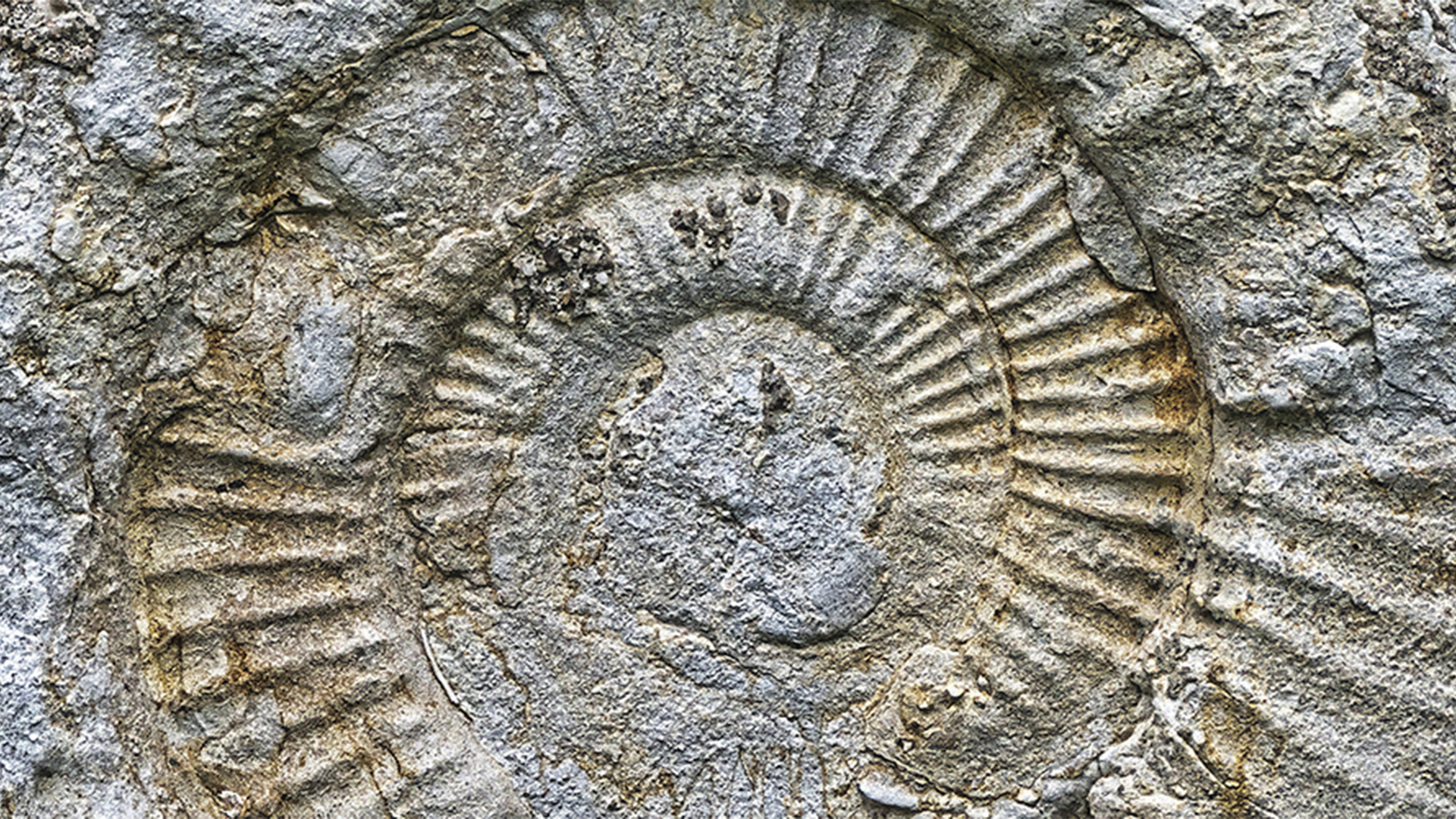
About 260 million years ago, there was a huge continent which united all large plates of the Earth’s crust.
On this enormous continent called Pangaea, the time of the dinosaurs started about 230 million years ago.
Pangaea began to break up. Two land masses formed called Laurasia in the north and Gondwana in the south.
150 to 70 million years ago, Laurasia and Gondwana broke up further into individual land areas in which today’s continents can already be recognised.
Back then, these continents were much closer together.
So new oceans formed in the spaces in between them,
Curriculum-centred and oriented towards educational standards
Matching


Youth Movement
Dancing until your feet hurt: Here, at the meeting on the Hoher Meissner near Kassel, 3,500 participants from Boy Scout associations, youth and Wandervogel groups from all over the German-speaking region have gathered. They want to celebrate, simply get to know each other and commemorate a historic anniversary.

Blogging
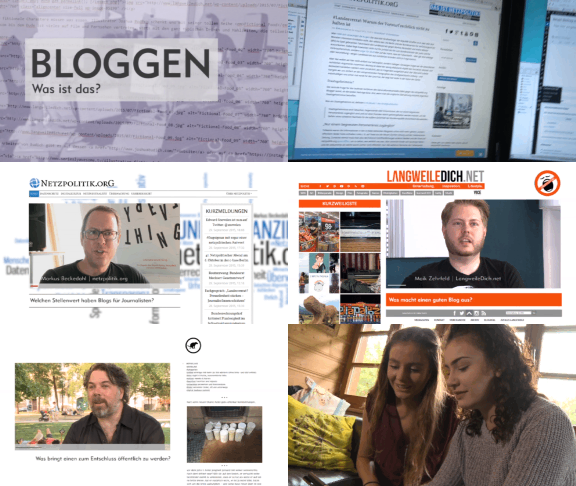
The weblog or blog, for short, as a medium is not much older than this century. Blogs came into being in the World Wide Web as ’messages from below’, as web pages from web creators who wanted to share their view of the world with the world. They are short notes, long texts, pictures, videos, which are posted loosely and at random intervals to the world for an undefined public.
Ceramic
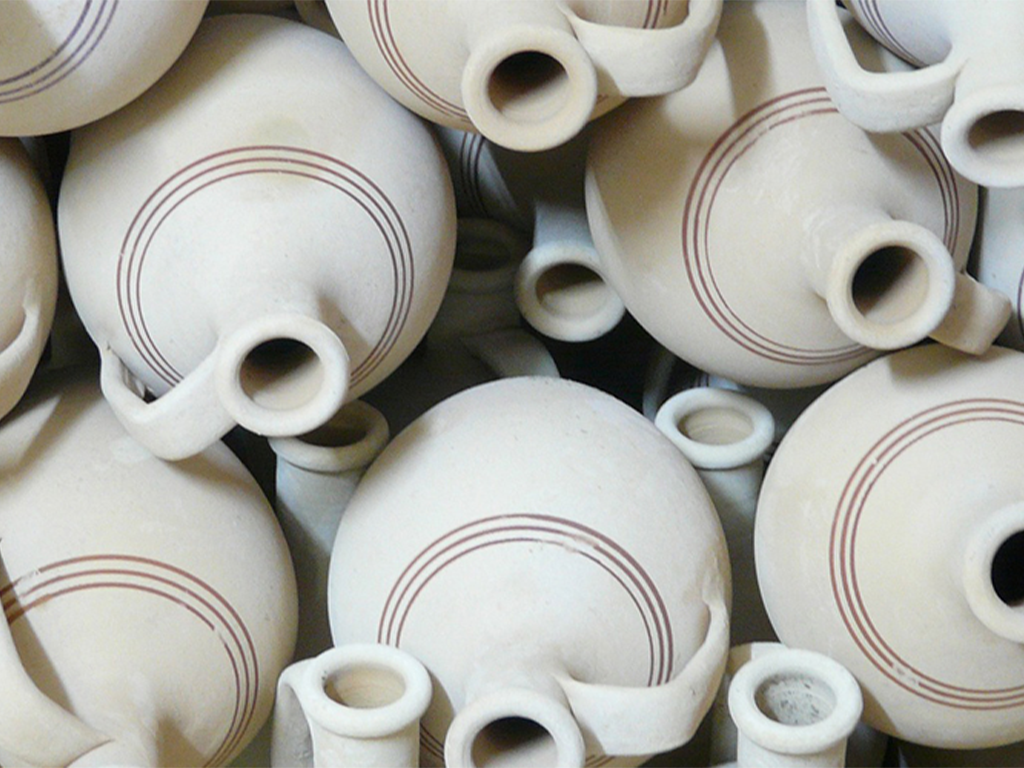
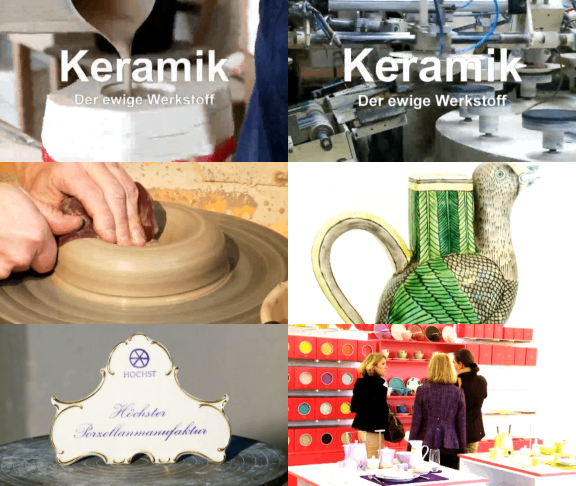
Ceramics are indispensable in our everyday lives. We eat from ceramic plates, drink from ceramic cups, use tiled ceramic bathrooms. But how is ceramic manufactured? The film reveals the secrets of this fascinating material! We get to know more about the beginnings of ceramic in the Old World of Egypt and Mesopotamia, about Greece, China and Rome. We gain interesting insights into the valuable earthenware and are also shown the exquisite further development of the "white gold". Today this versatile material is irreplaceable in industry, too. Whether in space or as an easily compatible substitute in medicine, ceramic is applied in many places.