 Primary School

4667158 / 5558684
Die innere Uhr
... bestimmt unser Leben
Der Faktor Zeit bestimmt unser gesamtes Leben. Manchmal scheint sie dabei still zu stehen und manchmal scheint sie nur so zu rennen. Zeit ist zwar eine physikalische Größe, die sich durch Uhren bis auf Millisekunden messen lässt. Das tatsächliche Zeitempfinden ist aber bei jedem Menschen individuell unterschiedlich. Woran liegt es, dass dem Einen eine Stunde ewig lang vorkommt, der Andere aber das Gefühl hat, es sei nur ein Augenblick vergangen? „Schau dich schlau!“ will wissen: Was ist mir unserem Zeitgefühl los? Was bedeutet Zeit überhaupt?
Eine der größten Herausforderungen im immer stressiger werdenden Alltag ist gelungenes Zeitmanagement. Deshalb blüht auch der Markt an Ratgebern, Tipps und Tricks jeglicher Art, wie wir uns unsere Zeit am Geschicktesten einteilen. „Schau dich schlau!“-Reporter Fero Andersen wagt den Selbstversuch: Um einen festgelegten Plan in die Tat umzusetzen, setzt er sich eine Frist von fünf Stunden. Wie gelingt es ihm am besten, die Aufgabe zu erfüllen: Wenn er planlos einfach damit loslegt oder wenn er sich darauf konzentriert, vorbereitet und gut durchdacht zur Tat schreitet?
Curriculum-centred and oriented towards educational standards
Matching


Geschlechteridentität
Teil des Erwachsenwerdens ist es, seine eigene Identität zu finden. Für manche wird diese Identitätsfindung erschwert, weil das körperliche Geschlecht nicht mit dem empfundenen Geschlecht übereinstimmt.

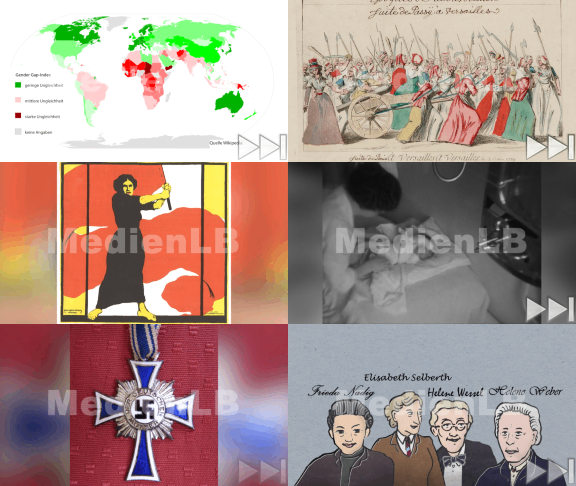
Gleichstellung der Geschlechter
„Männer und Frauen sind gleichberechtigt.“, so steht es im deutschen Grundgesetz in Artikel 3. Doch leben wir tatsächlich in einer geschlechtergerechten Gesellschaft? Der Film gibt darüber Aufschluss. Für den Unterricht empfohlen!