







 Society
4671637 / 5561460
Armut
Wie verändert sich das soziale Umfeld?
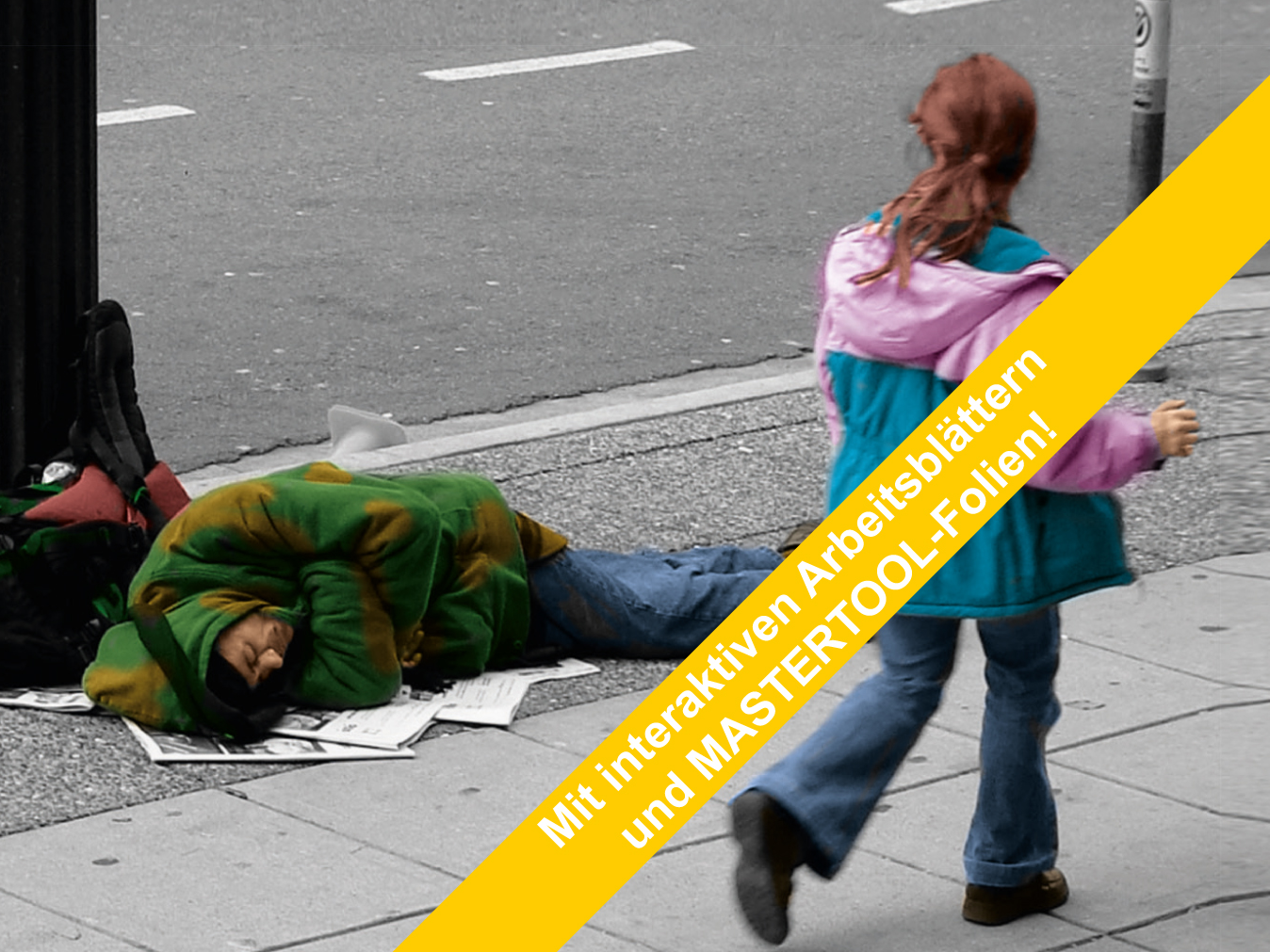
Jenke von Wilmsdorff stellt sich die Frage, wie es ist, arm zu sein. Für dieses Experiment lebt er eine Woche bei einer Familie, die ausschließlich von Hartz IV lebt. In Deutschland leben rund 4,4 Millionen Menschen von Hartz IV. Für Jenke von Wilmsdorff war das bisher nur eine Zahl.
Er erlebt die Armut hautnah. Er verbringt Weihnachten mit Menschen, die auf der Straße leben. Hier lernt er Lektionen für sein Leben. Der 32-jährige Blume rät ihm: „Pack dir `nen Knüppel unters Kissen!“ Was Jenke fasziniert ist, dass Blume sein Dasein auf der Straße frei gewählt hat – er hat ein Abitur mit einem Schnitt von 2,2!
Während seinen Erfahrungen begleitet ihn immer die Frage: Kann das mir auch passieren?
Der Film soll sensibilisieren für diese Frage und den Schülern zeigen, wie es ist, in Armut zu leben. Jenke muss betteln, er schläft auf der Straße. Er hilft der Familie Thiel, einen Neuanfang zu schaffen und bringt neuen Lebensmut in den Familienalltag. So schafft er auch für die beiden Kinder, Yasmin und Florian, neue Perspektiven.
Gemeinsam mit dem umfangreichen Begleitmaterial im Datenteil ist die didaktische DVD bestens zum Einsatz im Unterricht geeignet.
Play trailer
Curriculum-centred and oriented towards educational standards
Matching


Air Traffic
Being able to fly has been a dream of humanity from time immemorial. But it does not even date back a century that people actually started being able to travel through the air. Since the 1960s, the number of flight passengers has been constantly increasing. Thus, the airspace is no longer dominated by birds but by man-made flying objects.


Resuscitation
It can happen to anyone – of any age, in any place, at any time. Sudden cardiac arrest may quickly prove fatal. Immediate action is called for! Just remember: Check Call Press Anyone can do it. You can't do anything wrong!

Computer Games
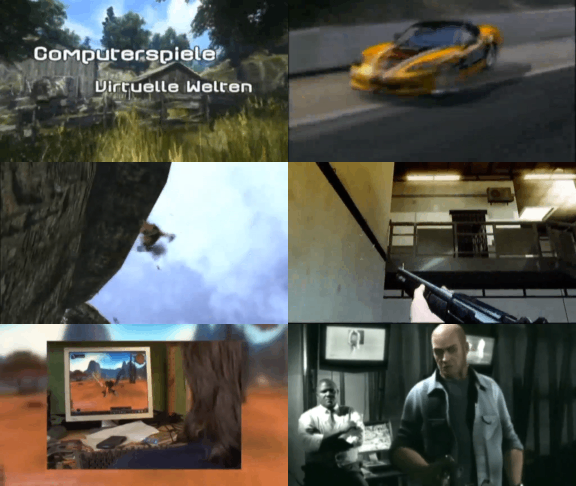
This film covers the topic of computer games in a variety of ways and from many different angles. Apart from the fascina- tion of computer games for users, the historical development as well as the production of computer games are described. The established genres are introduced, the guidelines of the German BPjM are explained. In light of recent public discussions, a neutral overview of the pros and cons of playing computer games is given, and different kinds of player behaviour are outlined. In this film, the pupils will recognise many aspects of their favourite pastime that encourage an independent, constructive use of this medium and reinforce their media competency. The film and teaching material are very closely related to the real-life situation.