






Suche:
- # Artistry
- # Biology
- # Chemistry
- # Ecological
- # Economy
- # English
- # Foreign Language
- # Geography
- # German
- # Health
- # History
- # Informatik
- # Latin
- # Mathematics
- # Media Education
- # Music
- # Physics
- # Politics / Civics
- # Preschool
- # Primary School
- # Religion
- # Society
- # Sports
- # Technology
- # Training of Teachers
- # Vocational Education
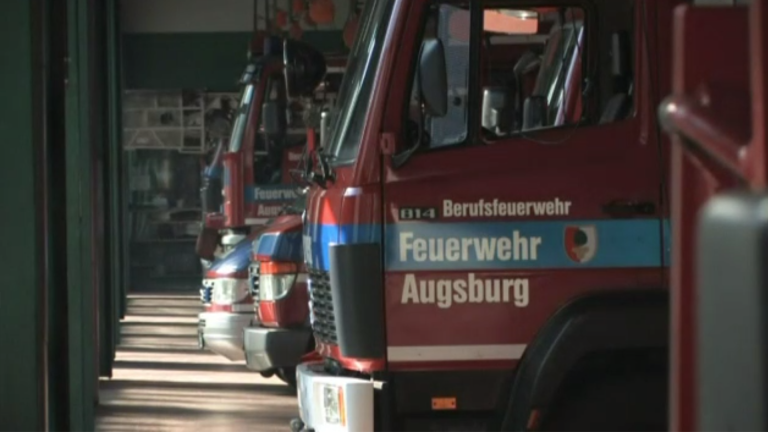
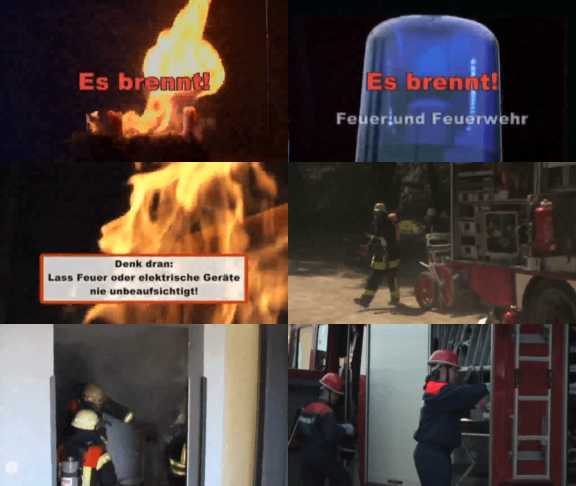
On Fire!
This DVD provides information on the history of fires and the fire brigade. The firefighters’ job is vividly illustrated, including their tasks and equipment. The topic of placing emergency calls plays a major part on this DVD. For safety training pur- poses, fire brigade operations are shown, causes of fires dis- cussed and extinguishing fires is practiced. In particular, the appropriate conduct in the event of a fire (alarm, test alarm, escape route, emergency call, fire detector, fire extinguisher, etc.) and first-aid measures for burns are demonstrated. The fact that besides the familiar fire engine, there are also fire brigades on water, on land and in the air shows how diverse this job is. A visit to the youth fire brigade makes this DVD especially suited for primary school pupils.
Learn more
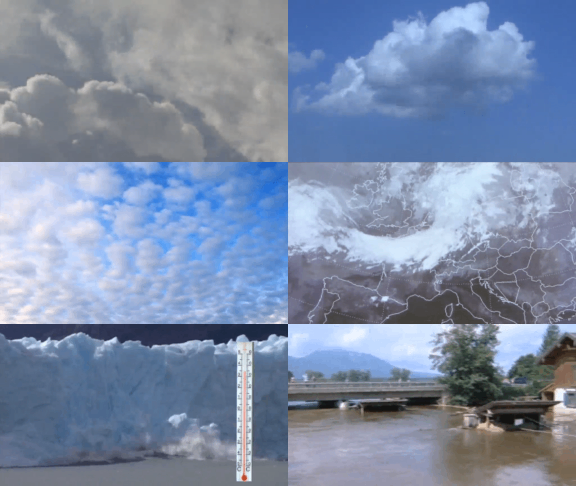
Our Weather
In everyday life we are confronted with this topic on a daily basis. It is part of our lives. The weather determines our daily routine more than we tend to think. Children, in particular, have a lot of questions on the subject. How does the weather form? What different forms of clouds are there? How is a weather forecast made? Why does it rain? These are only a few of them. The film looks into these questions and answers them in terms and pictures suitable for young pupils. Looking to the future, the problems of climate change and greenhouse effect are also dealt with. In addition, the film conveys to the children how important it is to treat our earth with sensitivity. As a special bonus, this DVD offers fast-motion picture material from weather stations as well as satellite pictures made available by the German meteorological service, which can be accessed via the DVD menu. Together with the didactically arranged accompanying material, this DVD is perfectly suited for the classroom both as an introduction to the complex topic of the weather and as a tool in the hands of the pupils when working individually or preparing projects.
Learn more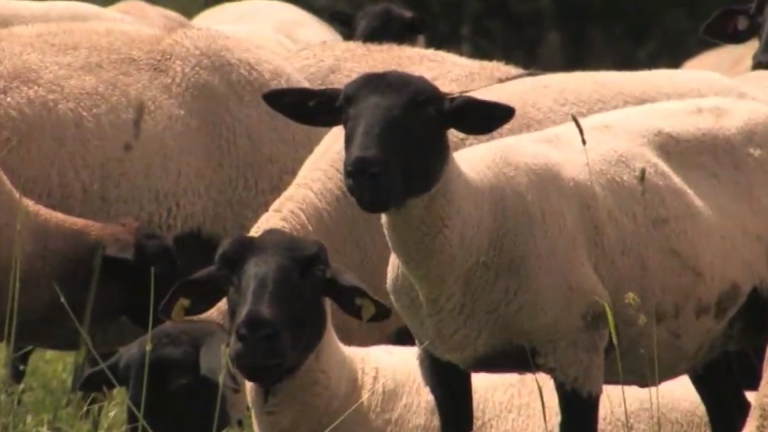
Sheep
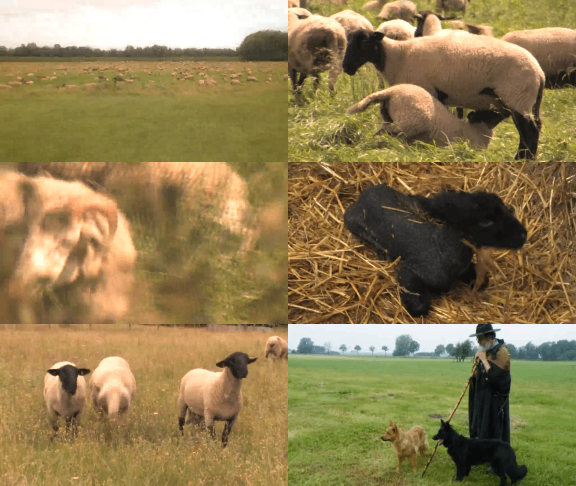
The sheep, one of the oldest livestock animals of mankind, has not only supplied us with wool, meat, pelts and milk but has also helped us conserve our landscape. There are between 500 and 600 different varieties. In Germany alone, there are more than 40 breeds. Because of marketing interests sheep were specifically bred for their wool, their meat, their milk and their pelts. Sheep farming, which is very time-consuming, involves shepherding, rearing and processing of wool, meat, milk and pelts. In order to be able to live on sheep farming various products must be marketed. Sheep help to preserve landscapes and provide flood control. Examples thereof are the Heidschnucke, which preserve the heath, and the dike sheep that help consolidate the dikes. Together with the extensive additional material the DVD is ideally suited for use in the classroom.
Learn more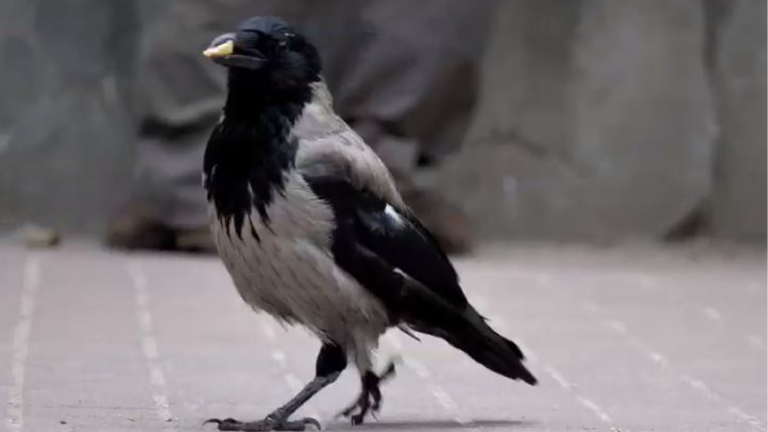
Raben und Krähen
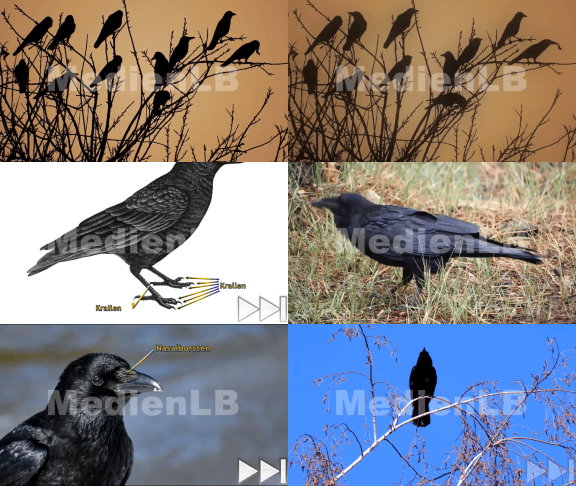
Corvus, die Gattung der Raben und Krähen sind nahezu weltweit verbreitet. Der Film stellt den Körperbau, die Lebensgewohnheiten und den Lebensraum ausführlich vor.
Learn more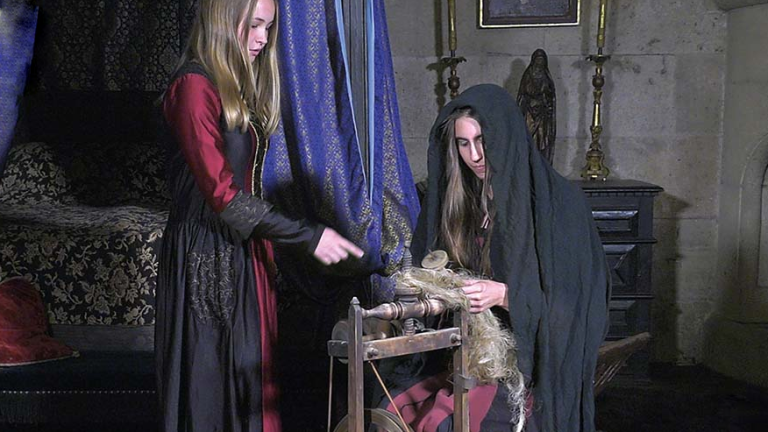
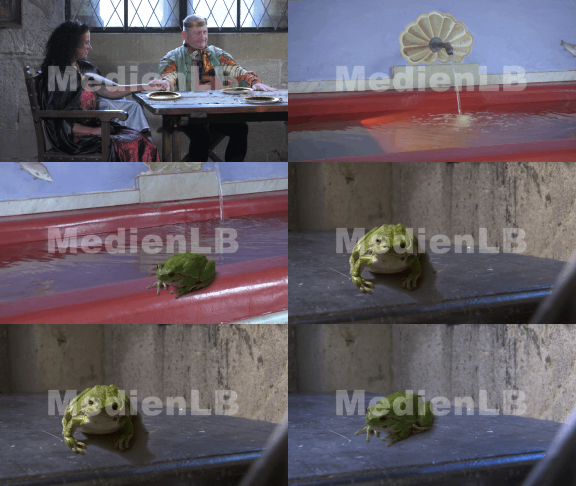
Dornröschen
Die Geschichte von Dornröschen ist eines der bekanntesten Märchen. Es gehört zu den „Kinder- und Hausmärchen“ der Brüder Grimm. Der Film zeigt in liebevoller Darstellung vor prächtiger Kulisse das Märchen vom Königspaar, welches endlich ein Kind bekommt. Durch einen Fluch wird das Mädchen 100 Jahre Schlafen, nachdem sie sich im fünfzehnten Lebensjahr an einer Spindel sticht. Durch den Kuss eines Prinzen wacht sie nach dieser Zeit wieder auf und die beiden feiern Hochzeit.
Learn more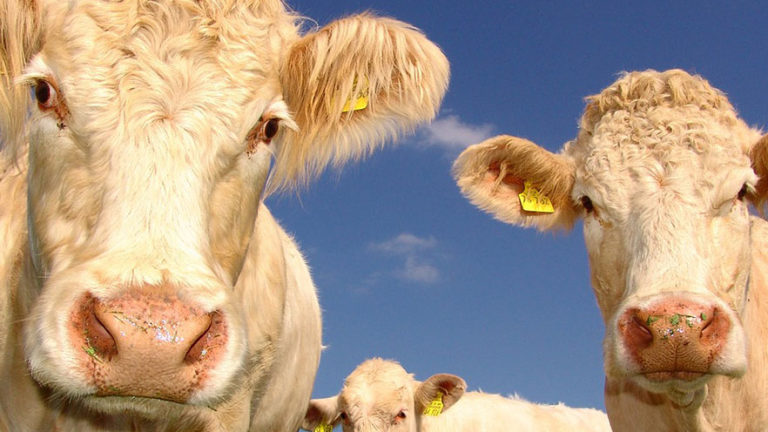
Bauernhof
Die Landwirtschaft ist die Quelle unserer Nahrung. Fleisch, Gemüse und Milch werden in landwirtschaftlichen Betrieben produziert.
Learn more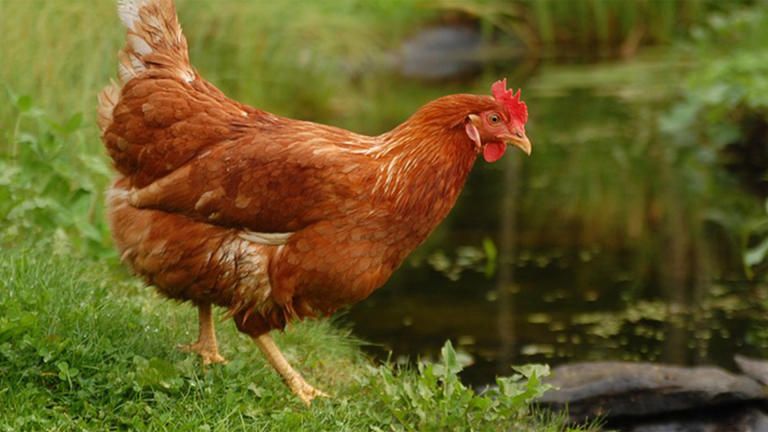
Healthy Diet
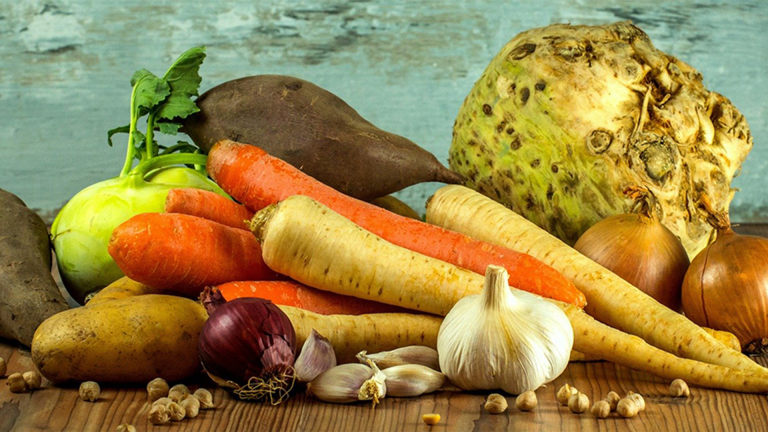
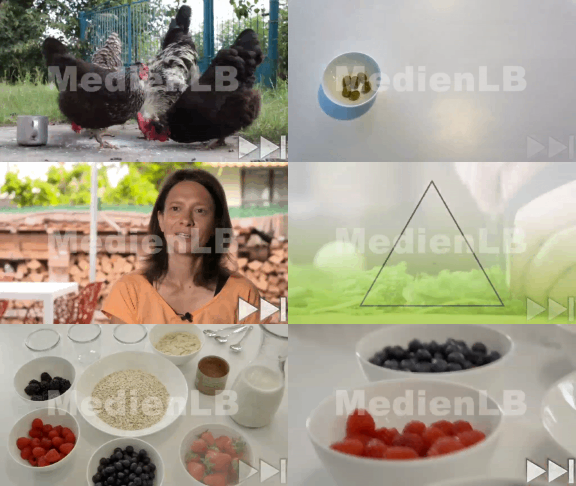
For a healthy, balanced and vitamin-rich diet it is essential to know what basic ingredients are contained in our food. Let us take a look at the carbohydrates first. These are contained in bread but also in pasta, rice, potatoes and also in fruit such as bananas.
Learn more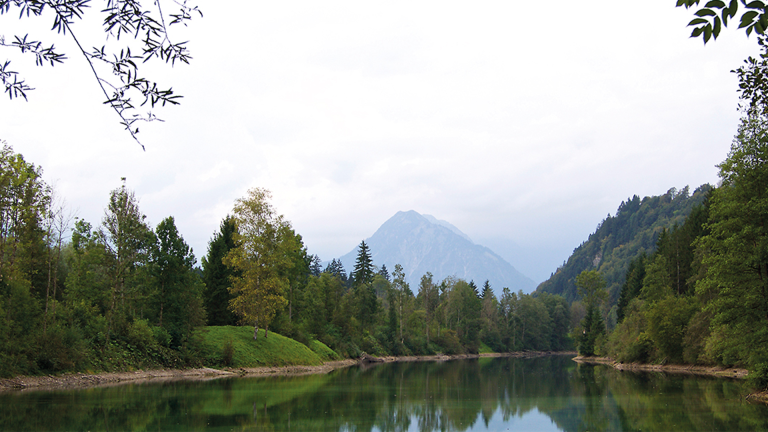
Riparian Forest
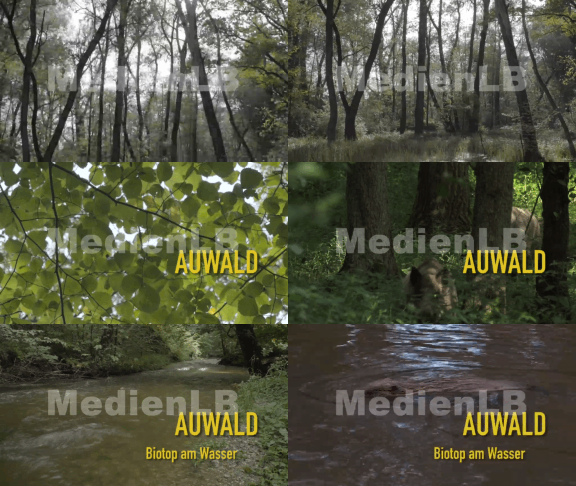
A large area of Europe is covered by woodland. In Germany alone, the number of trees is estimated at about 90 billion at present. That means, in Germany there are more than 1,000 trees per inhabitant.
Learn more
MedienLB has been producing award-winning school films and interactive modules for the classroom since 2006.

The Senses
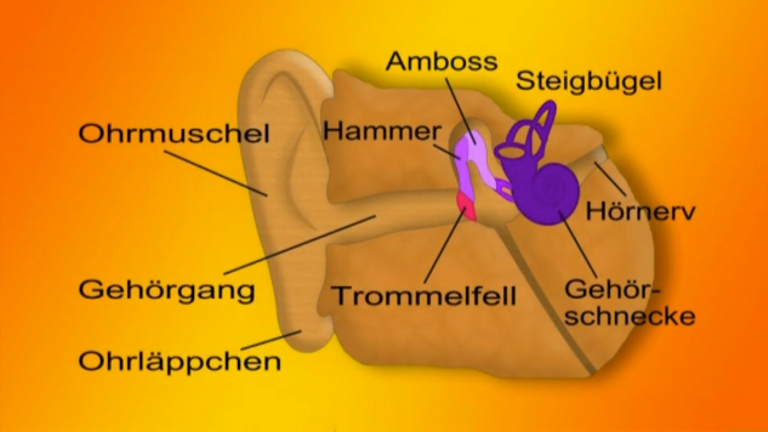
This DVD shows how we humans use our five senses to get in touch with our environment. The primary school pupils learn in an easily understandable way about the specifics, the use and the sensitiveness of each sensory organ and receive methodically organised information on their structure, function and protection. In addition, the human sensory organs are compared to those of different animals to illustrate similarities and differences. The DVD puts emphasis on the following topics: “Senso- ry Perceptions”, “The Eyes”, “The Ears”, “The Nose”, “The Tongue” and “The Skin”. The DVD is made up of five didactic units that can be inde- pendently accessed via the DVD’s menu structure. Further, the menu includes additional pictures and diagrams. With a variety of worksheets, test questions and colour slides, the curricular contents of the DVD can be captured for a more de- tailed discussion of the topic of the senses in the classroom.
Learn more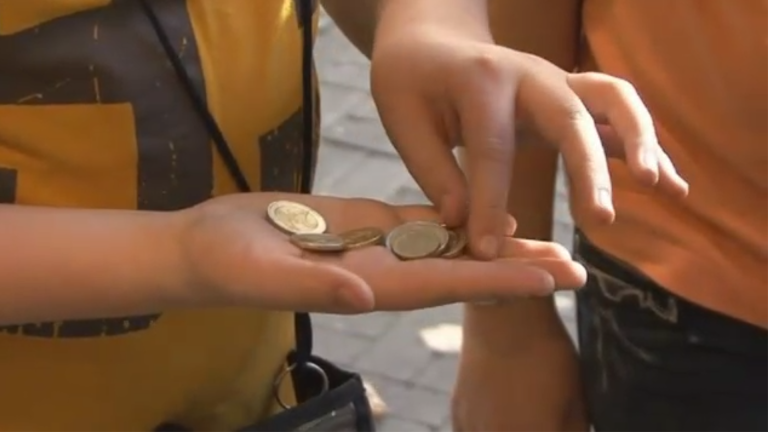
Our Money
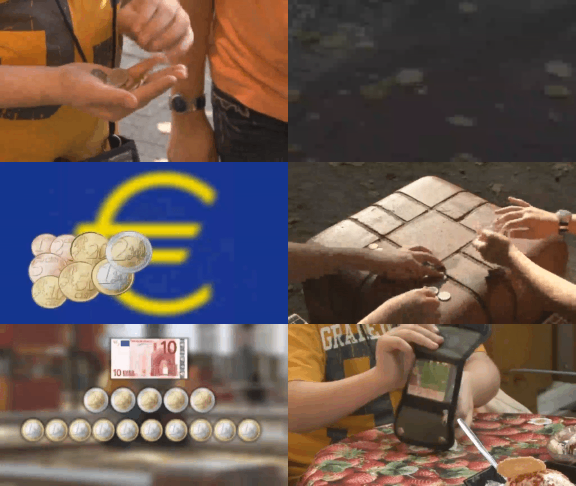
„Money makes the world go round.“ Today this proverb is more topical than ever and perfectly describes our dependence on the currency of money. This DVD is intended to contribute to an understanding of the phenomenon of money. In doing so, it first provides an overview of different world currencies with the main emphasis on our currency, the euro. The film shows that the European currency is not specific to a country but transnational. Common features as well as differences in the coins and notes are presented and illustrated. We accompany Jenny and Jakob during their day and learn how to compare, assess, count and calculate with sums of money. The DVD looks critically into the topic of borrowing. In addition, it demonstrates the advantages of saving up, explains the concept of interest and shows how to open an account. This DVD provides a good overview of handling money and calculating with it, describes its form and characteristics and is perfectly suited for lessons in both general knowledge and mathematics at primary school.
Learn more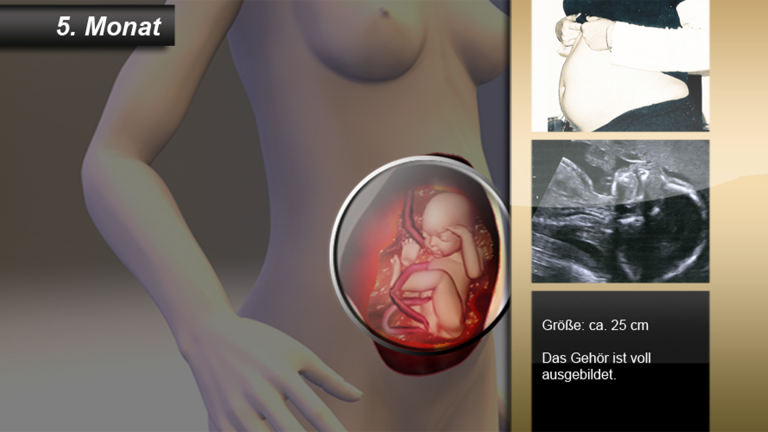
Sex Education
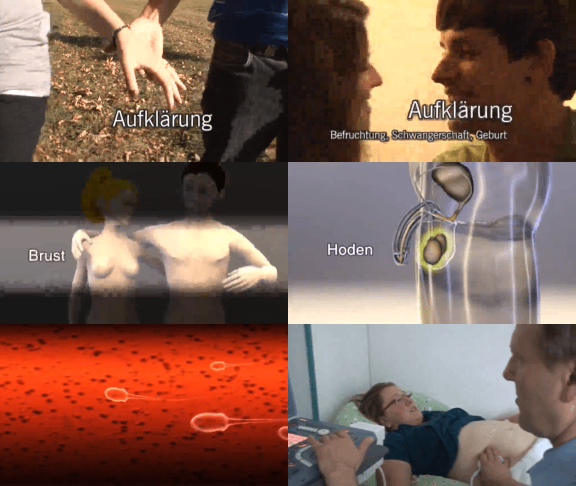
The creation of a new human being is a miracle. Children are interested in where they come from. They want to know how a baby gets into the mother’s womb, how it develops inside and is finally born. The film answers questions about fertilisation, pregnancy and birth. As an introduction similarities and differences of men and women are presented and explanations are provided about what role the male and female sexual organs play in procreation. Subsequently the topic of fertilisation is dealt with. The development of the fertilised egg cell into the embryo and finally the foetus is described. The pupils learn about the baby’s stage of development in any month of pregnancy. Then the progression of a birth is described. Eventually the film explains how the new-born baby must be cared for, what it needs and what it cannot do yet. Together with the extensive accompanying material the DVD is eminently suited for use in the classroom.
Learn more