






Suche:
- # Artistry
- # Biology
- # Chemistry
- # Ecological
- # Economy
- # English
- # Foreign Language
- # Geography
- # German
- # Health
- # History
- # Informatik
- # Latin
- # Mathematics
- # Media Education
- # Music
- # Physics
- # Politics / Civics
- # Preschool
- # Primary School
- # Religion
- # Society
- # Sports
- # Technology
- # Training of Teachers
- # Vocational Education

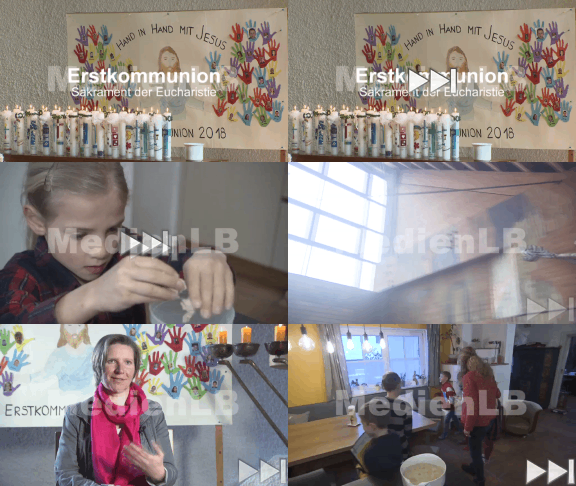
First Communion
At Annabelle’s home. She is nine years old and attends the third class. At this age, most children wish to celebrate their First Communion. Together with her mother Alice, Annabelle is preparing the bread dough today because they will discuss an important topic in communion class – the last supper that Jesus celebrated with his disciples. Alice is in charge of the group lesson. This means she prepares her daughter and five other children for First Communion.
Learn more

Staatssymbole
Currently There are 194 countries or states on our earth. Every state has its own state emblem, for example, a national flag. It is a symbol of the history of a country, of its situation or its culture.
Learn more

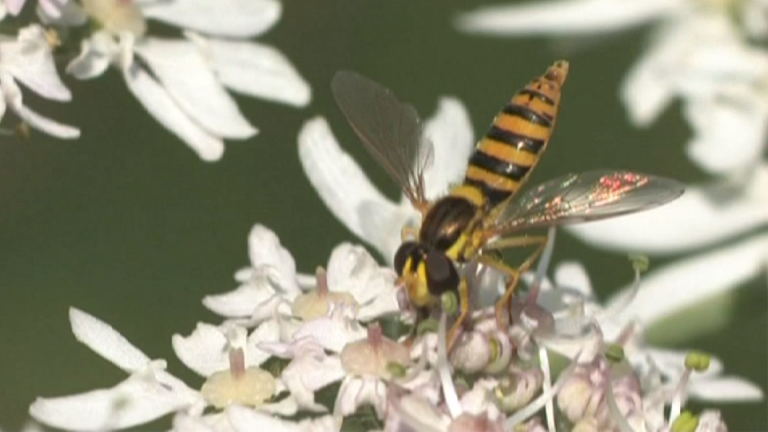
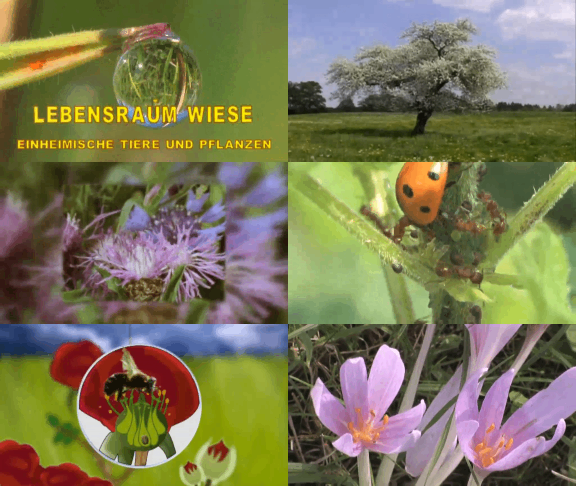
The Meadow as a Biotope
This DVD offers an insight into the plants and animals typically found in the meadow biotope. In an easily comprehensible way, primary school pupils experience a small, exciting world where various kinds of animals and plants co-exist. The film aims at improving the children’s understanding of animals and at arousing their curiosity for plants and animals. The DVD covers the following aspects of the topic of “meadows”: Types of meadows (creation of a meadow, marshy meadows, dry meadows, wet meadows, fertilised meadows); plants of meadows (cowslips, buttercups, dandelions and many more); layers of the meadow and animal habitats (on plants, on and in the ground, etc.); interference with the diversity of species (effects of mowing and fertilising on the meadow); protection of the meadow (responsibility of humans for nature); use of meadow plants (in medicine, human diet).
Learn more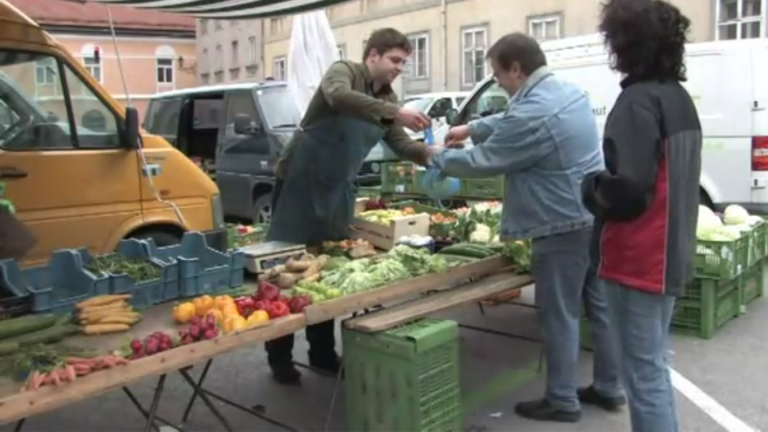
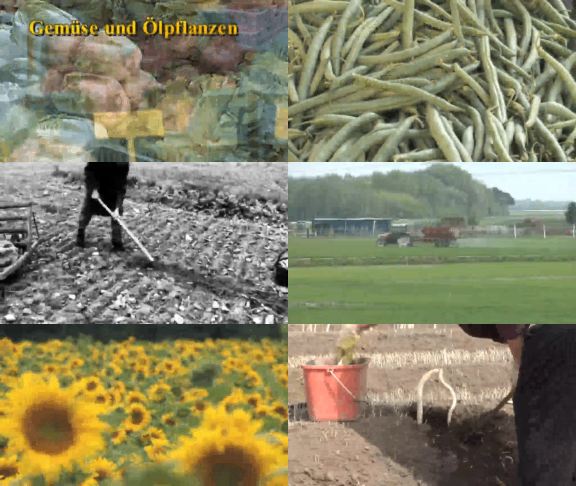
Vegetables and Oil Plants
Throughout the whole year, shops offer us a varied assortment of different kinds of vegetables. But where do the vegetables come from? Originally wild-growing, vegetables are crop plants today. They are sown or planted, cultivated and harvested by humans.
Learn more
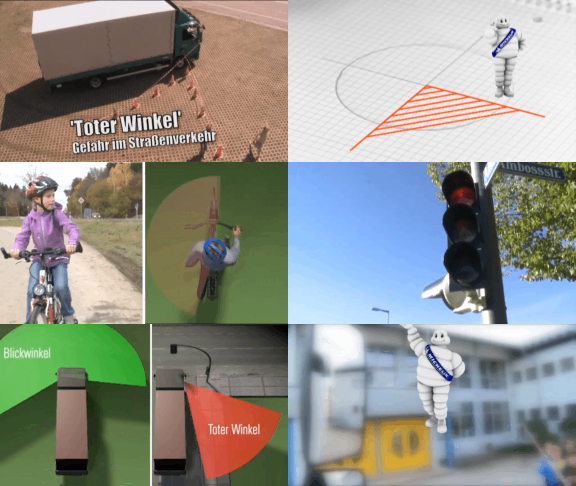
Dead Angle
Not only lorries have a dead angle. Other big vehicles such as buses or motor homes, even perfectly normal cars have a dead angle, that means an area where a driver might overlook a cyclist or pedestrian when turning corners. New technology is meant to help prevent accidents between cyclists and lorries. For example, sensors are often attached to lorries nowadays.
Learn more

Dachs
Der Dachs ist ein nachtaktiver Bewohner der heimischen Wälder. In teilweise jahrzehntealten, bis zu 5m tiefen Bauen verbringt er den Tag und begibt sich nachts auf Nahrungssuche.
Learn more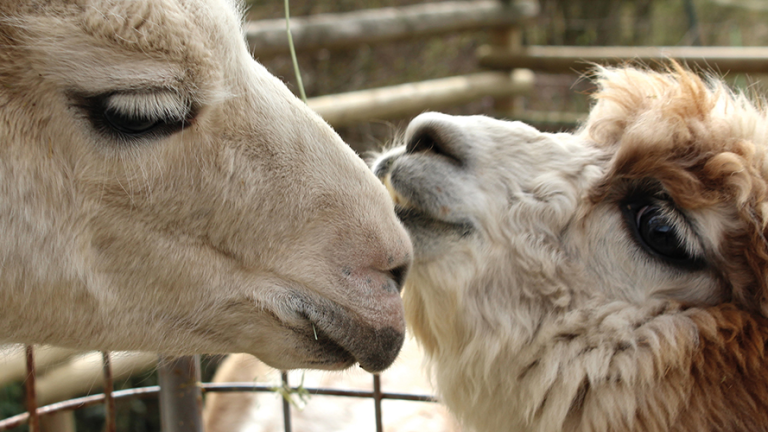
Mensch und Tier
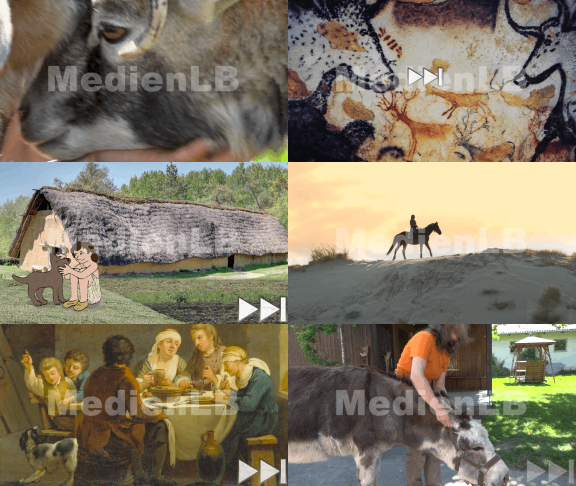
Menschen und Tiere leben seit Jahrtausenden zusammen. Ursprünglich als reines Nutztier gehalten, entwickelte sich eine Beziehung zu einem Tier als reines Haustier. Neuer ist die Verbindung der engen Beziehung des Menschen zu Tieren und therapeutischen Anliegen. Im Film werden verschiedenste Tiere und deren therapeutische und unterstützende Wirkung vorgestellt. Ob mit Schafen, Alpakas, Ponys, Schulbegleithunden oder Blindenhunden – der Film geht der engen Beziehung von Mensch und Tier nach.
Learn more
Deutschlands Landschaften
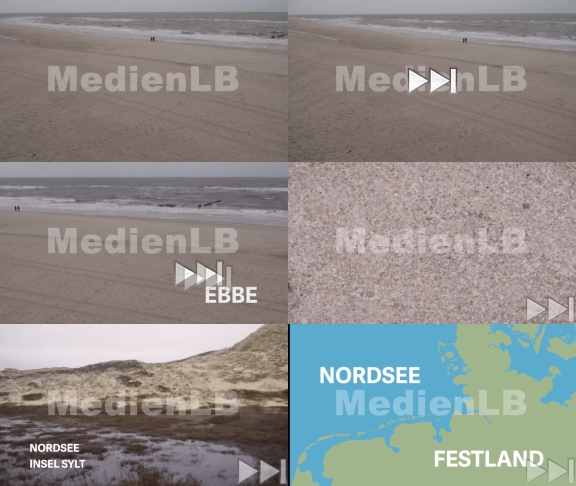
Deutschland ist ein Land der Landschaften. Der Film nimmt uns mit auf eine Reise von den Küsten im Norden über die Lüneburger Heide, die Lößbörde und die Mittelgebirge in der Mitte Deutschlands bis zu den Alpen im Süden.
Learn more
MedienLB has been producing award-winning school films and interactive modules for the classroom since 2006.
Müllvermeidung
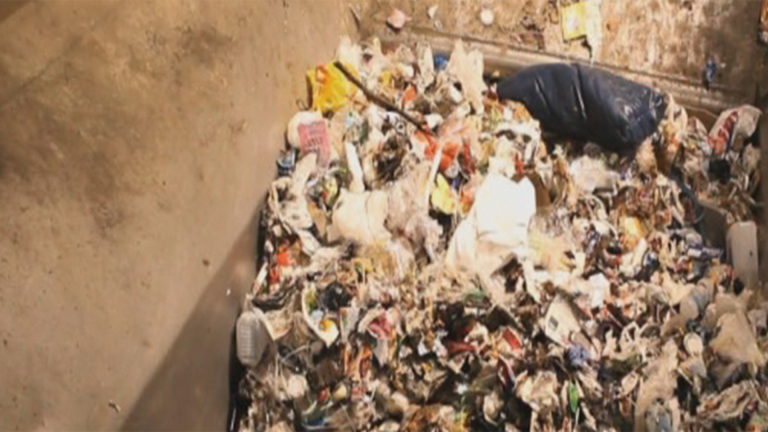
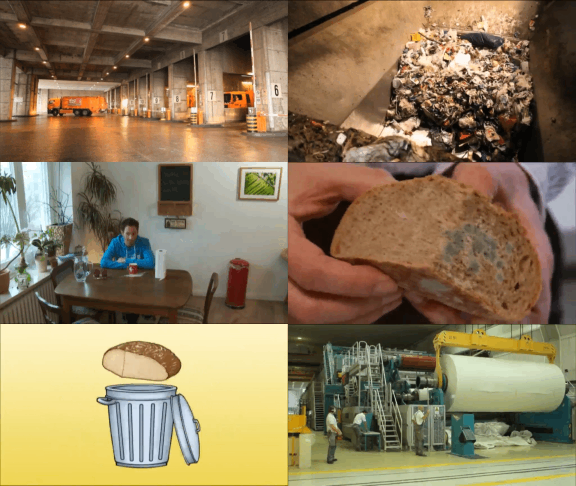
In dieser Ausgabe von "Schau dich schlau!" erfahren Sie alles, was man über Müll wissen muss. Jeder Deutsche hinterlässt jedes Jahr fast eine halbe Tonne Abfall. Wie kann man diesen gewaltigen Müllberg reduzieren? Die Wissensreporter Joey Grit Winkler und Fero Andersen wagen das spannende Experiment und wollen 24 Stunden lang keinen Müll produzieren. Joey Grit Winkler und Fero Andersen wagen ein radikales Experiment und treten in einen Müllvermeidungs-Wettstreit. Sie wollen 24 Stunden lang keinen Müll produzieren. Schnell stellt sich die Frage: Was können die beiden eigentlich noch essen? Wo können sie einkaufen? Und wie vermeiden sie es, mit Werbeprospekten und Verpackungsmaterial überschwemmt zu werden? Das Experiment zeigt, welchen Abfall wir tagtäglich produzieren und mit welchen Tricks wir unseren persönlichen Müllberg schrumpfen lassen können. In dieser Folge "Schau dich schlau!" bekommen die Zuschauer außerdem Antworten auf folgende spannende Fragen: Lohnt es sich, Flaschen nach Farben zu trennen? Landet unser sorgfältig getrennter Müll am Ende doch in der Müllverbrennungsanlage? Welche Trendsportart verbirgt sich hinter dem Begriff "Dumpster Diving", und wie kann man aus dem Datenmüll auf zerkratzten CDs und magnetisierten Festplatten wieder die ursprünglichen Informationen zurückgewinnen?
Learn more

Muslim Festivals
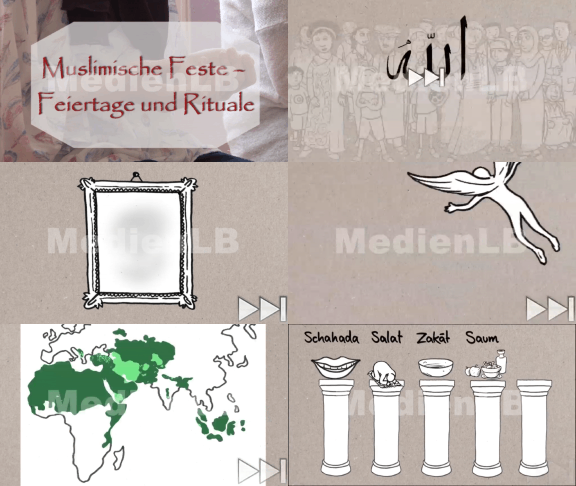
Meryem and Rabia at midday prayer with their parents. Normal daily routine for them because they belong to the almost five per cent of the German population who are of Muslim faith. They have, like most Christians, too, very special feasts, rituals and holidays. We are going to accompany them and other Muslim families on these festivals.
Learn more