






Suche:
- # Artistry
- # Biology
- # Chemistry
- # Ecological
- # Economy
- # English
- # Foreign Language
- # Geography
- # German
- # Health
- # History
- # Informatik
- # Latin
- # Mathematics
- # Media Education
- # Music
- # Physics
- # Politics / Civics
- # Preschool
- # Primary School
- # Religion
- # Society
- # Sports
- # Technology
- # Training of Teachers
- # Vocational Education
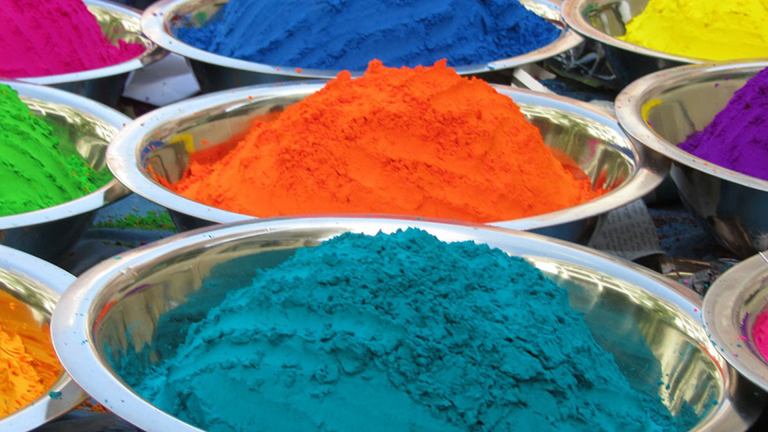

My Favourite Colour Is Multi-coloured
Paintbrush: ”Hello kids! I am Colori. Being a paintbrush, I love all those vivid colours: red, yellow, green, blue ... just all of them! Don't you like it colourful, too? Great! When I was painting, I thought that I'd like to know where all these fantastic colours we see come from. Why are meadows green? And why is a fire engine red? Why isn't a banana blue? And why is a rainbow always colourful? Would you like to know that, too? Great, then I'll tell you what I've found out!" Imagine for a moment that there were no colours. If nothing in this world had a colour, that would be quite boring and sad. No colourful flowers, no coloured butterflies, even your ice-cream on a sunny day would just be grey.
Learn more
Construction Sites
At a road construction site mostly the old road is removed with a big road miller. Sometimes a digger helps and carries the large parts away. They are loaded onto a truck. With the tar machine the road is newly tarred. Tar is a mixture of gravel, sand and crude oil. Here the tar is still very hot. When it cools down, it becomes very hard and the cars can drive on it. A new motorway or country road is created.
Learn more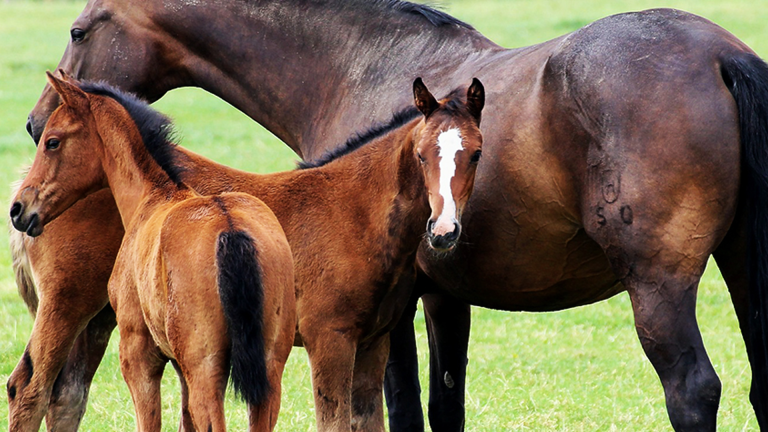

Horses
They are the epitome of power and elegance. Man domesticated them long after dog and cat, they provided meat, were strong agricultural helpers pulling ploughs and other implements. These hard times are over for the animals – their range of service has changed. The most favourite animal of many children and grown-ups, it has changed from former working animal to today’s companion for sport and leisure. The horse breeds known today are descended from a primeval horse. It lived about 50 million years ago – that is fifty with six zeros after it!
Learn more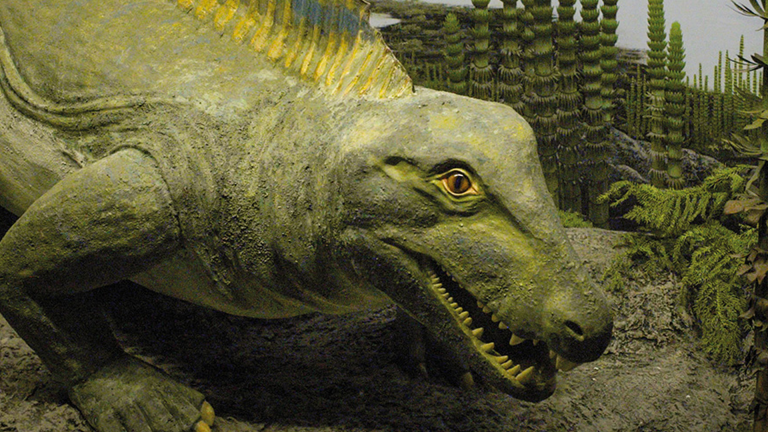
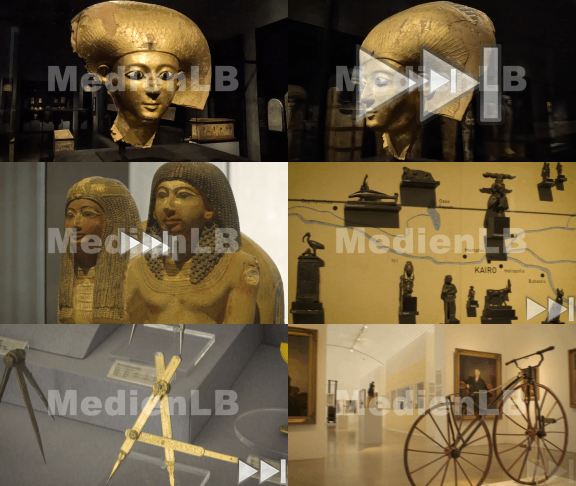
Besuch im Museum
Museen spiegeln in Form von Gegenständen, Texten, Ton, Gemälden, Briefen usw. die Vergangenheit, lassen die Gegenwart verstehen und manchmal sogar einen Blick in die Zukunft werfen. Sie sind die Bewahrungsstätten von Kultur und Geschichte und damit ein besonderer Ort außerschulischen Lernens.
Learn more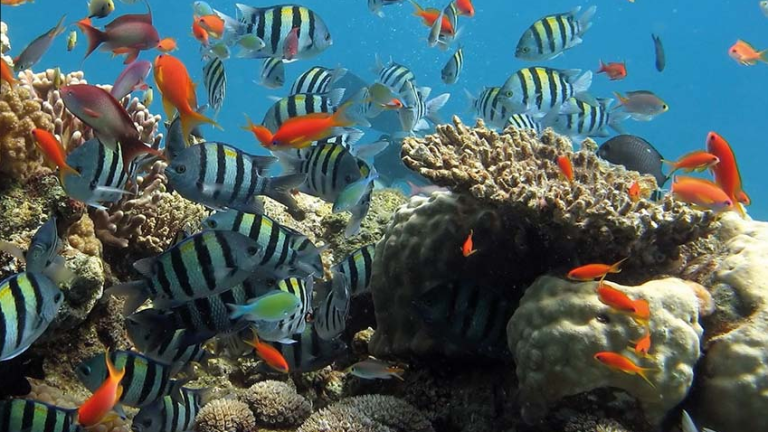
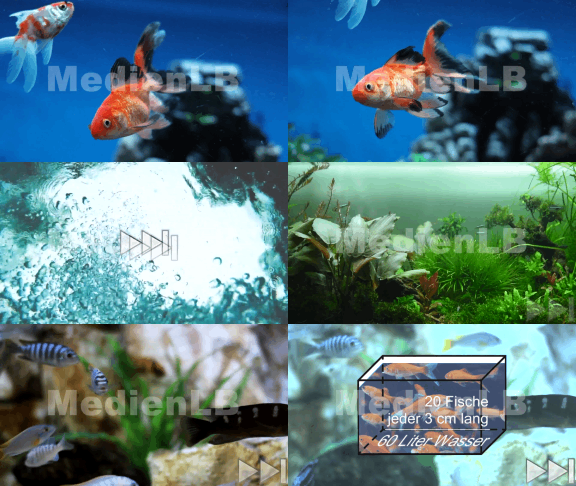
Aquarium
Ein Aquarium ist das Modell einer Unterwasserlandschaft – es gibt sie mit Meer- und mit Süßwasser gefüllt.
Learn more

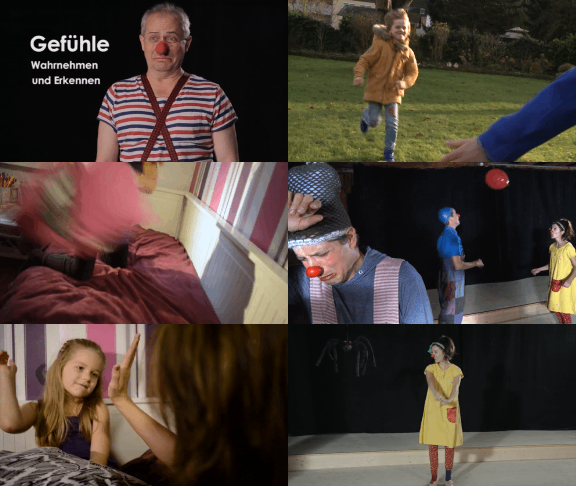
Feelings
Feelings belong to humans like their noses and ears or like eating and breathing.
Learn more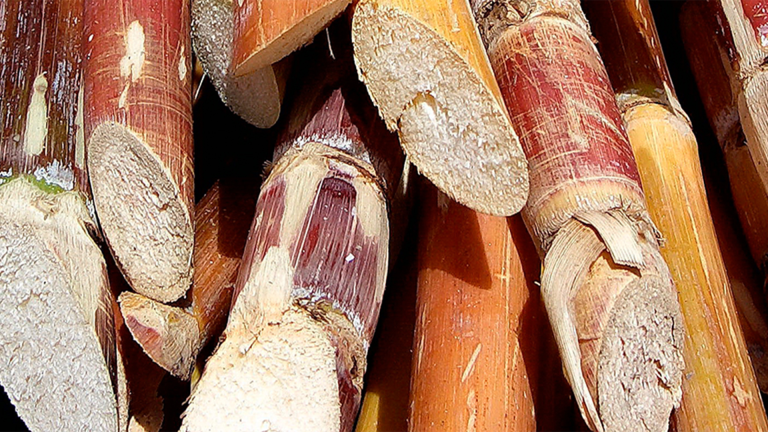

Sugar
The “Sugar” DVD covers the sugar beet and sugar produc- tion in detail. Simple and clear pieces of information allow the children to easily understand the individual stages from sowing the seeds to processing the beets in the sugar factory. The film conveys that the sugar produced is not an industri- al but a natural product, which is merely extracted from the sugar beet in the sugar factory. The pupils are provided with detailed answers to questions like “Since when have we had sugar?”, “What is sugar used for?” and “What properties does sugar have?”.The DVD addresses the following main points of the topic of “sugar”: Sugar sweetens our daily lives (sugar as an ingredient in many foodstuffs, significance of sugar in our diet), the his- tory of sugar (sugar as a luxury good 200 years ago), sugar formation in the beet (photosynthesis), sugar extraction (the major processes in the sugar factory), kinds of sugar (proper- ties of sugar, various kinds of sugar and their uses).
Learn more
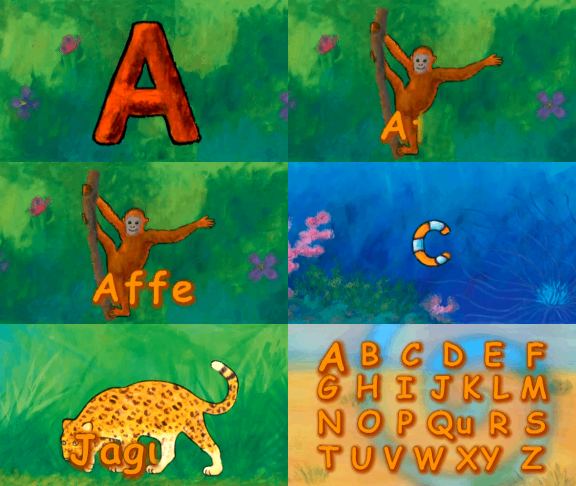
A wie Affe, B wie Bär
Wir, Tiere der Welt, manche groß, manche klein, laden dich ganz herzlich zu uns ein.
Learn more
MedienLB has been producing award-winning school films and interactive modules for the classroom since 2006.
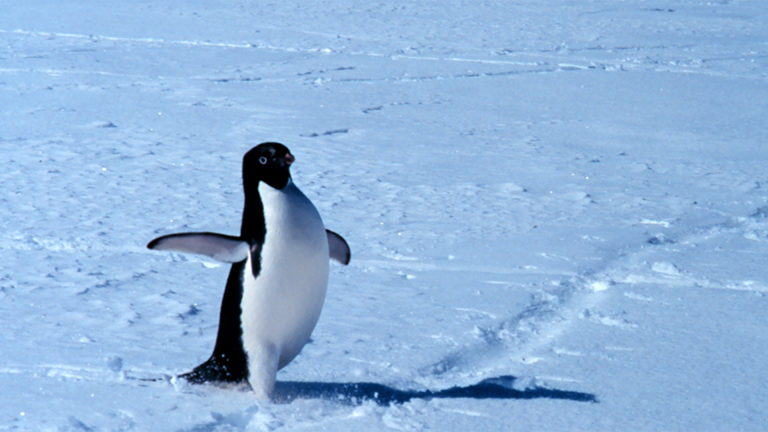
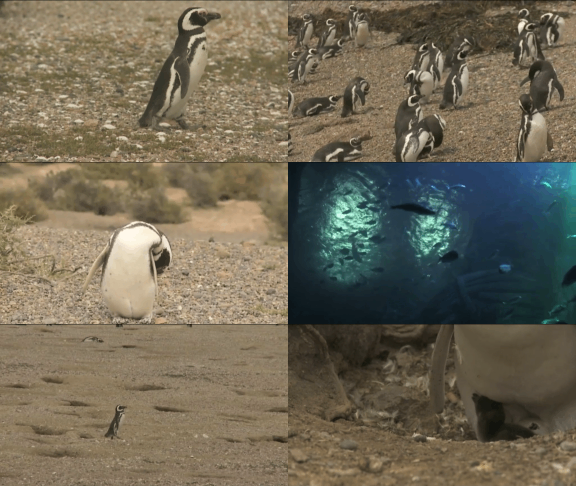
Penguins
When we hear the word “penguin“, we immediately think of animals living in the cold and ice world of Antarctica near the South Pole. However, this is not the whole truth. All of the various species of penguins do indeed live in the Southern Hemisphere but their habitats are not limited to the Antarctic region.
Learn more
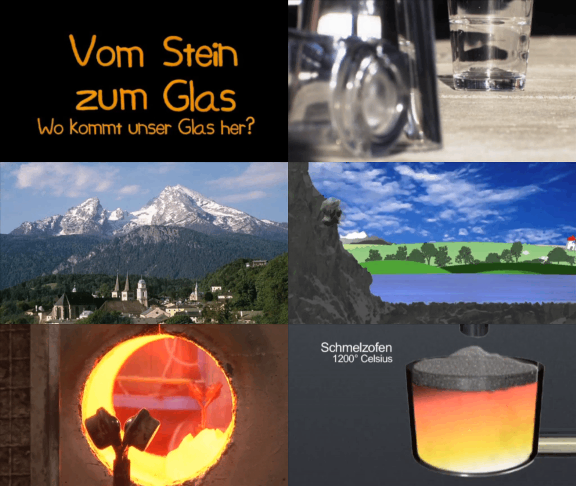
From Stone to Glass
In terms understandable to children, this DVD illustrates how glass, a widely used material, is made. The film shows, step by step, the development from rock to quartz sand, which, mixed with further ingredients, forms an important component in the making of glass. In order to give the children an exact idea of glass production, a glassblower is watched at his job. The accompanying material contains extensive suggestions and recommendations, such as songs, experiments, tips for assembly, games, mandalas, etc., both for a practical application of the topic in the classroom and for reinforcing the knowledge the children have acquired. Special emphasis was laid on an integrated learning experience in kindergarten life for the children to experience the often used material glass with all their senses. Thus, this DVD offers a basis suitable for child-oriented projects in kindergarten and early primary school, which take up and illustrate a topic familiar from the children’s everyday lives.
Learn more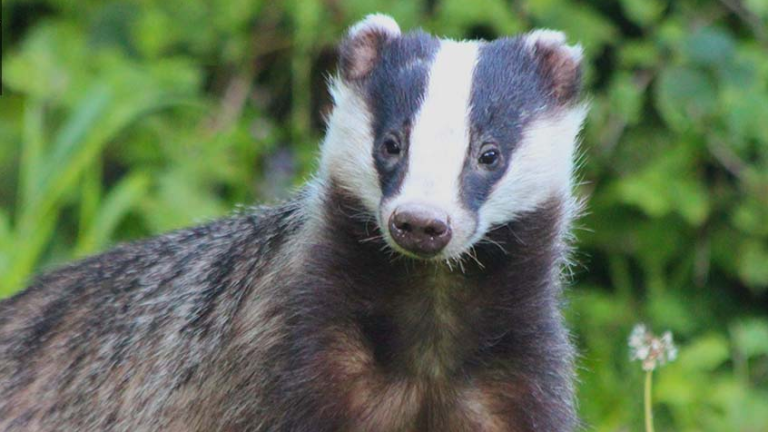
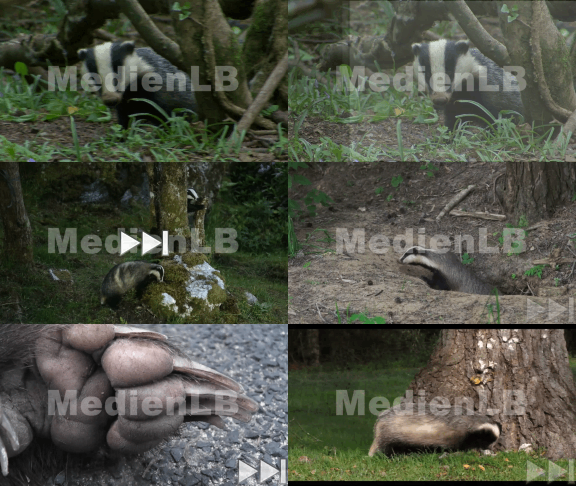
Dachs
Der Dachs ist ein nachtaktiver Bewohner der heimischen Wälder. In teilweise jahrzehntealten, bis zu 5m tiefen Bauen verbringt er den Tag und begibt sich nachts auf Nahrungssuche.
Learn more