






Suche:
- # Artistry
- # Biology
- # Chemistry
- # Ecological
- # Economy
- # English
- # Foreign Language
- # Geography
- # German
- # Health
- # History
- # Informatik
- # Latin
- # Mathematics
- # Media Education
- # Music
- # Physics
- # Politics / Civics
- # Preschool
- # Primary School
- # Religion
- # Society
- # Sports
- # Technology
- # Training of Teachers
- # Vocational Education
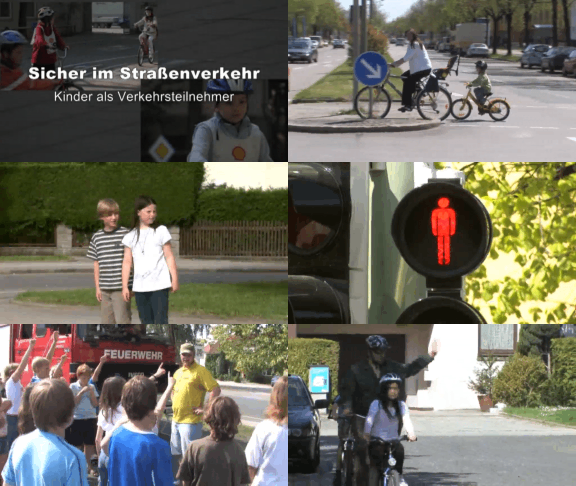
Safety in Road Traffic
This DVD encourages children as young traffic participants to be considerate in road traffic to ensure safety and show social responsibility. It explains that in road traffic, children are especially exposed to danger and emphasises that above all, primary school children are confronted with a lot of novel and difficult situations. The film focuses on the following aspects of road training: Pedestrians in road traffic, seeing and being seen, being a car passenger, the bicycle as a means of transport, the blind spot, the safe bike, traffic signs and regulations, turning left, the bicycle test. This DVD preventively supports correct conduct in everyday road traffic in terms clearly understandable to children.
Learn more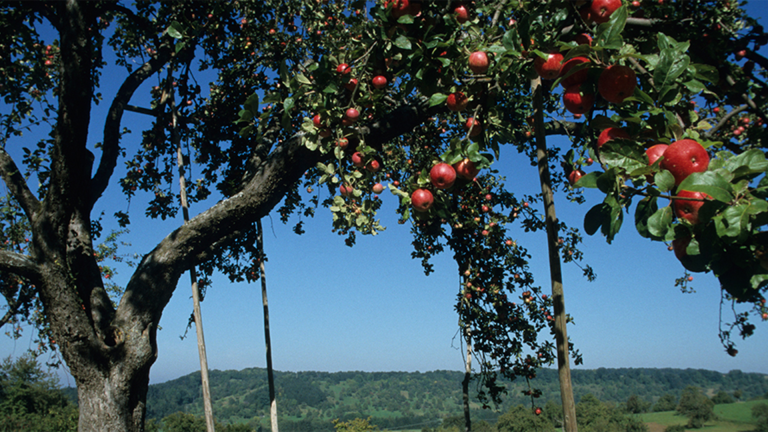
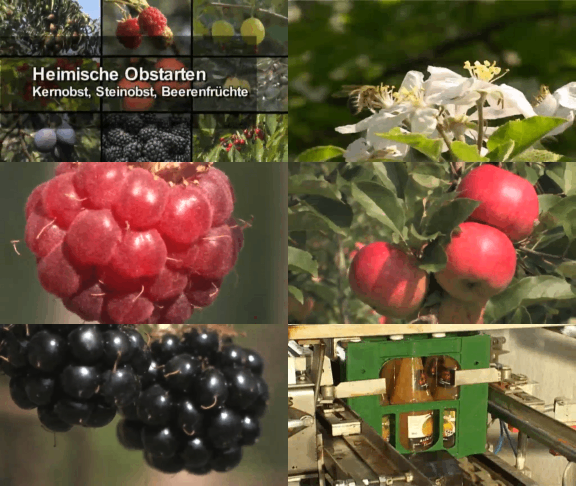
Domestic Fruit Species
The film deals extensively with the topic "Fruit". In a simple and comprehensible manner but with professional accuracy, it tells the primary school children about processes in nature. They learn how fruits form and develop on fruit trees and bushes. Information on domestic fruit farming is provided and they get to know the importance of fruit for a healthy diet. The film deals with the following core themes: domestic fruit species (various species, appearance, spread ...), aggregate fruit (pollination and fertilisation, developmental stages of an apple ...), drupe (structure and components of a cherry blossom, cherry tree transformation ...), berry fruit (ingredients, harvest time, vitamin content ...), methods of cultivation (plantation, orchards and their animal life ...), processing (harvest, apple juice production, preparation of jam ...). The film is divided into 5 menu items (chapters). Each chapter can be dealt with separately. Together with the comprehensive accompanying material, the film is ideally suited for use in lessons.
Learn more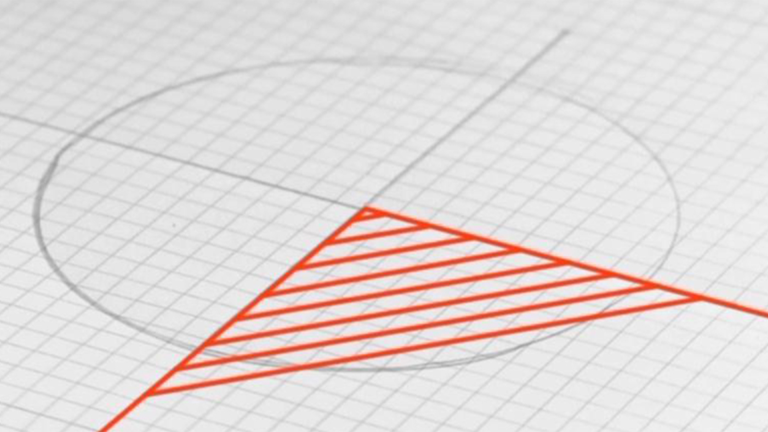
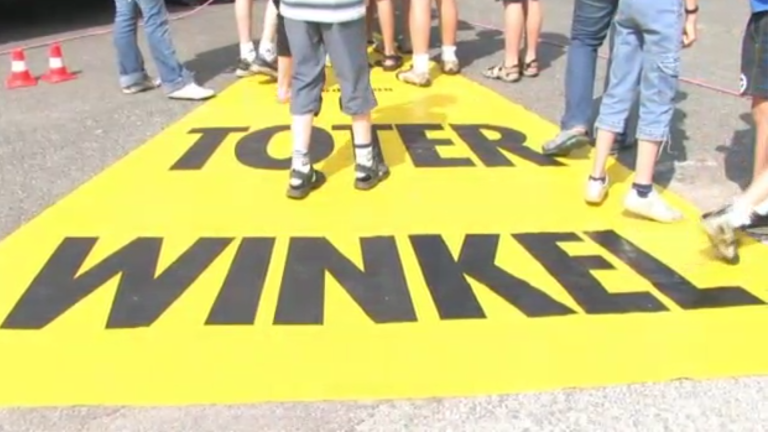
Dead Angle
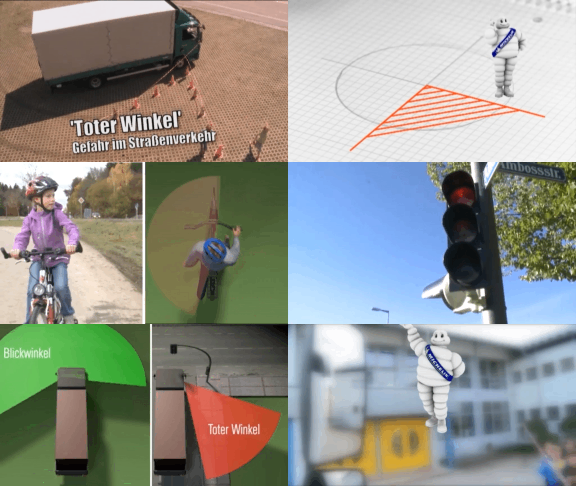
Not only lorries have a dead angle. Other big vehicles such as buses or motor homes, even perfectly normal cars have a dead angle, that means an area where a driver might overlook a cyclist or pedestrian when turning corners. New technology is meant to help prevent accidents between cyclists and lorries. For example, sensors are often attached to lorries nowadays.
Learn more
Summer
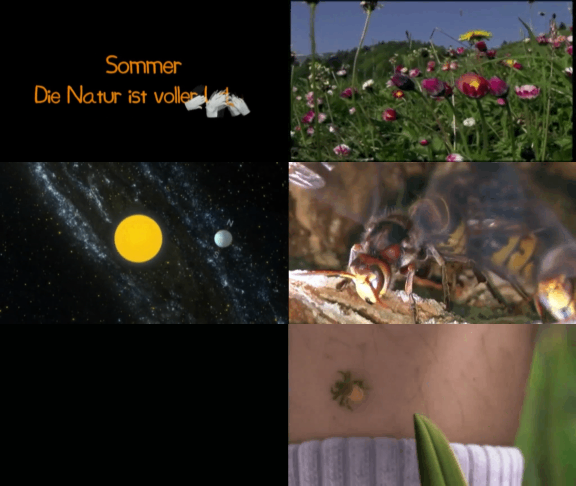
Finally, summer has come! This DVD explains in a way suitable for children why summer comes, how life develops in nature and why we humans love this season so much. In short chapters, children learn why daylight hours are longer and how a thunderstorm builds up. The behaviour of animals and their young as well as changes in the flora are explained in a way appropriate for children. Rules for the right behaviour in the sun, in the water and during a thunderstorm are explained just like the dangers of a tick bite or wasp sting and the right reaction in such a situation. Besides didactic-methodical suggestions, the accompanying material also includes various games, songs, experiments, tips and suggestions providing an incentive to work on a topic, which is virtually a compulsory annual subject, from different points of view and holistically and to discover it from a new angle.
Learn more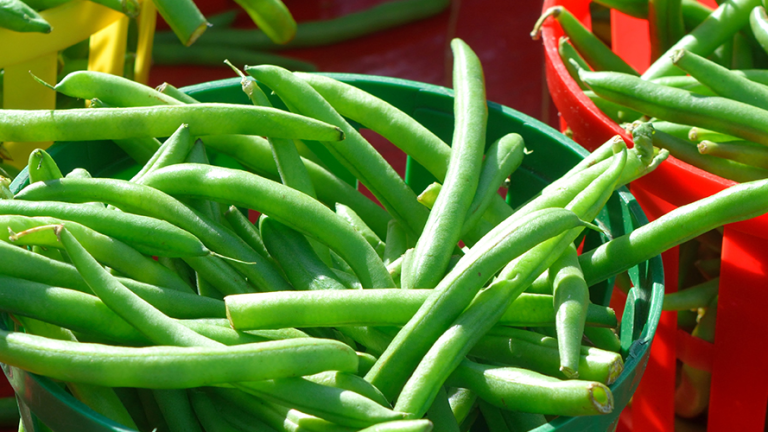
Bean
The word bean refers to both the seeds and the pods surrounding them and often even the whole bean plant. It is not easy to get an overview of the different types of bean plants. Their variety is due to, among other things, their different origins.
Learn more

Die 5 Sinne
Wie selbstverständlich sehen, hören, riechen, schmecken und fühlen wir. Jeder benutzt täglich seine fünf Sinne, ohne sie bewusst einzusetzen. "Schau dich schlau!" untersucht in dieser Sendung, warum sie für uns überlebenswichtig sind und wie sie funktionieren.
Learn more
Umweltretter
Unsere Umwelt ist in Gefahr, doch gibt es Möglichkeiten, sie zu retten und jeder kann seinen Teil dazu beitragen.
Learn more
Heimische Bäume
Birke, Eiche, Fichte, Tanne sind die häufigsten Bäume bei uns. Der Film zeigt den Aufbau der Bäume von der Krone über den Stamm bis zu den Wurzeln.
Learn more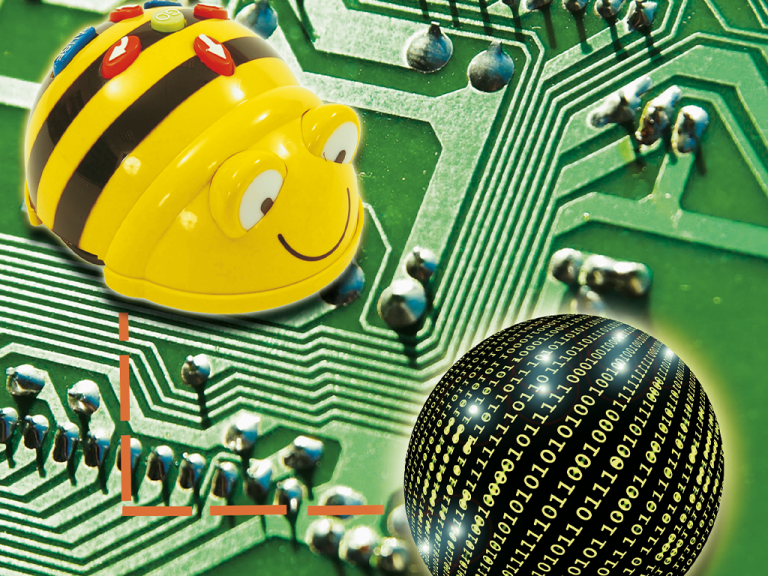
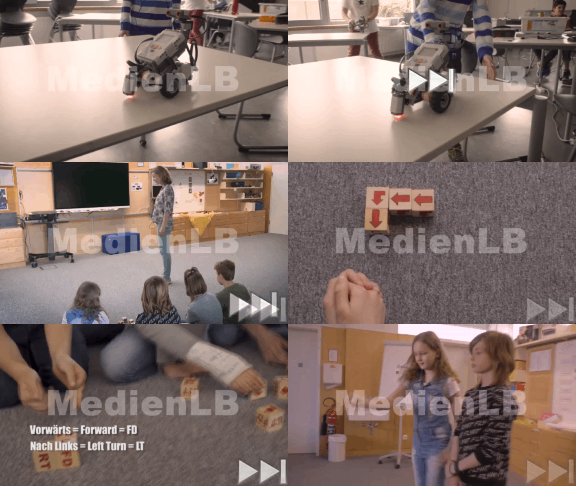
Programming
There are a lot of things in the world whose functioning and appearance were determined even before they are perceived or before they occur.
Learn more
MedienLB has been producing award-winning school films and interactive modules for the classroom since 2006.

Water
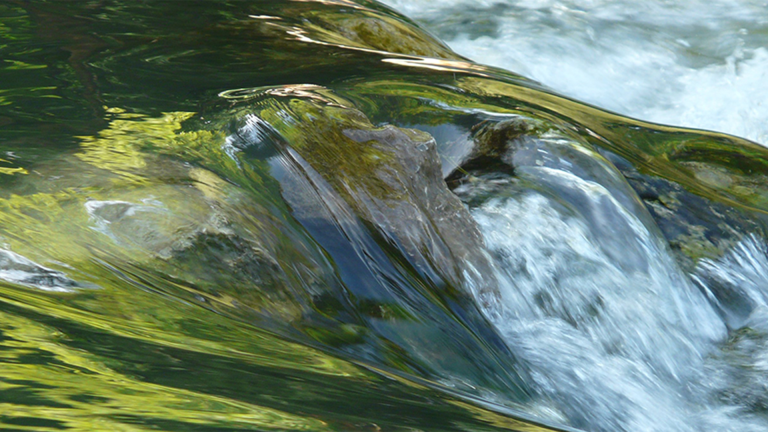
This DVD offers an insight into the correlation between life and water. In simple terms that are easily understandable to primary school pupils, the film outlines the significance of water for the lives of humans, animals and plants. The DVD covers the following aspects of the topic: Water is Everywhere (deposits and utilisation), Drinking Water (journey of the water, role of the waterworks, water consump- tion), Wastewater (water pollution, processes at a wastewater treatment plant, purification of wastewater), the Water Cycle in Nature (groundwater, evaporation, formation of clouds, rain, infiltration), States of Water (transition between the states, easy-to-perform experiments, occurrence in nature), Properties of Water (what water can do, percentage of water in animals and plants, water as nourishment). The film is divided into five menu items (chapters). Each chapter can be individually accessed and worked on.
Learn more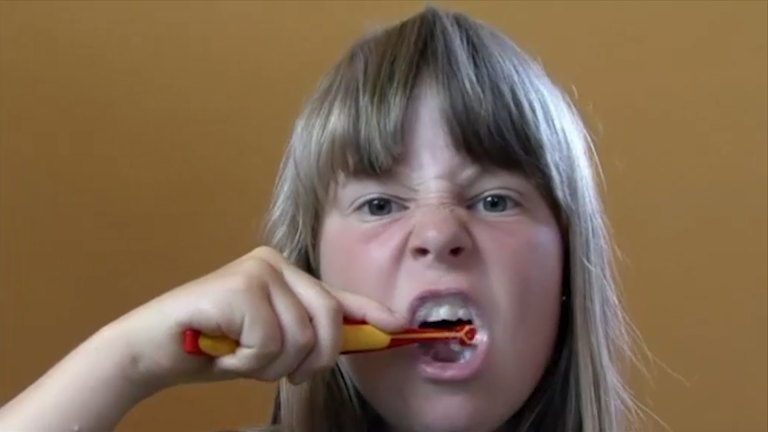
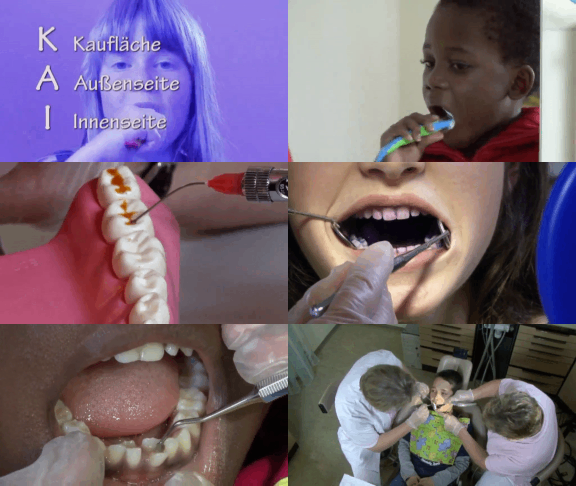
Your Teeth
This DVD demonstrates that a regular and thorough brushing of your teeth is the foremost condition for their lifelong health. At the same time, pupils learn that food that doesn‘t damage their teeth is decisive, too, in keeping them healthy. Moreover, the film provides information in simple and comprehensible terms on the structure and function of the different kinds of teeth and the necessity of seeing a dentist regularly. The DVD focuses especially on the following aspects of the topic: oral cavity (different parts, bacteria, purposes of saliva); dentition (kinds of teeth and their properties and functions, outward structure, milk teeth, teething, dentition); structure (inner structure, milk tooth as a place-holder, sugar – the enemy of your teeth, caries, food); dental care (tools for cleaning your teeth, brushing techniques); the dentist (a look at a dentist‘s surgery, dental treatment).
Learn more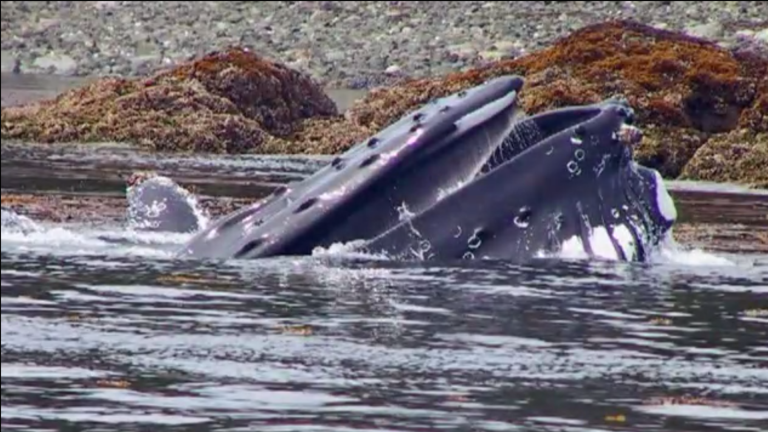

Marine Mammals
The oceans are the home of whales, which look like fish but, in fact, are mammals like we humans and breathe with their lungs. The film shows the peculiarities of whales, which are divided into two main groups: baleen whales and toothed whales. Baleen whales, among which there is also the blue whale, the biggest of all whales, feed on tiny crustaceans called krill. Toothed whales feed on fish, crabs and other marine animals. One of the best known representatives is the killer whale, which is the fastest marine mammal with a speed of up to 55 km/h. With their leaps they delight the audiences in sea life aquariums. Whether they should be kept like that is a highly controversial issue, however. Whales are also much coveted because of their fat, meat and oil. Having been ruthlessly killed, whales have amost been wiped out and today are subject to international protection. Whale watching boosts people’s interest in these formidable animals. Another threatened animal species lives in the warm and shallow waters of Central America: the sea cows, which feed exclusively on plants and surface for breathing every 2 to 5 minutes. With the extensive accompanying material this DVD is perfectly suited for use in the classroom.
Learn more