






Suche:
- # Artistry
- # Biology
- # Chemistry
- # Ecological
- # Economy
- # English
- # Foreign Language
- # Geography
- # German
- # Health
- # History
- # Informatik
- # Latin
- # Mathematics
- # Media Education
- # Music
- # Physics
- # Politics / Civics
- # Preschool
- # Primary School
- # Religion
- # Society
- # Sports
- # Technology
- # Training of Teachers
- # Vocational Education
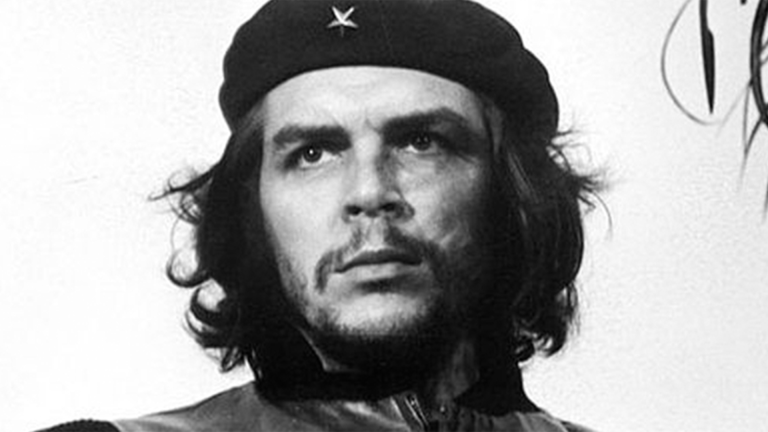

Ernesto Che Guevara
Che Guevara is the revolutionary fighter of the 20th century. His famous portrait can be seen everywhere on posters and T shirts. But who was Che Guevara? How did Ernesto Guevara de la Serna become the best-known revolutionist of contemporary history? Che is born in Rosario in Argentina as the son of a modern, educated couple. He attends high school and subsequently studies medicine.
Learn more
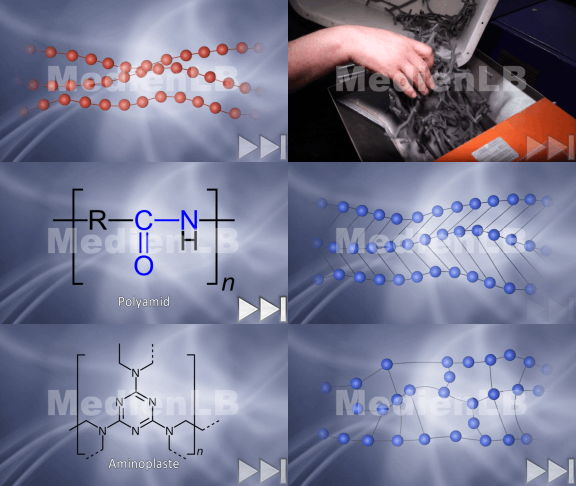
Plastic
Plastic has been around for not longer than roughly 100 years, and the synthetic material is a brilliant invention. Its production is cheap, it can take almost any possible form, it is light-weight, versatile and, above all, inexpensive.
Learn more
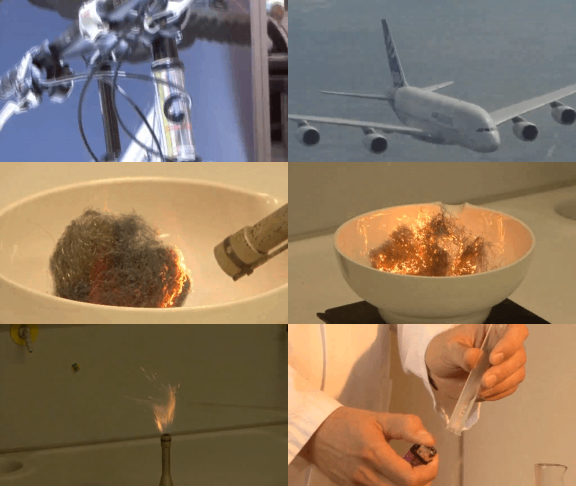
Aluminium I
In the modern world, we encounter aluminium at every turn. This is due to the particular properties of the metal. Increasingly, aluminium is about to edge iron and steel out of engineering, as aluminium allows energy-saving lightweight construction of aircraft and vehicles of all kind. Aluminium is weather-resistant, does not rust and is therefore well suited as building material for house facades, window frames or simply for all parts that are exposed to wind and weather. At the same time, aluminium has a noble-looking surface recommending it as material for interior design.
Learn more
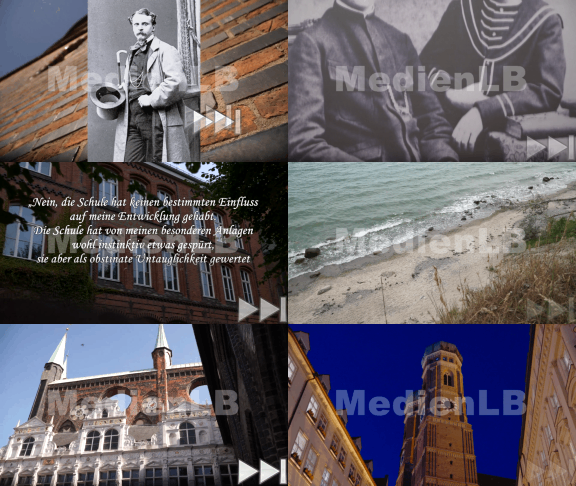
Thomas Mann
Thomas Mann ist einer der wichtigsten deutschen Schriftsteller des 20. Jahrhunderts. Der Film zeichnet die Lebensstationen des Literaturnobelpreisträgers nach und schafft Verbindungen zwischen seinem Leben und seinen wichtigsten Werken. Der Wandel vom unpolitischen Nationalisten zu einem überzeugten Demokraten und Gegner der Nationalsozialisten wird in zahlreichen Werkzitaten und Spielszenen überzeugend dargestellt.
Learn more
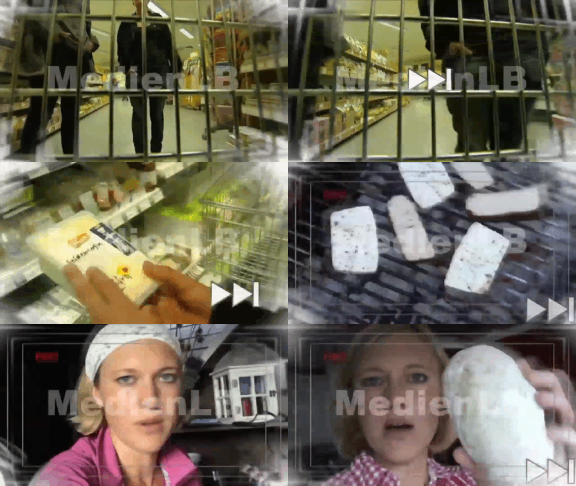
Vegane Ernährung
Familie Böhning lebt seit zwei Jahren vegan. Auch unsere Reporterin versucht, „Vegan“ in ihr Leben einzubinden. Der Film begleitet sie und Familie Böhning im Alltag, stellt Fragen und zeigt Probleme.
Learn more
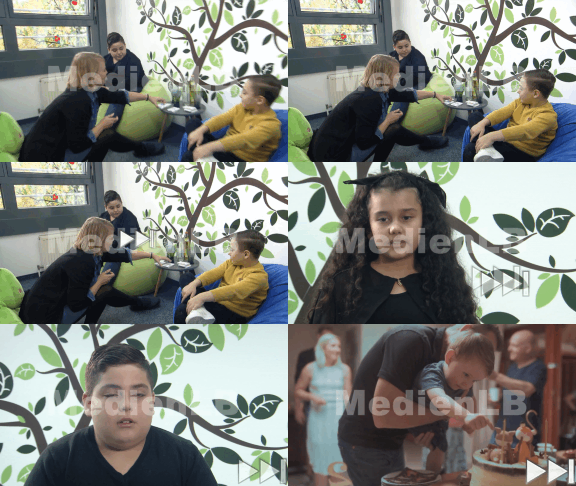
Häusliche Gewalt
Häusliche Gewalt ist ein verborgenes Problem mit einer erschreckend hohen Dunkelziffer.
Learn more
Kräuterdrogen
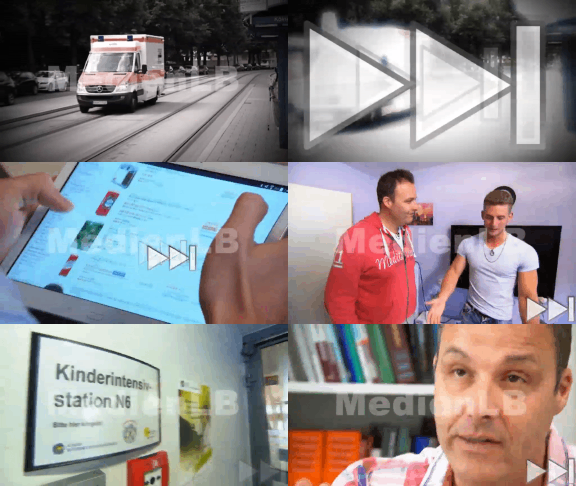
Sie bekommen minutenlange Lachflashs, haben ihre Bewegungen nicht mehr unter Kontrolle oder rennen ziellos durch die Gegend. Internetvideos zeigen, was die sogenannten Legal Highs mit Jugendlichen anstellen.
Learn more
Drogen und Komasaufen
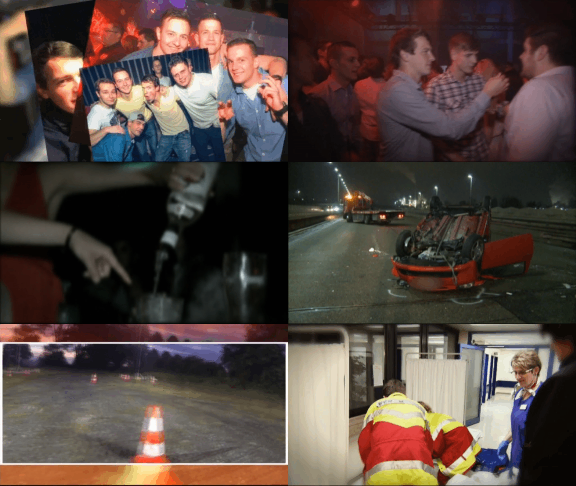
Sich die Welt schön trinken, high sein und pfeifen auf den Alltag mit all seinem Stress, Druck und der Verantwortung – was kann schöner sein? Die eigenen Grenzen kennen – gar nicht so leicht als junger Mensch. Die Gefahren legaler und illegaler Drogen sind vielfältig, deren Wirkung gerade für Jugendliche jedoch oft zu verlockend. So auch für Dennis und seine Freunde. Der Film begleitet die Clique beim nächtlichen Feiern und beobachtet, wie der Gruppenzwang einen dazu drängt, mit den anderen mitzutrinken und die eigenen Grenzen aus den Augen zu verlieren.
Learn more

Mobile Learning II
Oh, what’s that? Original soundtrack Thissen: “As our children grow up in a media world and naturally handle the media, they should also be a topic in school.“ An older child says the point is that they don’t just load down apps but create things themselves that haven’t existed so far. Hi, I’m Jana. A propeller hat. I’ll put it on. Now I’m no longer a simple rhino, but a flying rhino. Original soundtrack Thissen: “It’s exactly the great flexibility of tablets that promotes very personalised and adapted learning.” Original soundtrack Welzel: “It’s fascinating to see how the children grow with their products and how they always want to improve them.” The Westminster Abbey is a church in London for the royal family. Original soundtrack Welzel: “And?“ They think it is ok.
Learn more
MedienLB has been producing award-winning school films and interactive modules for the classroom since 2006.
Product Piracy
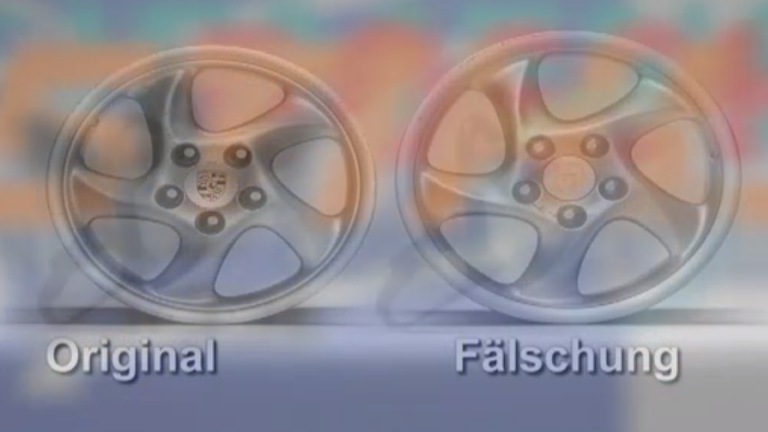
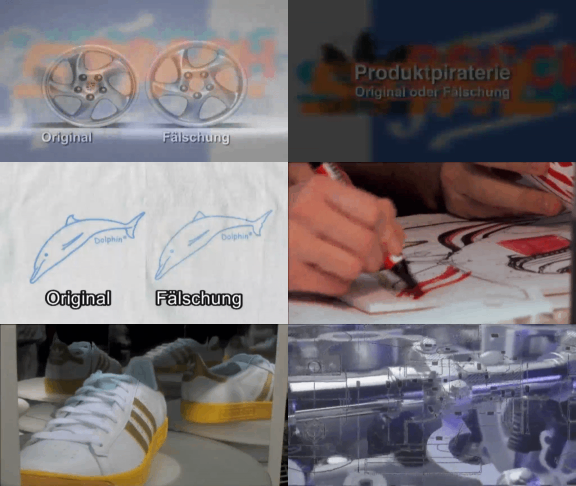
Counterfeiting takes place in almost all economic sectors – textiles, watches, car parts, machine parts, tools, accessories, software and medicines. Some counterfeits are easy to recognise, others are so well-executed that even experts have difficulty distinguishing between original and imitation. This DVD covers the development of a product from idea to manufacture. Once a product has become a trademark, product pirates appear on the scene.
Learn more

Shipping
From time immemorial people have been fascinated by the sea. With the help of wood, papyrus or animal skin our forbears began to move on water. The history of shipping is inseparably associated with the history of human civilization. It offered new ways of transport for goods, merchandise and also people. It brought cultures together.
Learn more
Musical Instruments
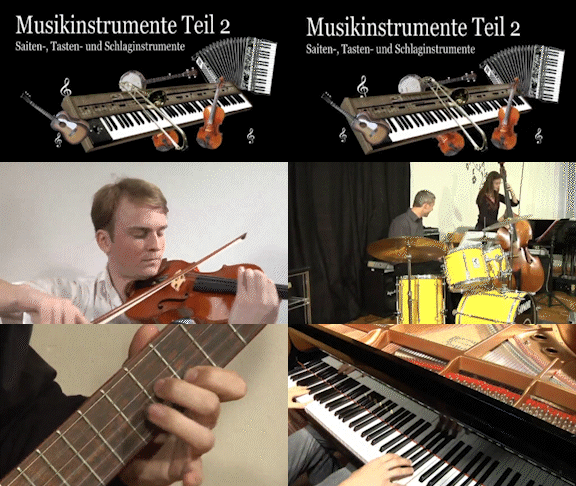
Music is an important part of our lives as well as of human culture. By listening attentively, pupils will obtain a finer perception of their musical environment and its structure, which is to support them in finding out and cultivating their own preferences in music. Part of this is also to be able to experience, describe and classify musical instruments.
Learn more