






Suche:
- # Artistry
- # Biology
- # Chemistry
- # Ecological
- # Economy
- # English
- # Foreign Language
- # Geography
- # German
- # Health
- # History
- # Informatik
- # Latin
- # Mathematics
- # Media Education
- # Music
- # Physics
- # Politics / Civics
- # Preschool
- # Primary School
- # Religion
- # Society
- # Sports
- # Technology
- # Training of Teachers
- # Vocational Education
Major EU Project
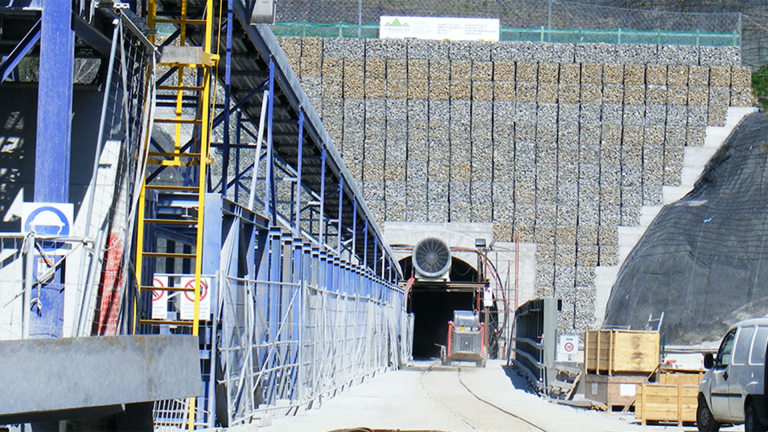
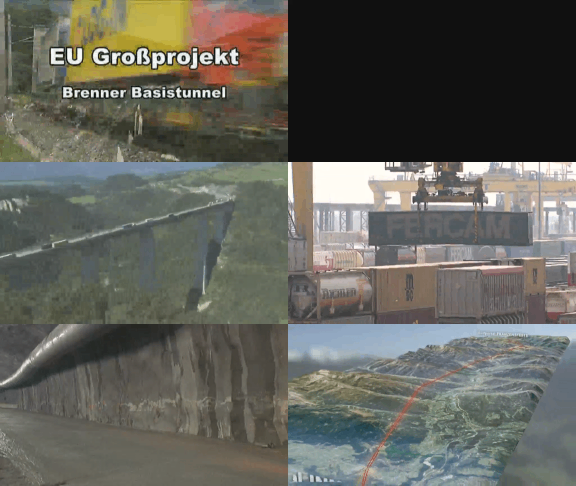
The Brenner Base Tunnel and the New Brenner Railway are a project of the Trans-European Networks – in short, TEN. The aim is to connect European countries optimally and to contribute to a more environmental-friendly and efficient organisation of traffic. The transportation of cargo is to be shifted to the railway and public passenger transportation is to become more attractive. The TEN Axis No. 1 runs from Berlin to Palermo.
Learn more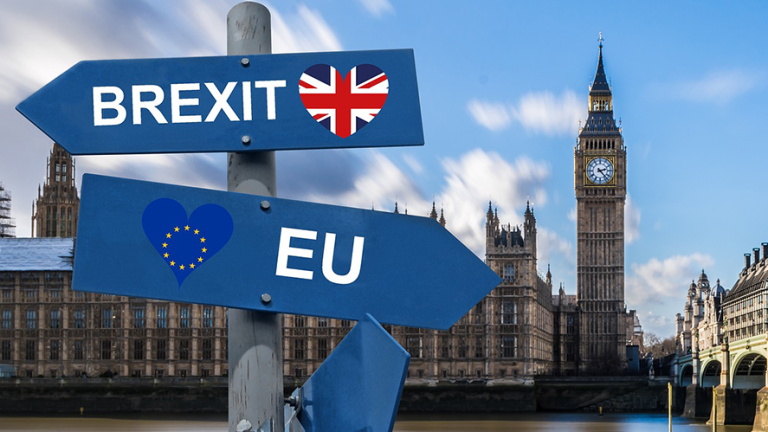
Brexit
On 24 June 2016, a narrow majority of eligible voters in the UK voted to leave the EU, the so-called Brexit.
Learn more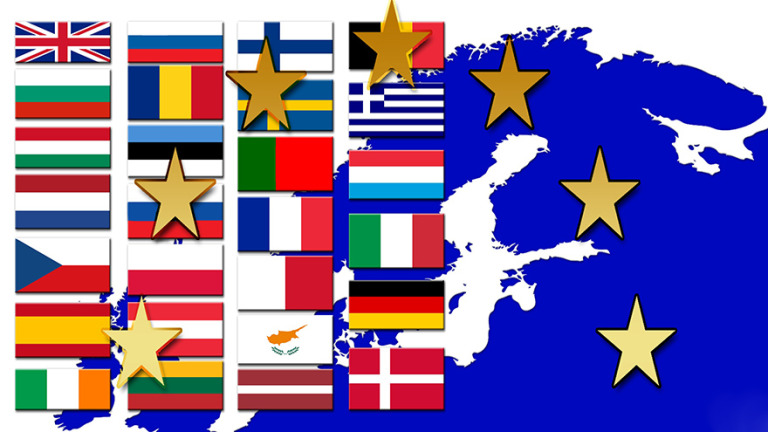
Europe
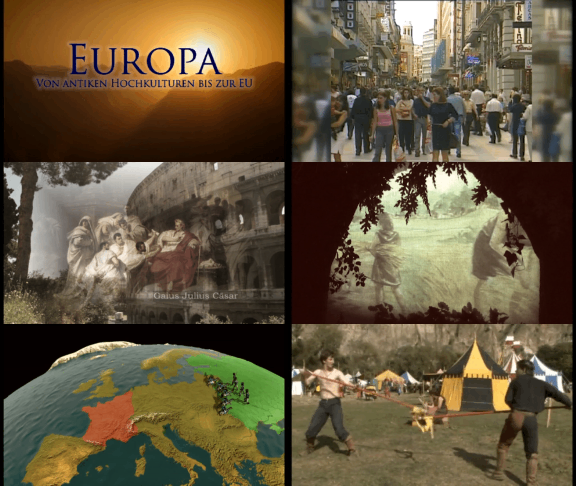
According to many scientists, the beginnings of Europe go back to antiquity, and there specifically to the freedom and democracy of the Greeks. Others consider the foundations laid as late as in the Middle Ages. But the settlement of the area we call Europe today began far earlier. The key periods of our European history are to explain how Europe became what it is today.
Learn more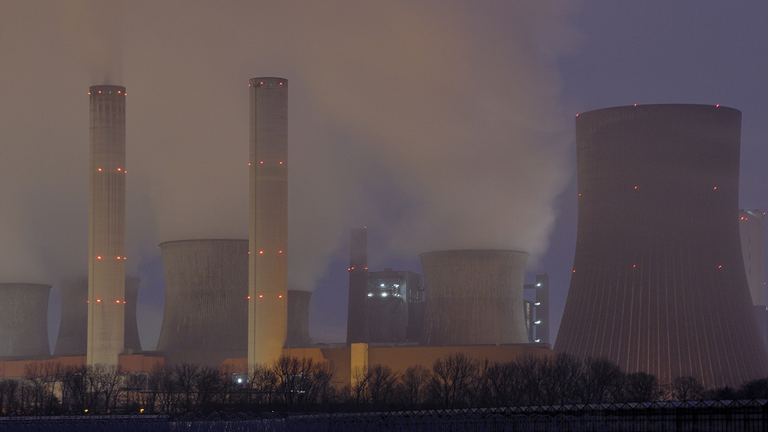
Electricity
How is the electricity generated with which we power our appliances in everyday life?
Learn more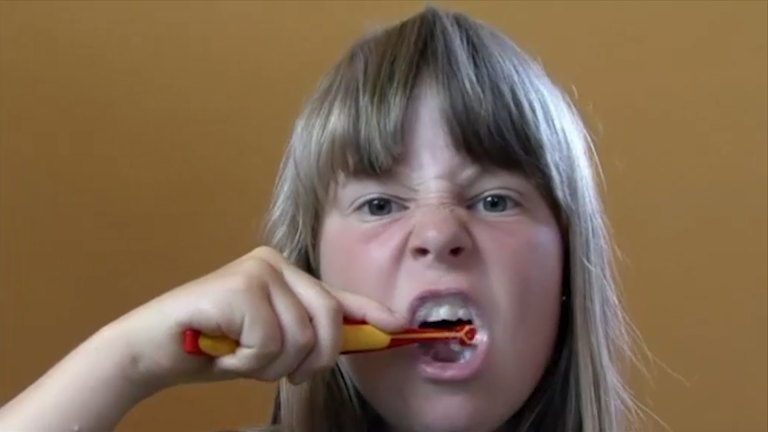
Your Teeth
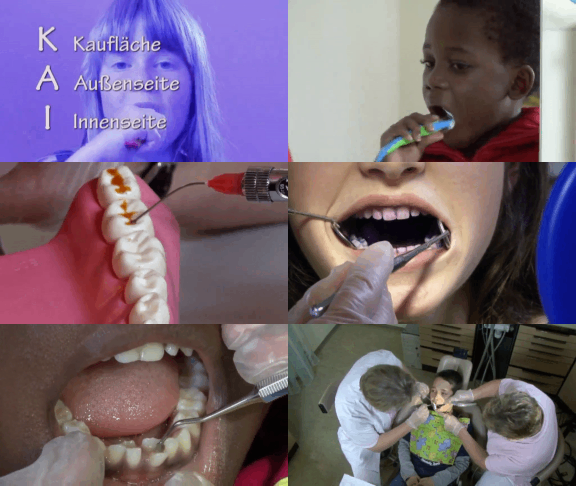
This DVD demonstrates that a regular and thorough brushing of your teeth is the foremost condition for their lifelong health. At the same time, pupils learn that food that doesn‘t damage their teeth is decisive, too, in keeping them healthy. Moreover, the film provides information in simple and comprehensible terms on the structure and function of the different kinds of teeth and the necessity of seeing a dentist regularly. The DVD focuses especially on the following aspects of the topic: oral cavity (different parts, bacteria, purposes of saliva); dentition (kinds of teeth and their properties and functions, outward structure, milk teeth, teething, dentition); structure (inner structure, milk tooth as a place-holder, sugar – the enemy of your teeth, caries, food); dental care (tools for cleaning your teeth, brushing techniques); the dentist (a look at a dentist‘s surgery, dental treatment).
Learn more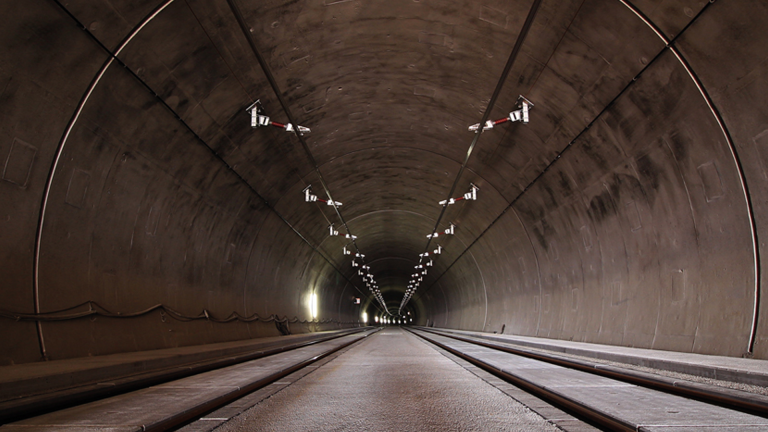
Höhensatz des Euklid
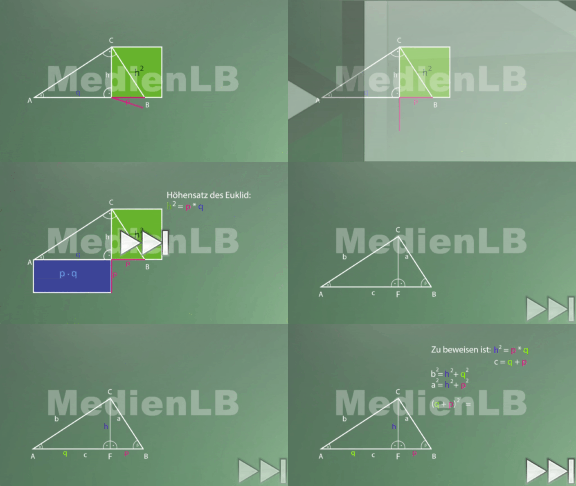
Der Film stellt in zahlreichen Animationen einen wesentlichen Beitrag zur pythagoreischen Geometrie vor: den Höhensatz des Euklid.
Learn more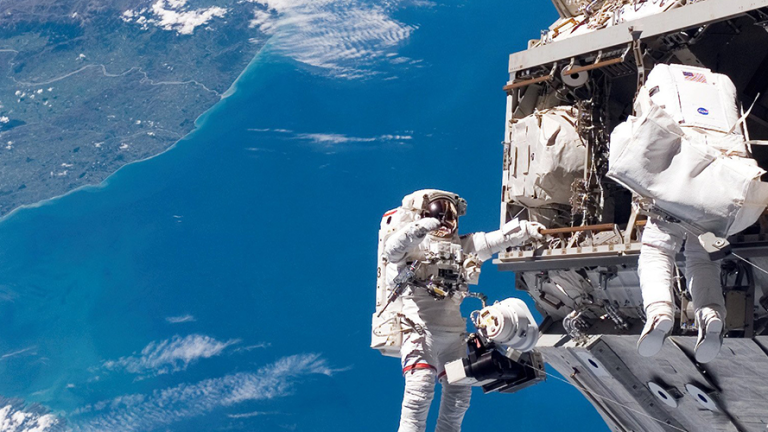
Gravity
Gravity is the force that pulls something to the ground. It ensures that everything falls downwards. Like every force, it has a direction, namely towards the centre of the celestial body. The film vividly shows the development of the law of gravity from Isaac Newton through the further development by Albert Einstein, who described that gravity not only causes bodies to attract each other, but also causes space to curve around a body. Space and time are no longer absolute, fixed quantities, but changeable.
Learn more

Freestyle-Fußball
Freestyle Fußball ist eine Variante des Fußballs, bei der es darum geht, den Ball mit allen Körperteilen außer den Händen möglichst lange und kunstvoll in der Luft zu halten. Die Tricks lassen sich alleine oder zu zweit durchführen.
Learn more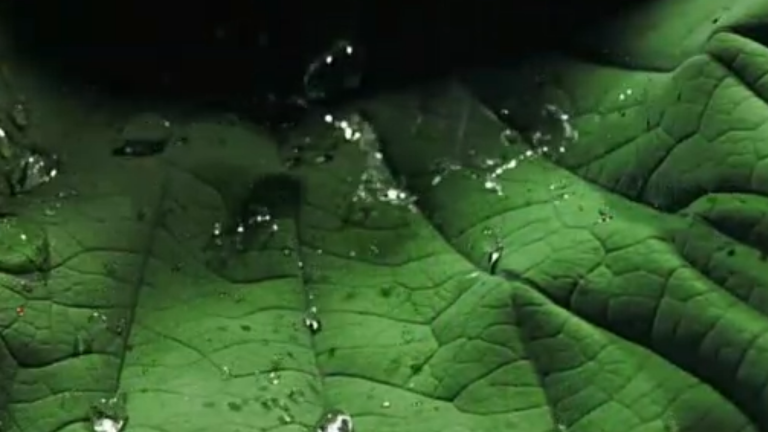
Bionics
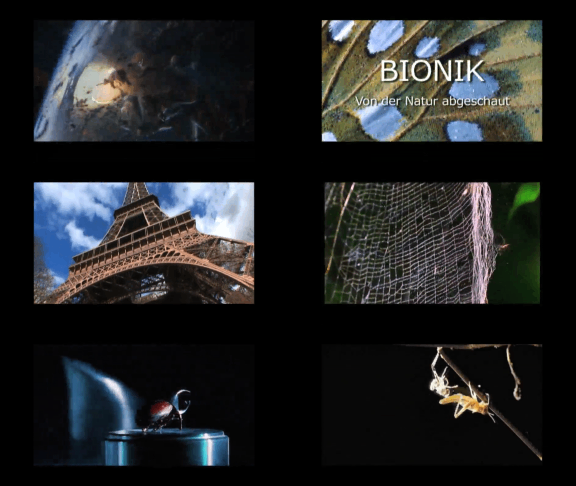
Humanity’s achievements in engineering have always been admired. This applies to antiquity’s Seven Wonders of the World as well as to the architectural masterpieces of modern times, such as the Eiffel Tower. The ideas of architects, physicians, mathematicians, chemists, engineers and technicians often have their origins in nature. Nature offers a huge reservoir of materials, which have proven their worth by permanent adaptation over millions of years. However, scientists do not just try to copy nature but strive to understand its principles and constructions and make them technically applicable in a modified way. Biology and technology have merged to the scientific discipline of BIONICS. Why can birds and insects fly? How do creatures live in the water without getting wet? Why is the blue morpho butterfly bright blue without the help of a colorant? Why is the lotus leaf always clean? Which building materials are there in nature? These and many more questions are answered in this DVD! Furthermore, the film gives a detailed illustration of how science implements and reconstructs nature’s ideas and makes them usable for us.
Learn more
MedienLB has been producing award-winning school films and interactive modules for the classroom since 2006.

Preußen II
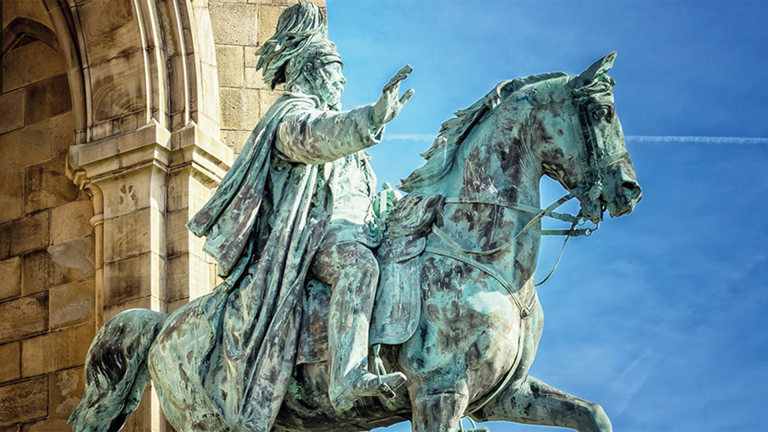
Dieser zweite Teil unserer Filmreihe über Preußen berichtet über die Politik des letzten preußischen Königs und späteren deutschen Kaisers Wilhelm I. Vom Aufstieg zum Deutschen Kaiserreich bis hin zu Preußens Untergang. Die Auflösung Preußens nach Ende des 2. Weltkrieges setzte einen Schlusspunkt unter eine Jahrhunderte alte wechselvolle Geschichte. Der Name Preußen ist untrennbar verbunden mit Aufklärung und Toleranz, verkörpert etwa in Friedrich dem Großen, verbunden aber auch mit Militarismus, Maßlosigkeit und Selbstüberschätzung Wilhelms II. Das Nachdenken über Preußen stand in den letzten Jahrzehnten im Schatten der hitzigen Debatten über die deutsche Geschichte.
Learn more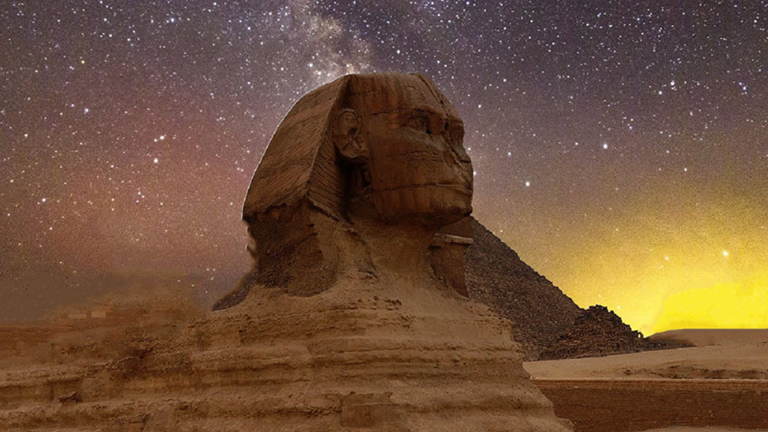
Egypt
Roughly from 3100 to 322 BC, one of the greatest and most powerful cultures of antiquity flourished in the Nile Valley.
Learn more
Rulers, States, Regimes
About 150 years lie between the creation of these pictures: on the one hand, the absolute ruler of France Louis XIV, who reigned from 1643 to 1715 and on the other hand, George Danton and Maximilien Robespierre, two distinguished representatives of the French Revolution after 1789, who decided the fate of France. What had happened that the leaders of their country had themselves represented in such different ways? Here the radiant, glorious prince, clothed in precious robes, in front of a legendary background – there the plainly dressed men at their desks with pen and ink as attributes of the educated citizen.
Learn more