






Suche:
- # Artistry
- # Biology
- # Chemistry
- # Ecological
- # Economy
- # English
- # Foreign Language
- # Geography
- # German
- # Health
- # History
- # Informatik
- # Latin
- # Mathematics
- # Media Education
- # Music
- # Physics
- # Politics / Civics
- # Preschool
- # Primary School
- # Religion
- # Society
- # Sports
- # Technology
- # Training of Teachers
- # Vocational Education
Wadden Sea
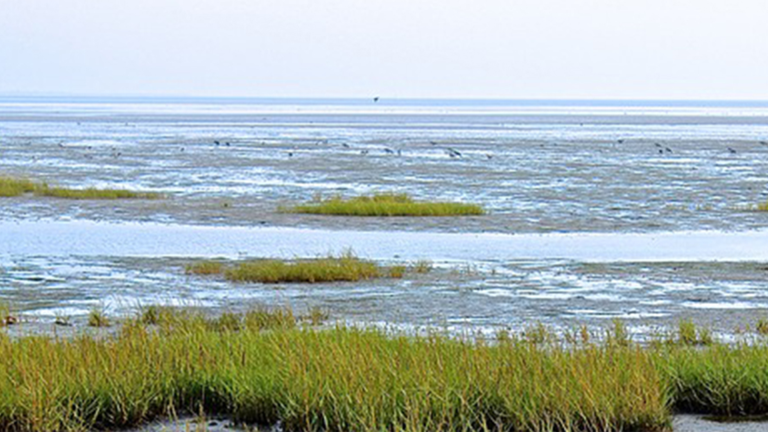
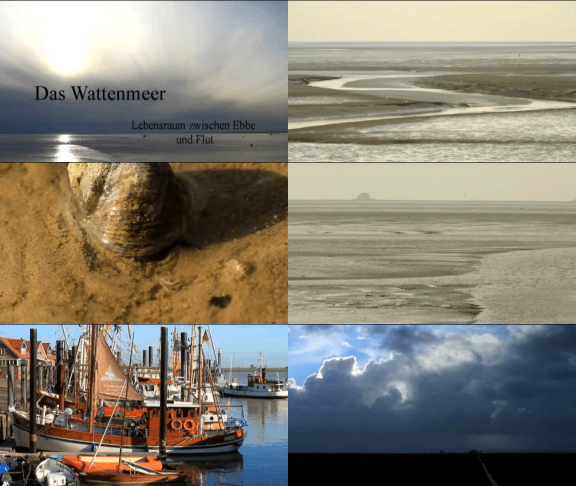
Wadden Seas are parts of seas or landscapes on the coast respectively. Characteristic of these landscapes is that Wadden Seas are particularly exposed to the tides. There are many Wadden Seas in the temperate zones all over the world. The sea accessible by wading is usually flooded twice a day during high tide. The areas drying out at low tide are called mudflats. The habitat is susceptible to pollutions, in particular to those caused by man. We deal with the natural landscape between the Dutch Den Helder and the Ho Bay in Denmark that covers 10,000 square kilometres in total. The Wadden Sea along the North Sea: National Park, UNESCO World Heritage natural site and the largest contiguous area of mudflats in the world. The North Sea coast is wilderness on the one hand, work of man on the other hand.
Learn more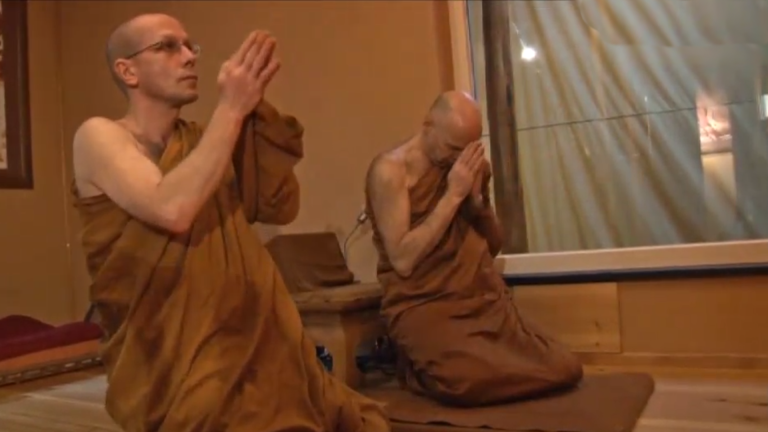
Prayer
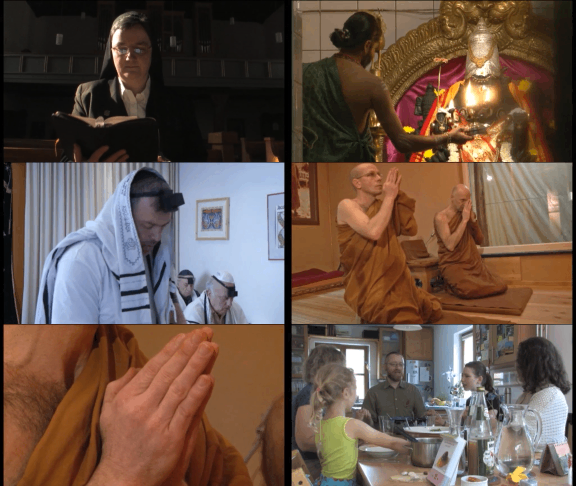
The prayer, a fundamental religious act, which may be formulated in the form of a request, a thanksgiving or as a dialogue. Whether in Islam, Christianity, Buddhism, Hinduism or Judaism – in all five world religions, the prayer is a communion with their God or a Higher Power. Thanking God, asking him for something, recapitulating the day, finding peace – all that can be contained in a prayer. We pray because we are looking for answers, consolation and strength and because in times of stress we seek peace and reflection. Some people also pray out of tradition or out of a sense of duty to their God. Some may also wish to have their prayers answered. There are studies investigating whether what we ask for in prayer actually comes true. The results, however, are not unequivocal. But to the one who prays this is no reason to stop. For the benefit of prayer cannot be measured by studies. For many the happiness of praying consists less in having their requests answered than in their contact with God. Together with the extensive accompanying material the DVD is perfectly suited for use in the classroom. Target group: primary school, special needs school, secondary school
Learn more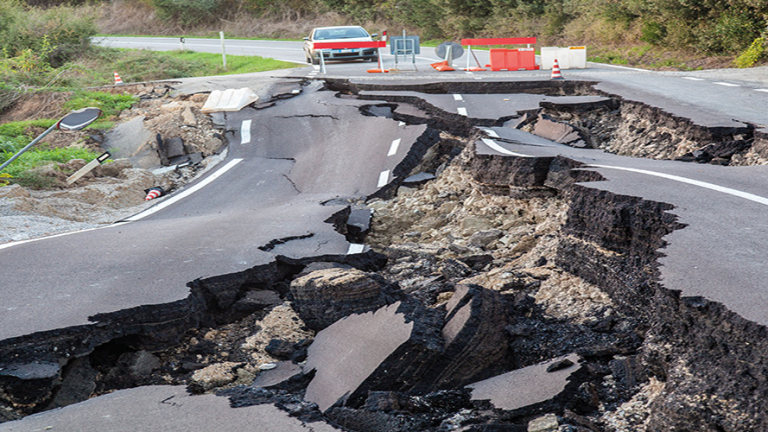
Earthquakes
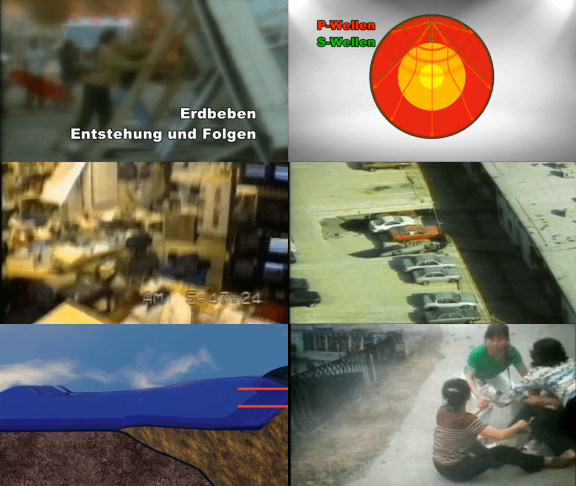
For millennia, people have been afraid of earthquakes. A force of nature that regularly devastates whole regions and claims thousands of lives. One reason for the fear of earthquakes may be that so far people have not succeeded in predicting these natural phenomena. Therefore, earthquakes still hit people unprepared in most regions of the world.
Learn more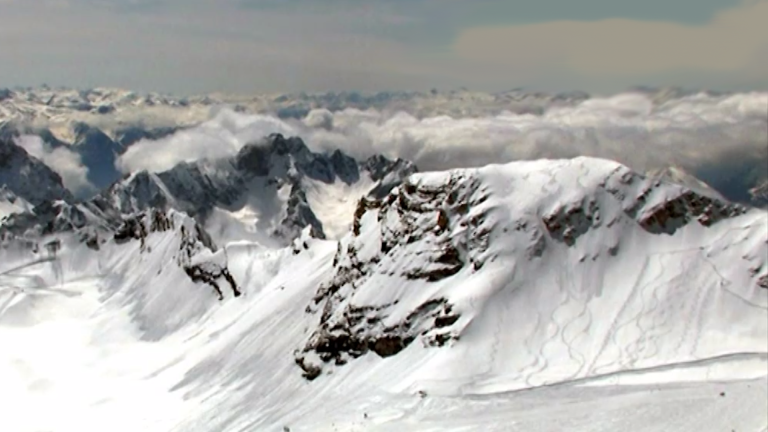
Alpine Glaciers
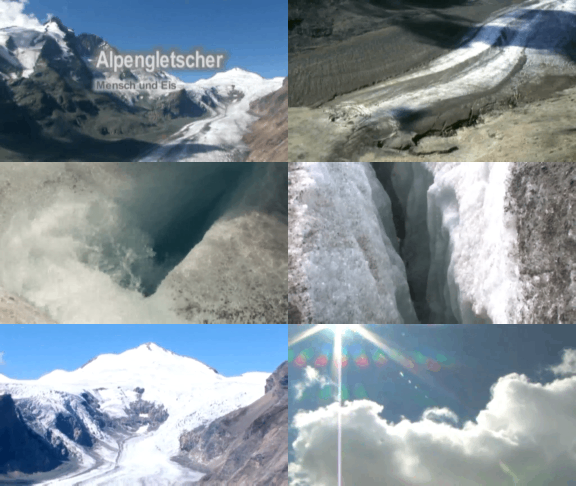
Melting alpine glaciers are the most conspicuous indication of global warming, and in the wake of the climate discussion, the public has become increasingly aware of their fate. Besides the structure and function of the glaciers, the film describes their role in the ecosystem and for the economically active human. In this respect, primarily the role of the glaciers for the water balance of the Alps and neighbouring regions and above all, their effects on summer and skiing tourism as well as the energy generation from water power are of major importance. The dwindling of the glaciers is illustrated with the help of historical comparisons. The Pasterze in Austria – the largest glacier of the eastern Alps – and the Bavarian Zugspitze are given as detailed examples. The film addresses younger pupils in the context of the topic of the Alps as well as older secondary school students in the context of climate issues.
Learn more
Sicherheitspolitik
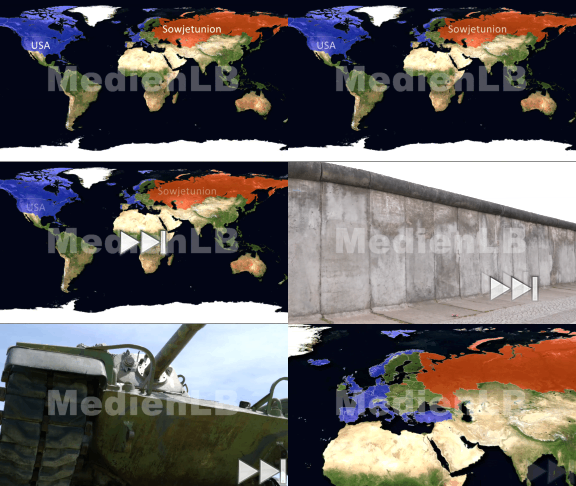
Nach Ende des Zweiten Weltkriegs wuchsen rasch die Spannungen zwischen den beiden Weltmächten USA und UdSSR, die zur Schaffung der beiden Militärbündnisse NATO und Warschauer Pakt führten. Nach Ende des Kalten Krieges und der Auflösung des Warschauer Paktes veränderte sich die weltweite Sicherheitsarchitektur. Wie wichtig die NATO noch heute ist, zeigt die Bedrohung, die für Westeuropa nach dem russischen Einmarsch in der Ukraine entstanden ist.
Learn more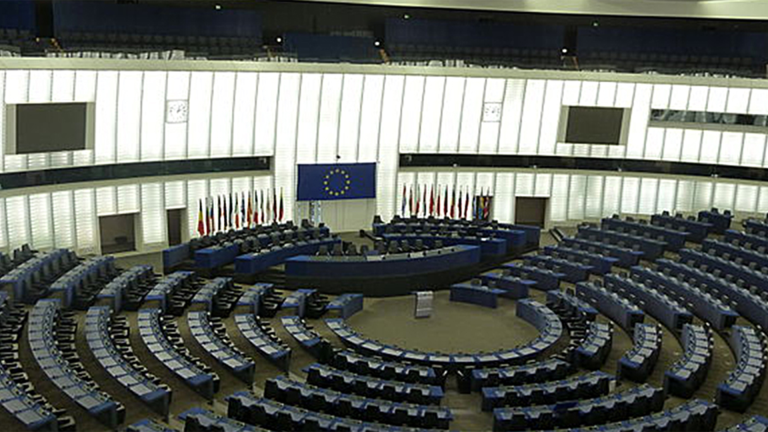
The European Parliament
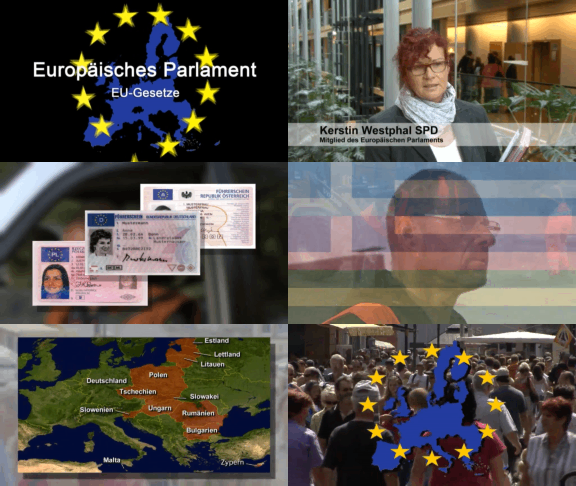
The European Union is a union consisting of 27 European states. Currently its population comprises about 500 million inhabitants. 17 of these states have a common currency. Its aim is a pan-European area of freedom, security and justice. The European Parliament is elected every five years by the EU citizens and is thus the only directly elected body. The European Parliament shares its legislative function with the Council of the European Union, wherein the governments of the individual member states are represented, and the European Commission, which represents the interests of the EU as a whole. These three institutions together develop the political strategies and legislative provisions which are applied throughout the EU. The European Parliament ensures uniform pan-European regulations. Citizens profit from them for example for data protection, for mobile tariffs, for working and living in Europe and much more besides! Together with the extensive accompanying material the DVD is ideally suited for use in the classroom.
Learn more

The Otto Engine
This DVD offers an insight into the historical birth of the Otto engine and also describes its latest version – the hybrid engine. In addition, other engines of the future are covered. The life and achievements of Nikolaus August Otto are dis- cussed, with all his successes and failures, from his first en- gineering attempts when reconstructing the Lenoir engine to the presentation of the “atmospheric gas engine” on the Paris World Fair through to his cooperation with Gottlieb Daimler and Wilhelm Maybach. The mode of operation of the Otto engine is explained to the pupils in detail, also with the help of a variety of animations and diagrams. The DVD goes into the four strokes of intake, compression, power and exhaust as well as the Otto engine as energy converter. Crude oil is one of our most important sources of energy. Besides outlining the evolution and processing of crude oil into fuel, this DVD puts emphasis on the increasing shortage of global crude oil resources. Alternative propulsion sources like hybrid engines as well as hydrogen-fuelled or gas-fuelled vehicles offer an environmental-friendly vision for the automobile’s future in times of global climate change.
Learn more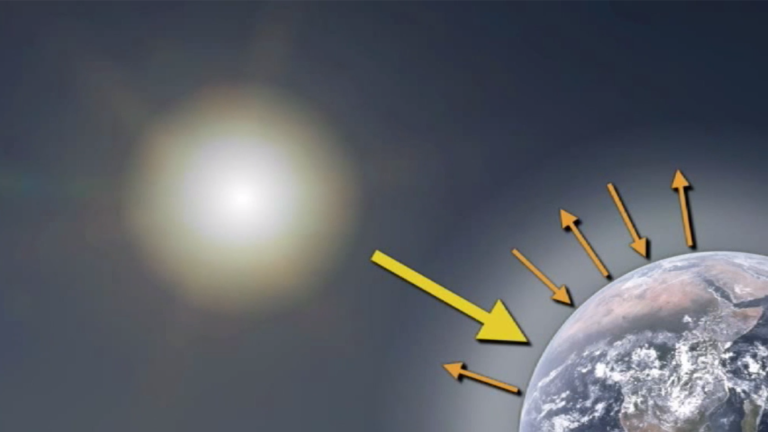
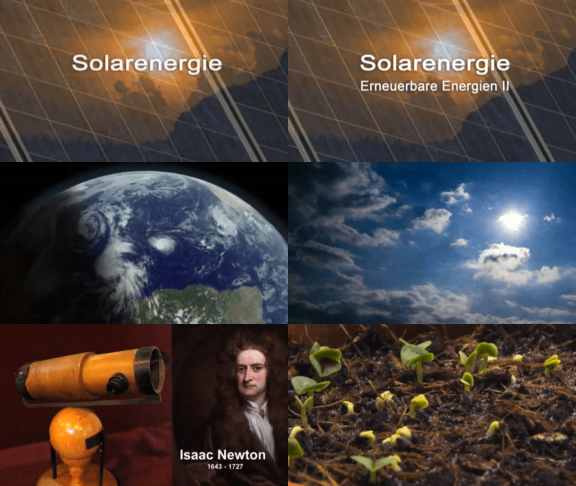
Solar Energy
80 % of our current energy needs are covered by fossil fuels (coal, oil, gas). Their supply may soon lead to severe problems as worldwide stocks will be exhausted one day. That is why the future belongs to renewable energy from sun, wind, water, and biomass. The Sun as an inexhaustible energy source is estimated to be available to us for another 4.5 billion years to come. It supplies us with “clean energy“ that is available everywhere on earth and that exceeds worldwide energy needs many times over. The film presents the pupils with the long history of solar energy use. The functioning of solar collectors, solar cells and solar power plants is explained, the current operating ranges of solar technology are dealt with and an outlook for the future is provided. With the act on the phasing-out of nuclear energy Germany has taken over a pioneering role worldwide in the field of renewable energies. Together with the extensive accompanying material the DVD is ideally suited for use in the classroom.
Learn more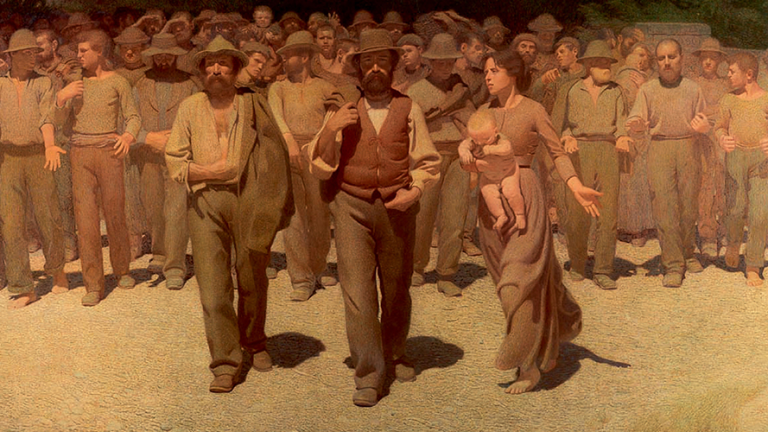
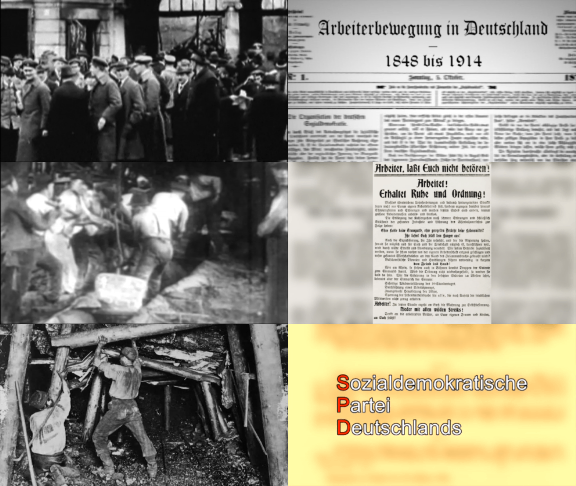
Labour Movement in Germany
In 1815, after the end of the Napoleonic wars, Europe reinvented itself. The Congress of Vienna created new states and changed a great number of borders. After the devastating war years, now a deceptive peace was reigning and people could focus on normal life again.
Learn more
MedienLB has been producing award-winning school films and interactive modules for the classroom since 2006.
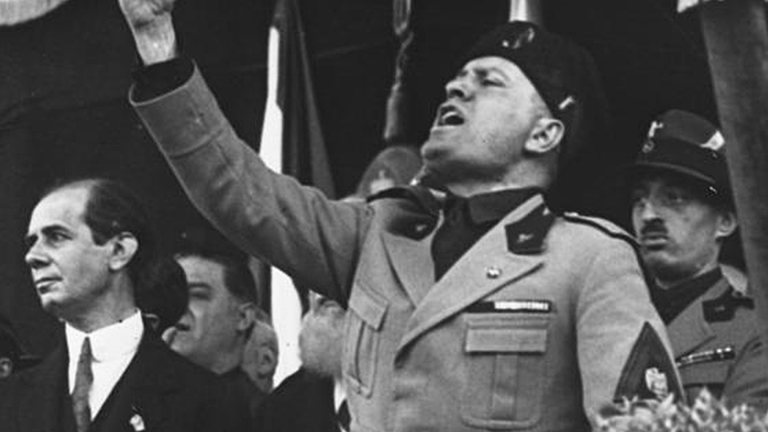
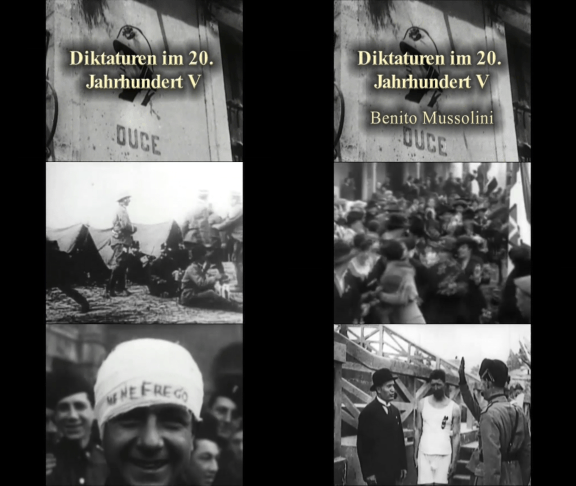
Dictatorships in the 20th Century V
Benito Mussolini is born in1883 in the Romagna, a region of farmers and labourers, and grows up in an Italy where the economic crisis determines people’s lives. This leads to mass emigrations in the south and also in the better developed areas of the north, the situation escalates. In 1911 unemployment reaches a record high throughout the entire country.
Learn more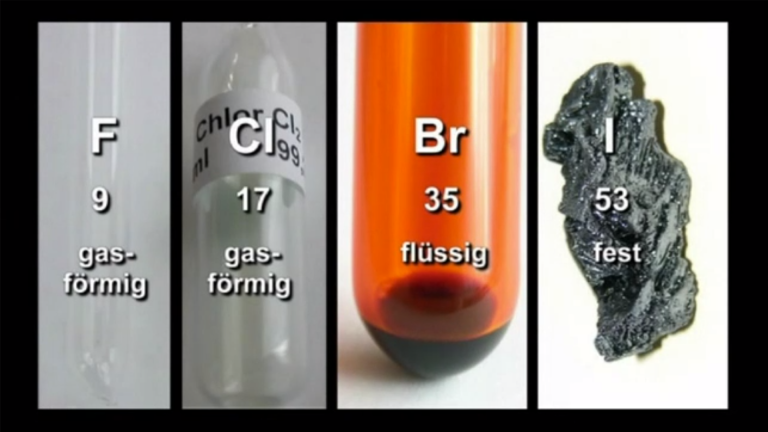
Halogens
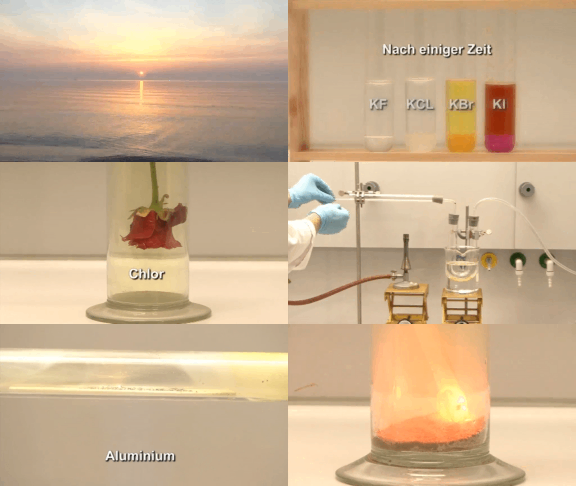
The compounds of halogens are - with the exception of astatine - widespread, can be encountered in nature and are versatile substances. This fact is taken up on this DVD in order to teach the students the chemistry of the halogens by illustrating their special qualities and explaining the correlation of their structure with their chemical properties. In the first part, an overview of the element group of halogens lays emphasis on the common as well as on the distinguishing characteristics of fluorine, chlorine, bromine and iodine. In a second part, the specific properties of fluorine and chlorine are presented. This topic is linked to the students‘ everyday experience (fluorine as a protection against caries, chlorine as a disinfectant, etc.) on the one hand. On the other hand, the DVD presents carefully selected experiments. As a rule, they are of a kind that can only be realized with difficulty, or high expenditure in the chemistry classroom. With the help of these experiments, students are introduced to the chemistry of the halogens in a way that enables them to draw conclusions on the basis of their observations.
Learn more
Unterwegs
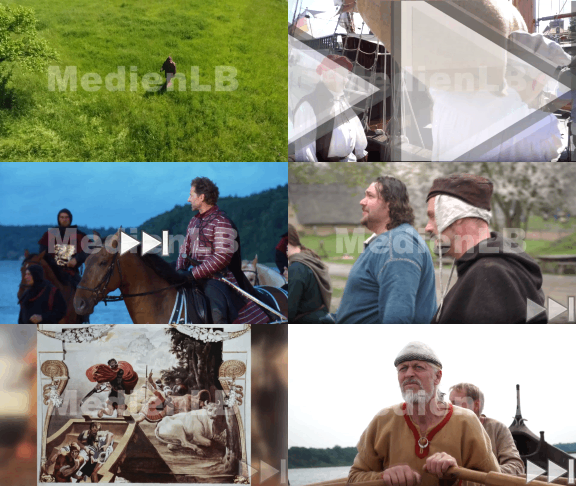
Unterwegs sein, auf Reisen sein ist eine Urerfahrung des Menschen. Ob auf einem Feldzug, einer Bildungsreise oder einer Erholungsreise – die Urerfahrung des Reisens findet ihren Niederschlag in der Literatur.
Learn more