






Suche:
- # Artistry
- # Biology
- # Chemistry
- # Ecological
- # Economy
- # English
- # Foreign Language
- # Geography
- # German
- # Health
- # History
- # Informatik
- # Latin
- # Mathematics
- # Media Education
- # Music
- # Physics
- # Politics / Civics
- # Preschool
- # Primary School
- # Religion
- # Society
- # Sports
- # Technology
- # Training of Teachers
- # Vocational Education
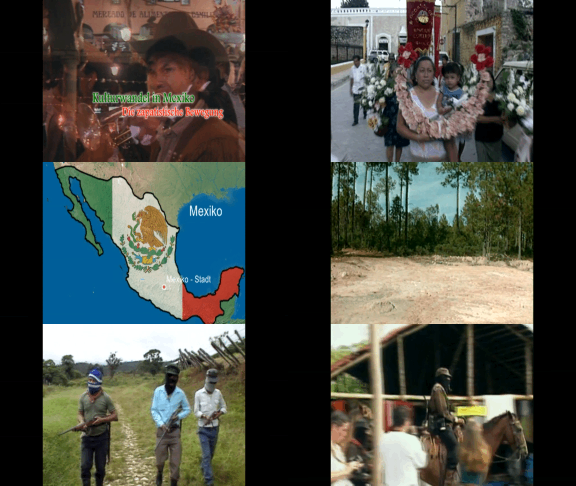
Cultural Change in Mexico
31 federal states and the capital district of Mexico City form the United Mexican States.
Learn more

Man and Climate
The first chapter of this DVD deals with the population development over the past 3000 years and the associated dramatic effects on nature. The massive deforestation and the fast-increasing water consumption are analysed as two examples for the consumption of our resources. The dependency of the regeneration of our water supplies on climatic conditions clearly illustrates the close link between humans and the climate. But what exactly is the climate and how is it determined? This question is discussed in detail in the second chapter. A look back into the past helps us in addressing current questions. The warm High Middle Ages and the following Little Ice Age as well as plant remains, e.g. the annual rings of trees, or animal finds such as dinosaur skeletons allow us to draw conclusions regarding climatic conditions. Will we meet the same fate as the dinosaurs? In the fourth chapter, we visit the climate data processing centre at the MPI. Significant climate changes are predicted in model calculations for the next 100 years. This leads to further important questions: Do we need to act? If yes, when and on what scale? Especially with this last chapter, the pupils are encouraged to recognise their own responsibility in order to shape the future of all of us.
Learn more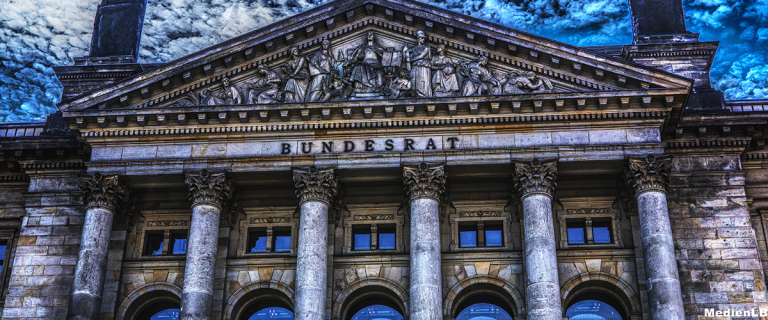

Bundestag and Bundesrat
“I think politicians should by all means be responsible for the representation of interests, they should, so to speak, represent the people and make possible what the people wants in order to provide the greatest possible wealth and satisfaction in society. That should be their goal.“
Learn more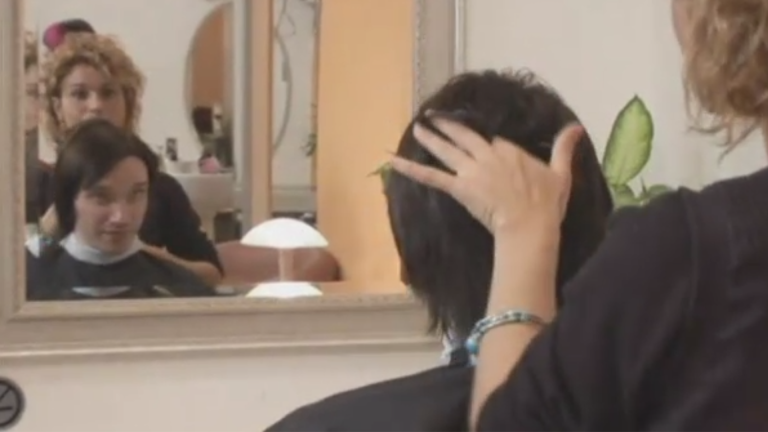
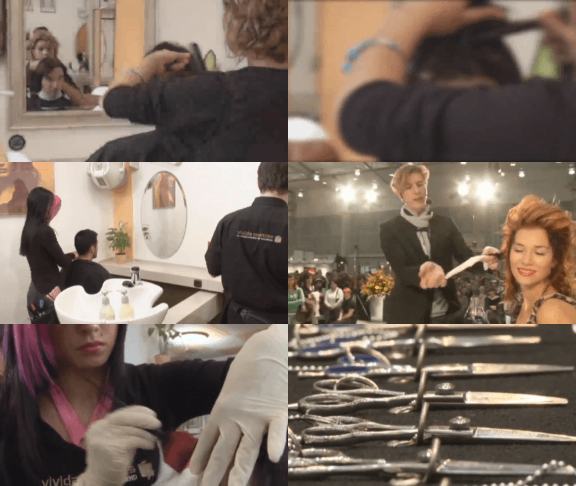
Hairdresser
Today regular appointments with the hairdresser are a matter of course for our individual styling. The aim is no longer to simply cut the hair so that it looks well-groomed but the hairdo is an expression of personality and thus intended to contribute to the overall look of a person. A good hairdresser knows about trends and lifestyle and what’s fashionable, and is able to give competent advice on how to complement the customers’ style. The job of a hairdresser is a positive challenge for everyone interested in fashion, lifestyle and creative work with other people. Apart from the technical knowledge and practical workmanship, primarily giving advice to customers as well as an understanding of the customers’ needs are key qualifications for this crisis-proof job. A traineeship is a possibility of getting familiar with a hairdresser’s work environment. An important aspect is that this career choice offers good prospects for young people on the job market, thus building a bridge to an economically secure future.
Learn more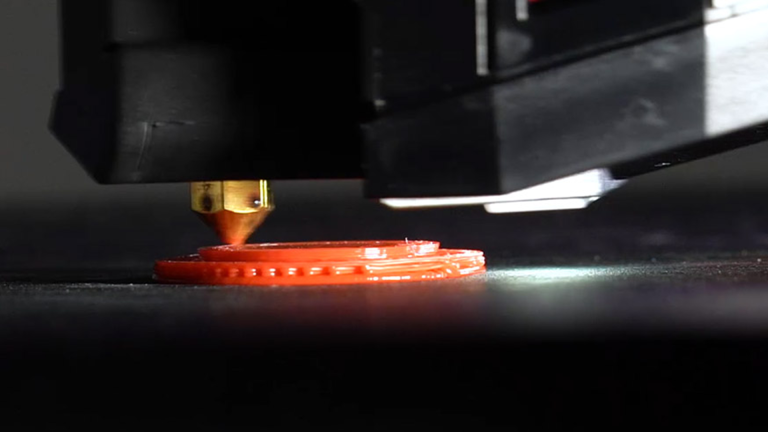
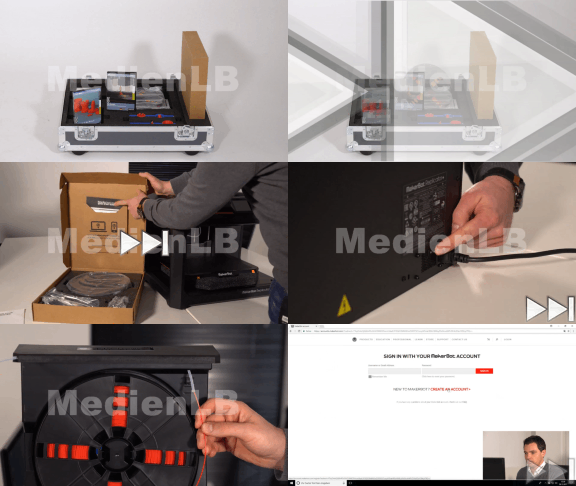
3D-Design & Druck in der Schule
Anhand zahlreicher praxisnaher Beispiele zeigt der Film, wie man mit dem 3D-Drucker den Unterricht bereichern kann.
Learn more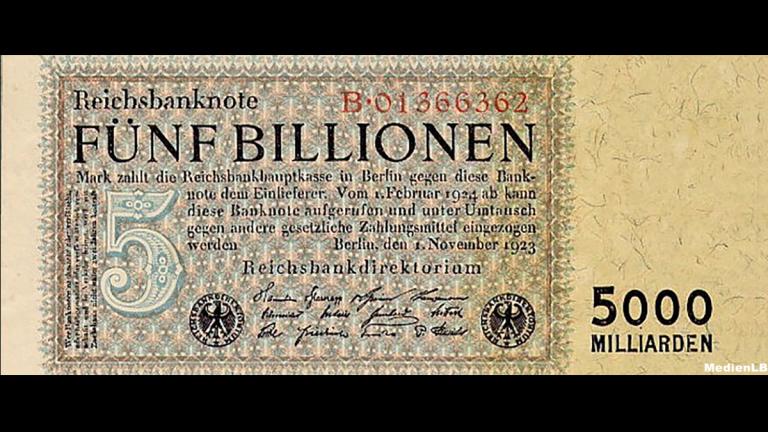
The Weimar Republic
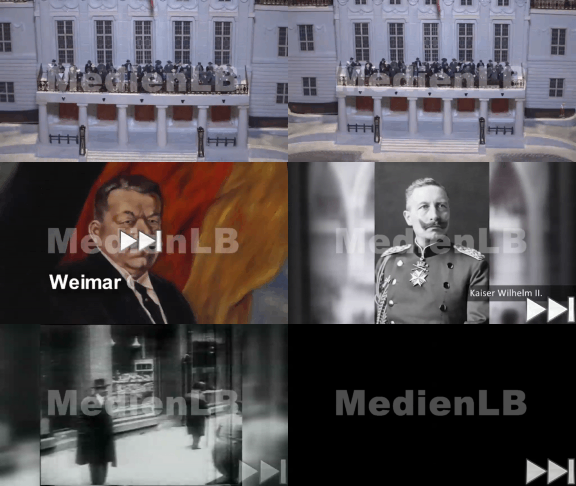
In the heart of the federal state of Thuringia, there is the small town of Weimar, in which the cultural histories of Germany and Europe are blended together in a confined space.
Learn more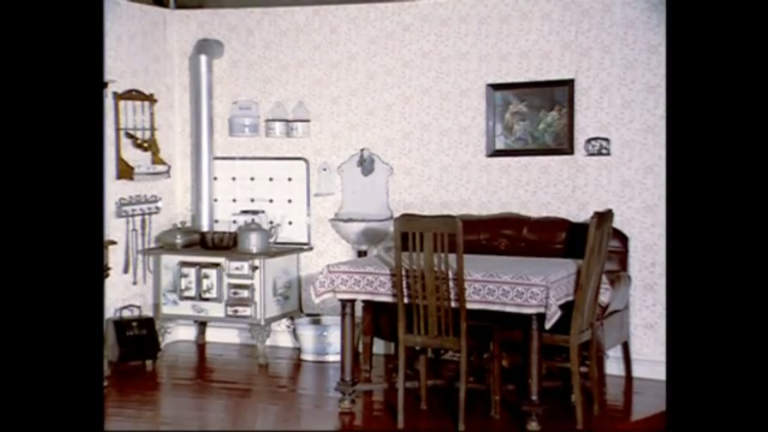
Industrialization
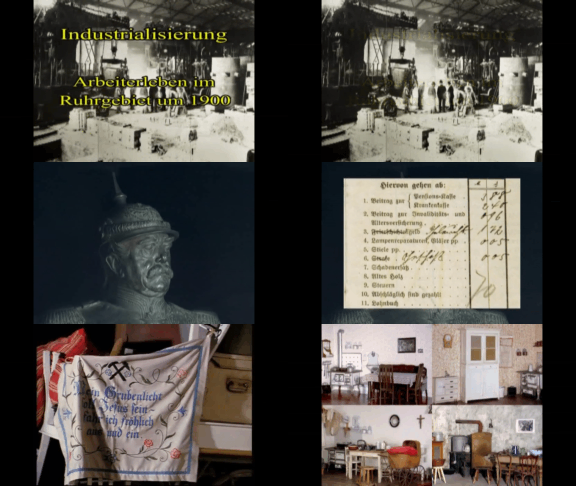
This DVD treats the different working and living conditions of people in the Ruhr valley around the year 1900 and refers to the thesis of the sociologist Li Fischer-Eckert. She conducted interviews with working class women on their living conditions in the workers’ housing estates in 1911 and 1912. Based on her findings, she divided the workers in four classes: The first one has a “cosy home without luxury or deprivations”, those in the second class live “on the verge of deprivation”, the poorer workers “are defeated by unfavourable conditions” and those in the fourth class live in “complete neglect”. With the kitchen-cum-living-rooms set up in the Ruhrland Museum, which are shown and described in the film in an impressive way, a direct insight is offered into the workers’ lives. Furthermore, work in heavy industry and mining, the strict reign of the employers as well as the changes in social policy and the workers’ fight for their rights are discussed.
Learn more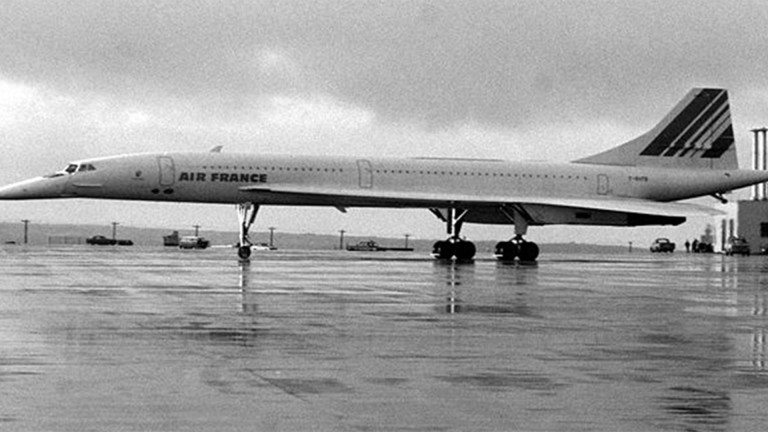
Great Disasters II
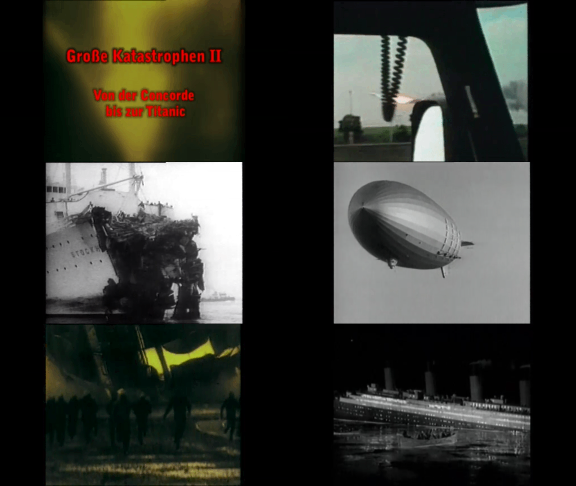
A disaster occurs when the balance inherent in a particular phenomenon is disturbed. This may happen either because a new powerful force comes into play that triggers the disaster or because a small – even tiny – causal factor interferes in a situation with an unstable equilibrium and manages to achieve an enormous effect.
Learn more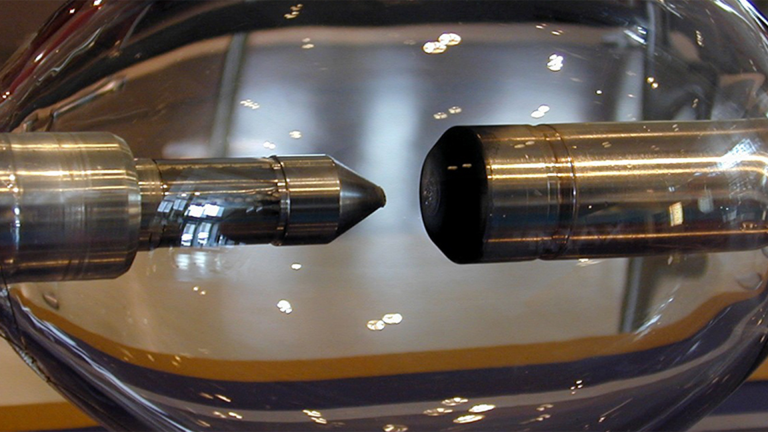
Noble Gases
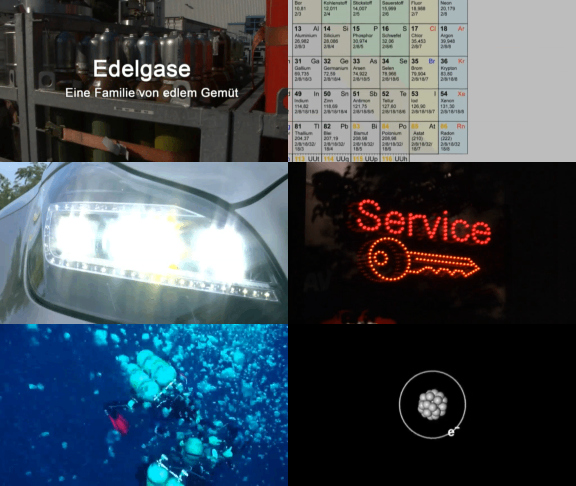
Xenon, Helium, Neon, Argon, Krypton and the radioactive Radon belong to the noble gases. These form the family of noble gases as the elements of the eighth group of the periodic table. All of them are colourless and odourless, non-inflammable and non-toxic. Their most striking chemical property is their inertness. This can be explained by their electron arrangement, termed noble gas configuration and represents a particularly stable and therefore low-energy state. The noble gases are to be found in scant amounts in our air from which they are also distilled. Helium is mainly extracted from natural gas. In everyday life, we encounter noble gases for example as shielding, filling or buoyant gases and in fluorescent tubes. The shell model describes the structure of the atoms. It is based on the distribution of electrons in restricted areas at a fixed distance around the core of the atom.
Learn more
MedienLB has been producing award-winning school films and interactive modules for the classroom since 2006.
Goethe‘s Faust I
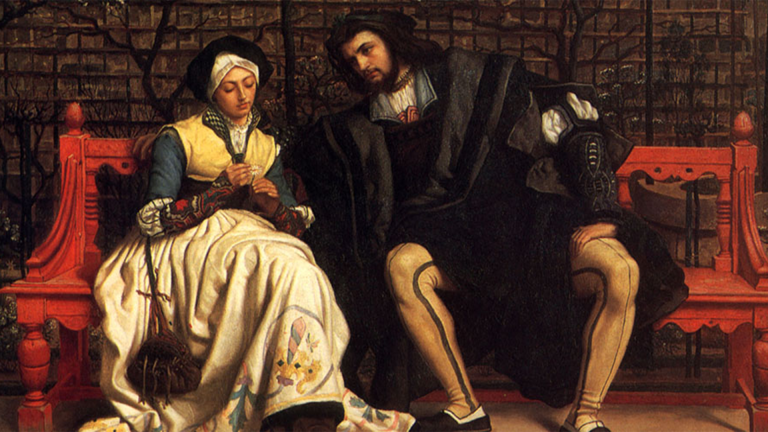
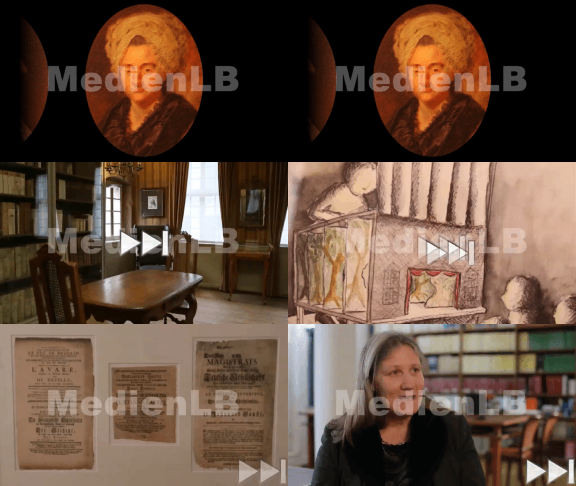
Faust by Johann Wolfgang von Goethe is still considered the most important work of German literature today. Even after 200 years, its still very lively reception bears witness to that fact.
Learn more

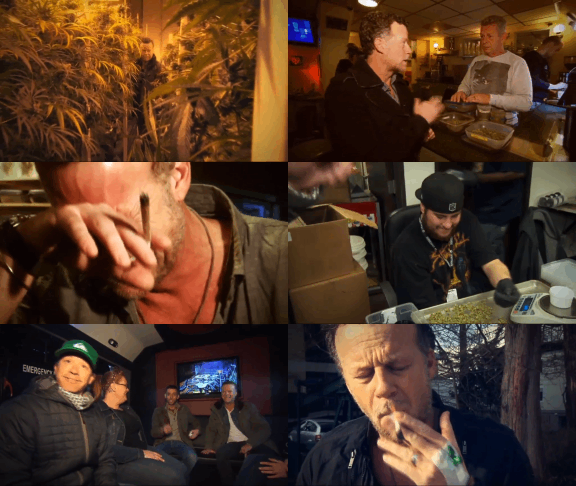
Kiffen
Für sein neuestes Experiment muss Jenke von Wilmsdorff zwangsläufig das Land verlassen. Denn er möchte im doppelten Sinne eine Grenz-Erfahrung machen: Fünf Tage lang konsumiert er im niederländischen Haarlem intensiv Cannabis, um im Selbstversuch zu erfahren, wie sich das Rauschmittel auf den menschlichen Körper auswirkt.
Learn more