




Suche:
- # Artistry
- # Biology
- # Chemistry
- # Ecological
- # Economy
- # English
- # Foreign Language
- # Geography
- # German
- # Health
- # History
- # Informatik
- # Latin
- # Mathematics
- # Media Education
- # Music
- # Physics
- # Politics / Civics
- # Preschool
- # Primary School
- # Religion
- # Society
- # Sports
- # Technology
- # Training of Teachers
- # Vocational Education
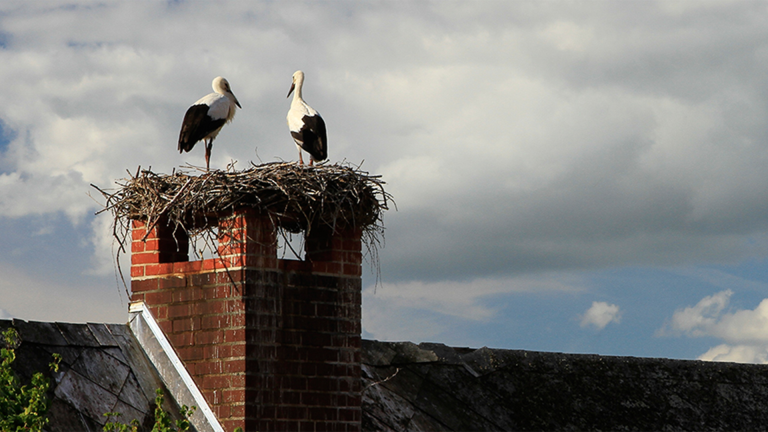

Cranes
They are counted among the most elegant and distinctive domestic birds. Due to their size, cranes can hardly be overlooked. Their call can be heard for miles. And: You hear them more and more often.
Learn more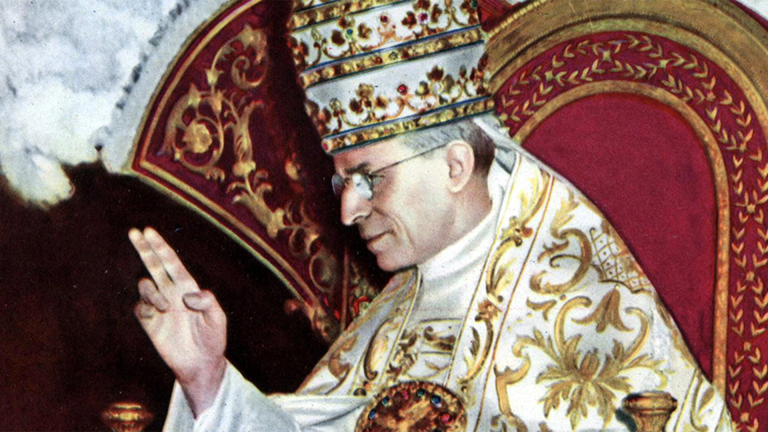

Popes
1922, St.Peter’s Square in Rome, at the dawn of a new era. On 6th February 1922, Achille Ratti, Archbishop of Milan, is elected Pope Pius XI. He addresses the faithful that have gathered on the square that is still Italian back then.
Learn more

Israel
The territory of present-day Israel is one of the oldest cultural regions on Earth. It is the Holy Land of three world religions: Judaism, Christianity and Islam. But this country between the Jordan and the Mediterranean with a rich tradition is threatening to break apart because of the conflict between Israelis and Arabs.The territory of present-day Israel is one of the oldest cultural regions on Earth. It is the Holy Land of three world religions: Judaism, Christianity and Islam. But this country between the Jordan and the Mediterranean with a rich tradition is threatening to break apart because of the conflict between Israelis and Arabs.
Learn more

The Danube
With a length of over 2,800 kilometres, the Danube is the second-largest river in Europe. The river, which is to become so mighty, starts out as a narrow brook with the confluence of both its headwater streams Breg and Brigach in Donaueschingen. Before reaching its river delta into the Black Sea, the Danube crosses ten riparian states. On its long way, past important towns and cities, across mountains, wild ravines and broad valleys, lined with forests, fields and vineyards, the Danube connects a plethora of different cultural, economic and living environments.
Learn more

Freedom of Speech
In 1948 the United Nations General Assembly passed the “Universal Declaration of Human Rights”.
Learn more

Mayor(ess)
Gauting is a municipality southwest of the city of Munich in Bavaria. About 20,000 people live in the municipality. But who actually ensures that such a system works? Who determines how and what is built? Who will ensure that traffic is regulated for all? That there are traffic lights, that pedestrians have their rights? Who makes sure that enough playgrounds are built and that there are schools for the children of the community to go to? Who leads the administration of such a municipality which is needed so that everything we take for granted in everyday life works smoothly? A mayor or mayoress takes care of all these activities. In Gauting, this is Brigitte Servatius. Today we want to visit the mayoress in the town hall with class 4c of the primary school Gauting and ask what a mayor actually does.
Learn more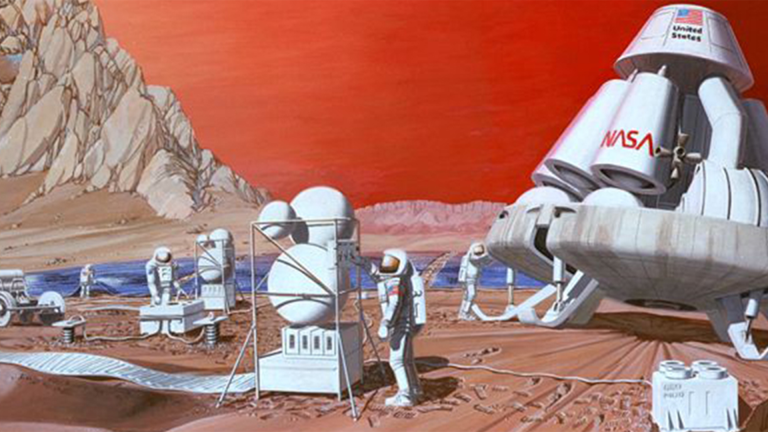

Space
The conquest of a new world: the first satellite, the first man in space, the first steps on the moon – pictures we all know.
Learn more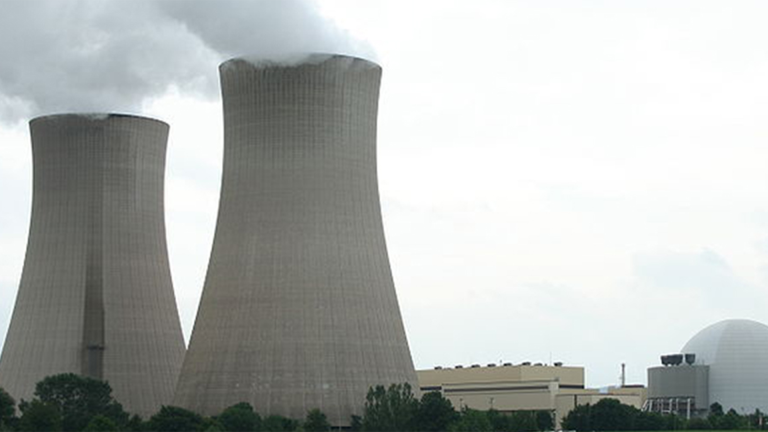

Smart Grid
The turnaround in energy policy is meant to lead away from the old system of centralised power stations, from the conventional energy sources such as coal, oil or nuclear power. Instead, energy is to be generated in a lot of smaller installations from renewable sources such as sun or wind. That leads to a new structure of energy supply. The turnaround requires a new, intelligent system with which the energy exchange between generator and consumer will be controlled in the future. The English term “smart grid“, which translated means nothing other than ’intelligent electricity network’, represents this system of the future.
Learn more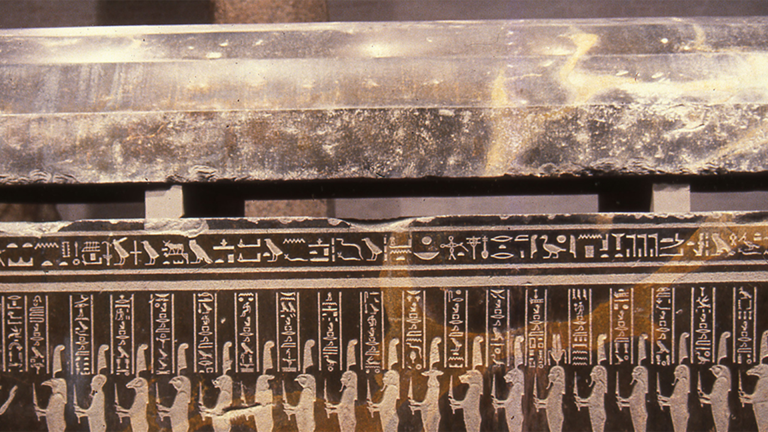

The Egyptian Book of the Dead
The notions described in the texts and pictures of the Book of the Dead are central to the ancient Egyptian belief in an afterlife – the belief in resurrection and life after death. In order to be granted passage to the “Realm of the Blessed”, the deceased first have to justify themselves before the Court of Death and give account that they have led their lives according to the laws of Maat – the order of the universe and justice. The Book of the Dead lists the names of the judges at the Court of Death, who the dead must appeal to and convince of their innocence. Further, it contains a plethora of magical texts for the protection of the deceased and describes the places in the underworld. These texts were inscribed on papyri, coffins and numerous burial objects like canopic jars, uschebtis or mummy masks so that they were available to the deceased at any time. After all, they describe their transformation from mortals to glorified god-like beings who would live eternally.
Learn more
MedienLB has been producing award-winning school films and interactive modules for the classroom since 2006.


Georg Elser
Who is this boy who almost killed Hitler later in his life? But for a gap of only a few minutes he would have decisively changed world history. Perhaps this boy would be hailed as a hero of German history today if his attack on Hitler had proceeded as he had planned? Who is this Georg Elser, who comes from a rather modest background and grew up in a small Swabian village far away from the big cities? And how did it happen, anyway, that he set out alone against Hitler? And why is it that this Georg Elser, who nearly changed the course of the world, is still so little known in Germany?
Learn more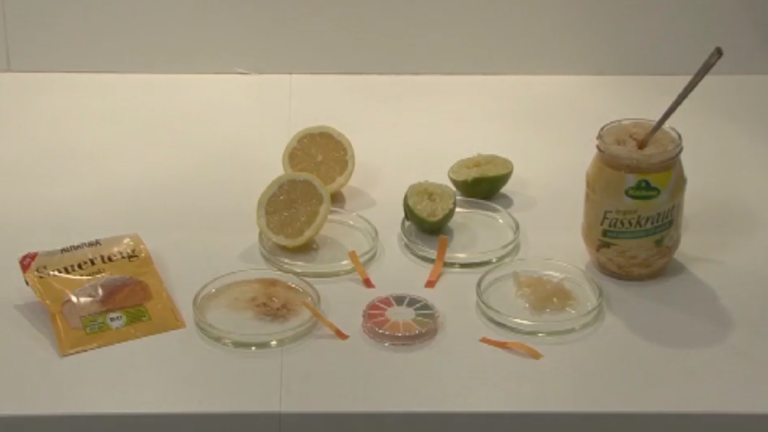

Acids and Bases
We can find acids and bases in every supermarket, some of them in our food, others in cleaning agents. In everyday products, acids and bases as well as acidic and alkaline reacting salts have extremely different functions. In food, acids are either present or added as flavouring agents such as citric acid, tartaric acid and acetic acid, as antioxidants such as ascorbic acid or generally as acidifiers, sequestrants (citric acid and tartaric acid) and preservatives (acetic acid).
Learn more

Pre-March Era
After Napoleon's final defeat at Waterloo in 1815, Europe was reorganised at the Congress of Vienna.The civil rights achieved in the French Revolution, which spread throughout Europe, were taken back. The growing resistance to this culminated in the March Revolutions of 1848 in various European countries. The film traces the epoch of Vormärz in Germany and shows in particular how the political present of the time was reflected in literature.
Learn more