






Suche:
- # Artistry
- # Biology
- # Chemistry
- # Ecological
- # Economy
- # English
- # Foreign Language
- # Geography
- # German
- # Health
- # History
- # Informatik
- # Latin
- # Mathematics
- # Media Education
- # Music
- # Physics
- # Politics / Civics
- # Preschool
- # Primary School
- # Religion
- # Society
- # Sports
- # Technology
- # Training of Teachers
- # Vocational Education


Biotechnology II
The results of the fundamental research in genetics and genetic engineering are the basis for the further development of biotechnology, whose basics have already been covered in part I of the biotechnology series. In conjunction with findings in microbiology, biotechnology has made significant progress. In particular the identification of the genetic code has opened up new possibilities for numerous applications. It has enabled the genetic modification of organisms for a desired purpose. The close cooperation between different disciplines in biotechnology continuously generates new insights and possible applications. Moreover, in the so-called red biotechnology – which is medical biotechnology – biologists, medical scientists and pharmacists contribute, amongst other things, to the development of new medicines, thus creating a link between scientific fundamental research and its medical application. An important example of red biotechnology is the production of insulin.
Learn more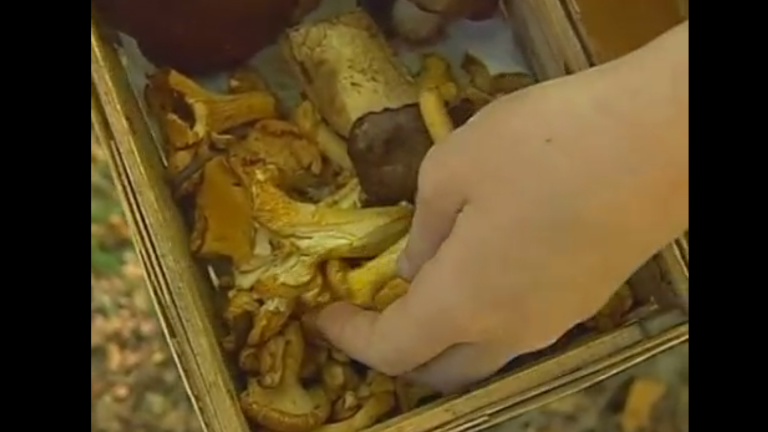
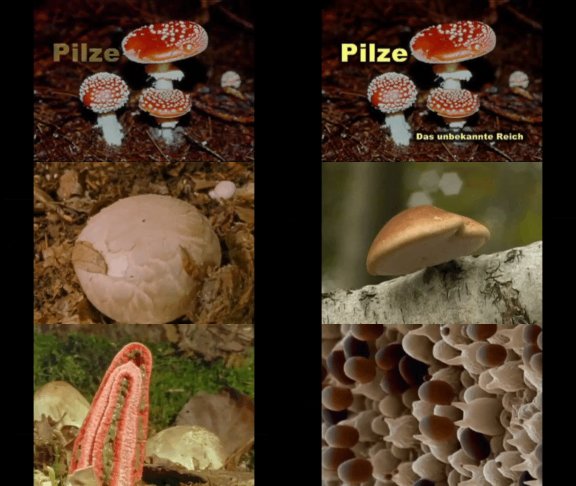
Mushrooms
This DVD offers a clearly structured survey of mushrooms with an emphasis on the following aspects: Mushrooms of different shapes and colours present their fruit bodies. The reproduction by means of spores is shown with different kinds of mushrooms. The actual mushroom is formed by hyphae in the ground. The symbiosis between mushroom and tree is called mycorrhiza. Mushrooms can be poisons or medicines, as is illustrated by the examples of ergot and the birch polypore. Mildews and slime moulds are examples of the decomposing effects of mushrooms. In the fermentation of yeast plants, sugar is transformed into alcohol and carbon dioxide. Lichens are extremely adaptable. Under the electron-scan microscope, we can see how algae and mushroom hyphae form a complex symbiosis. Finally, rules and recommendations for gathering mushrooms are provided. Outstanding shots (with impressive fast-motion pictures and animations) give the pupils a comprehensive overview of the characteristics of mushrooms.
Learn more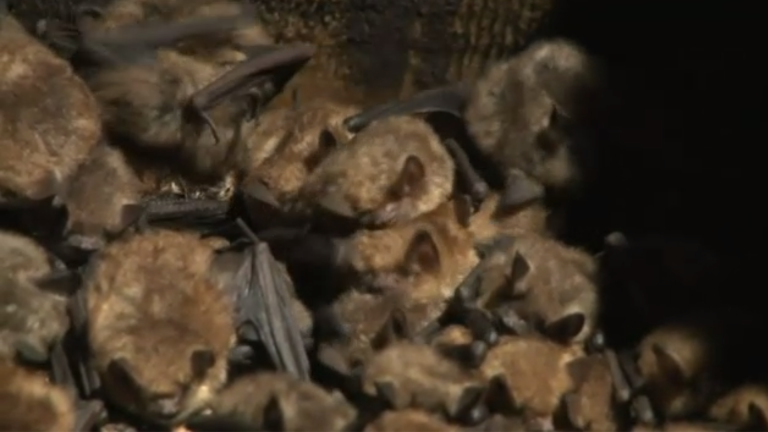

Bats
Bats are the only mammals that can fly actively. In mythology they represent the dark element and were the inspiration behind the invention of vampire stories. On account of their nocturnal way of life and their dark appearance, they are considered scary by many people. But the nocturnal hunters are by no means keen on human blood. They mainly hunt insects, thus assuming an important role as natural pest controllers.
Learn more
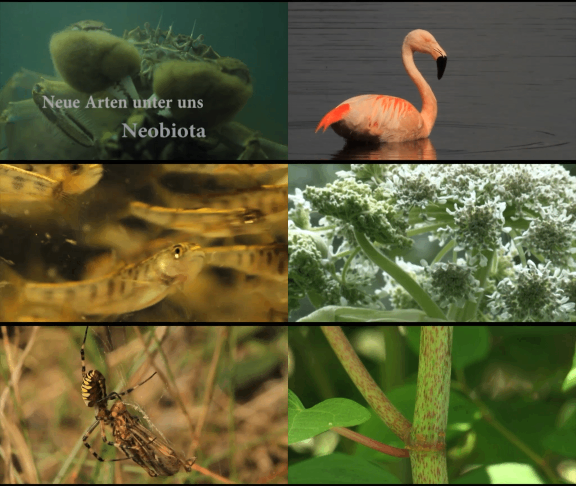
New Species in our Environment
More and more animal and plant species successfully spread far away from their original homes. They are organisms that with our assistance – or even alone – are disseminated further and further across the globe: they are called invasive species.
Learn more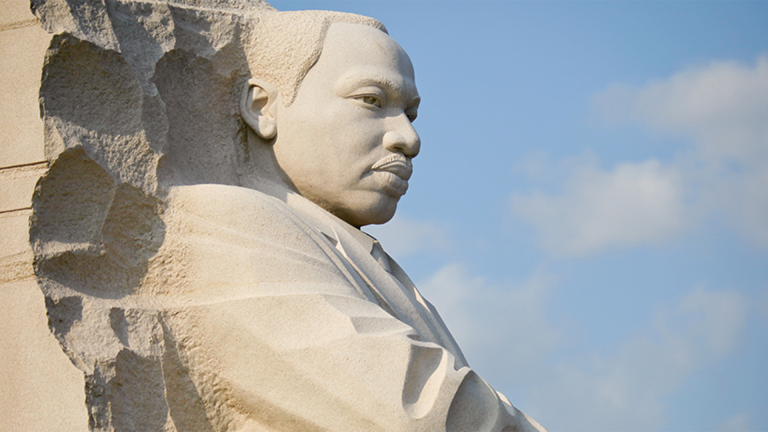

Martin Luther King
Martin Luther King, born and raised in the household of a pastor, was one of the privileged blacks. He saw and experienced the injustice of social oppression and racism, which were particularly pronounced in the Southern States of the USA, and some of which are still lingering today. He called for demonstrations and civil disobedience and became the spokesman for the Civil Rights Movement of the USA: ”But we refuse to believe that the bank of justice is bankrupt.“ In his famous speech Martin Luther King referred to the “inalienable rights of life, liberty and the pursuit of happiness” established in the American Declaration of Independence: ”I have a dream – I have a dream deeply rooted in the American Dream“, King announced his utopia of a just America amid tremendous applause from the crowd. In spite of the violent repressions of the demonstrations he remained an ardent proponent of nonviolent resistance, deeply impressed by Mahatma Gandhi and the Bible. In 1964, he was awarded the Nobel Peace Price. The film shows moving moments of the life and achievements of Martin Luther King up to his assassination. Together with the teaching material in the data section, the DVD is perfectly suited for use in the classroom.
Learn more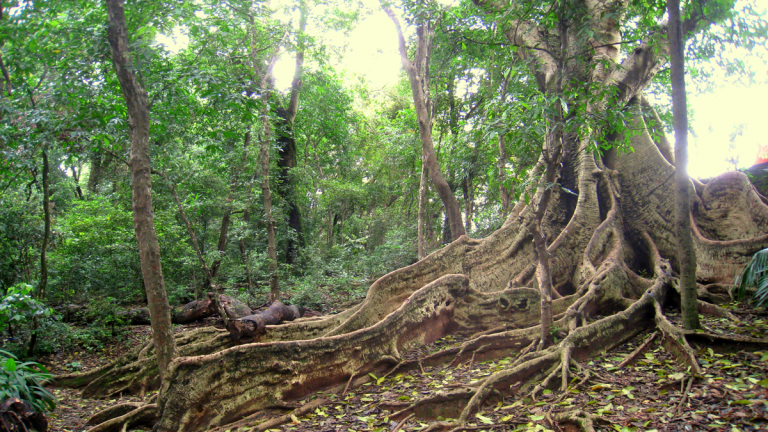

Amazon Basin
Because of its overwhelming biodiversity, the Amazon Basin is rightly referred to as the crown jewel of nature on earth.
Learn more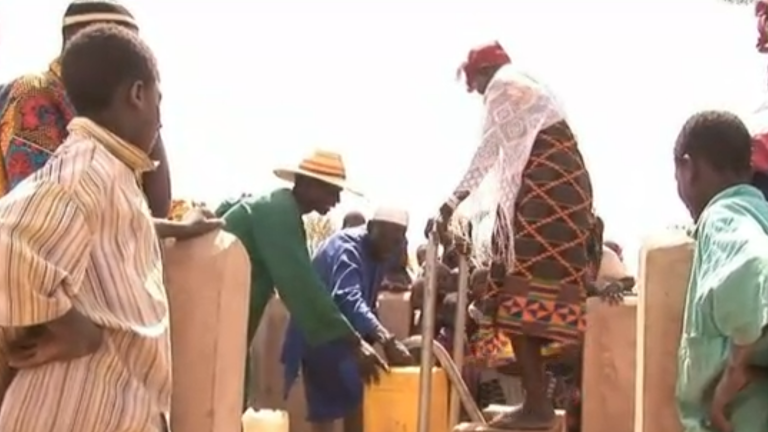
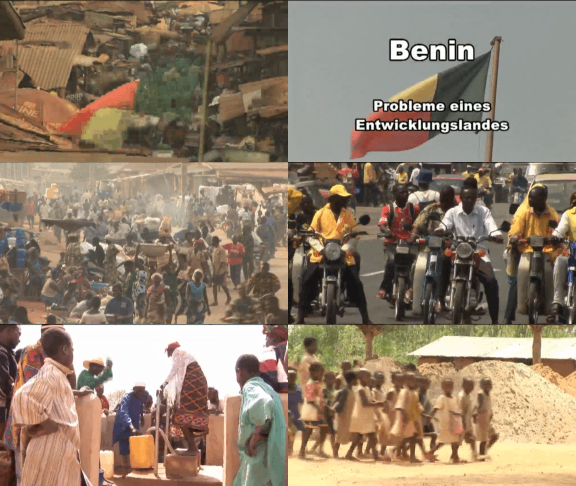
Benin
Benin is situated in Equatorial Africa and is one of the poorest countries of the world. One third of its population lives in extreme poverty and infant mortality is high. The film provides an overview of the geographic location of Benin in Africa, its natural environment, climate and population. A brief outline of its history shows the development from the kingdom of Dan-Homé to the People's Republic of Benin. Economy, infrastructure and expansion of agriculture are featured as well as the way of life, the complexity of religions, cultures and dialects. Educational opportunities for children and adolescents are insufficient. The catastrophic conditions of medical services, problems associated with AIDS and inadequate development aid are exposed.
Learn more
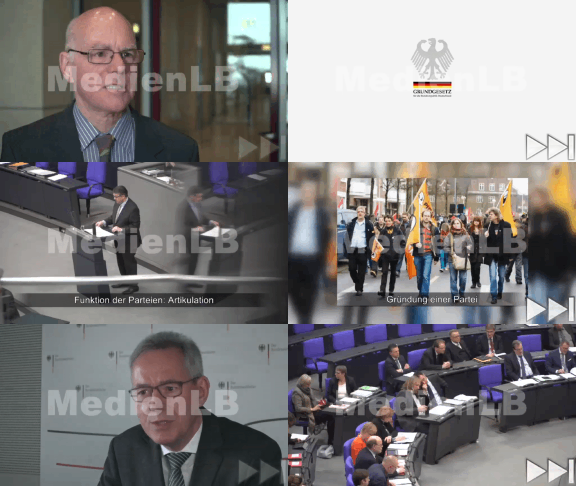
Parteien heute
Der Film stellt die Parteien in Deutschland in ihrer Rolle und Funktion für das politische Leben vor. Er zeigt, welche Bedingungen erfüllt sein müssen, damit aus einem Verein eine Partei werden kann und welche besondere Stellung Parteien im Grundgesetz und im Parteiengesetz zugestanden wird.
Learn more
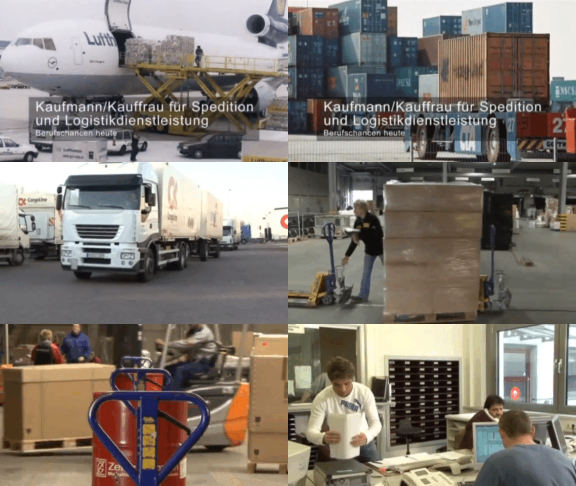
Freight-forwarding and Logistics Service Clerk
The job of a freight-forwarding and logistics service clerk is all about the transport of goods: the storage, selling and shipping of goods must run smoothly – on a national as well as on an international level. This mainly includes planning, controlling and supervisory tasks but also communication with customers and business partners. Planning is the be-all and end-all of the freight-forwarding and logistics trade. Communication with carriers (airlines, shipping or railway companies) is required, suitable routes and means of transport must be chosen, schedules must be determined and finally, the processes must be supervised. In addition, the clerks carry out price calculations, determine costs and revenues, observe offers on the market and take care of technicalities such as insurance cover and customs issues. A good command of foreign languages is therefore essential in this job. And flexibility, too! If problems occur, the clerks need to react quickly and effectively.
Learn more
MedienLB has been producing award-winning school films and interactive modules for the classroom since 2006.

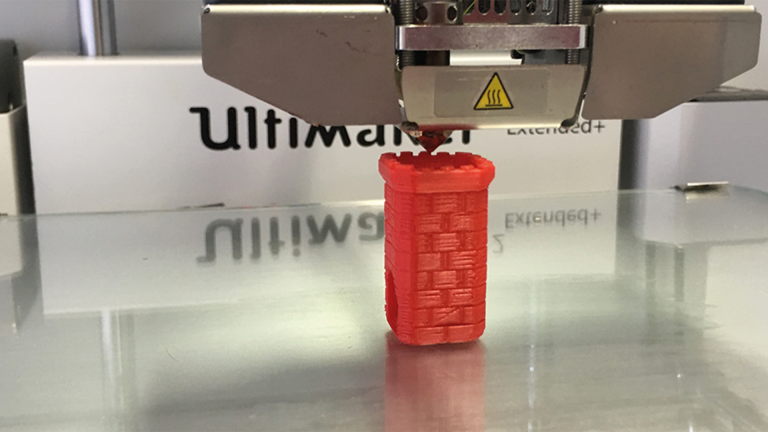
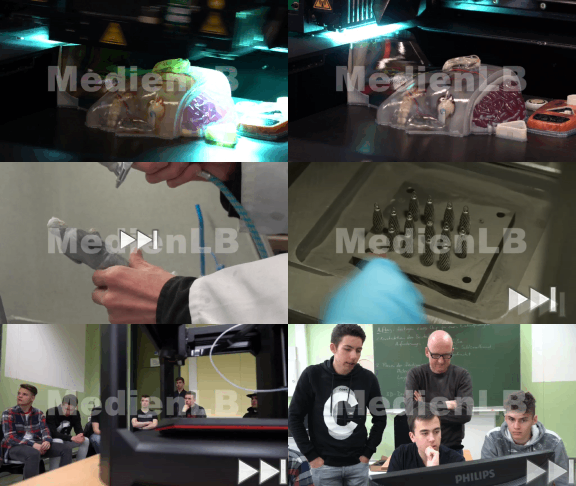
3D Printing
Layer by layer, a three-dimensional form is being created here – a chess piece. Just like that, from a printer – however, a special one: a 3D printer. Thus, the dream of being able to manufacture three-dimensional pieces yourself at home becomes reality.
Learn more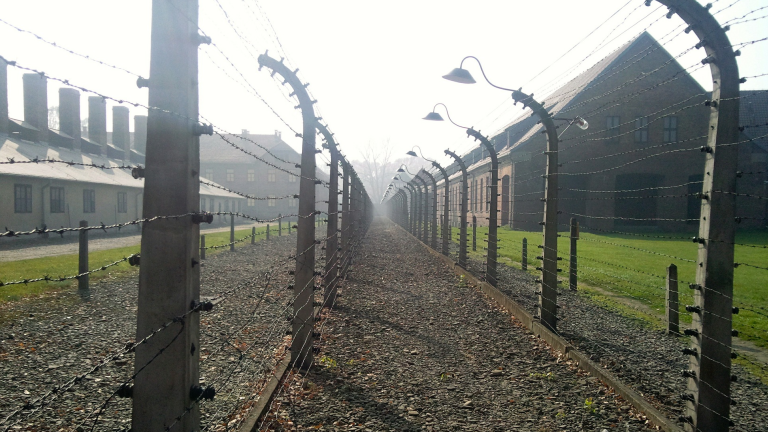
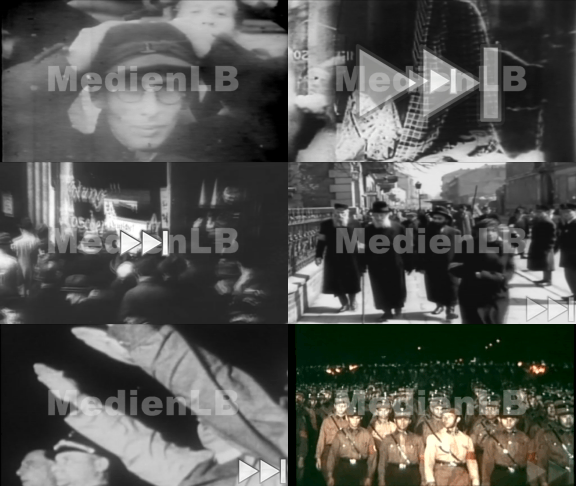
Genocide of the Third Reich
Germany, 14th July 1933: Six months after Hitler’s so-called rise to power all parties were
Learn more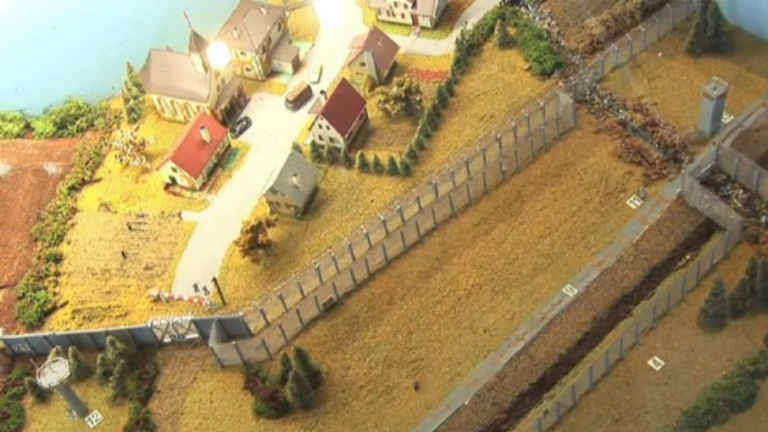

The Border
The DVD helps students, who have no first-hand recollection of the partition of Germany, to approach this problem. The film illustrates the historical development of the inner- German border from 1945 to 1989. The example of Point Alpha also sheds some light on the Cold War – not without reason, the camp has been considered the „hottest spot of the Cold War“. Photos of the German Border Police, pictures from the exhibitions at the memorial Point Alpha near Fulda and the „house at the border“ create a vivid impression of the partition of Germany. Ninth-form students interviewed contemporary witnesses for the film: one of the American commanders at Camp Point Alpha (Steven Steininger), the former mayor of Fulda (Dr. Wolfgang Hamberger) and two border guards of the West German Border Police, Erwin Ritter and Gerd Leinert. Bertold Dücker describes his escape across the border. After the almost complete dismantling of the border installations, only few remains of the former border can still be seen today. The film provides background material and points out Running Time: 22:29 ms how important it is to visit the memorial.
Learn more