






 Primary School, Religion

4677108 / 5564397
Kirchen
Ausstattung und Räume
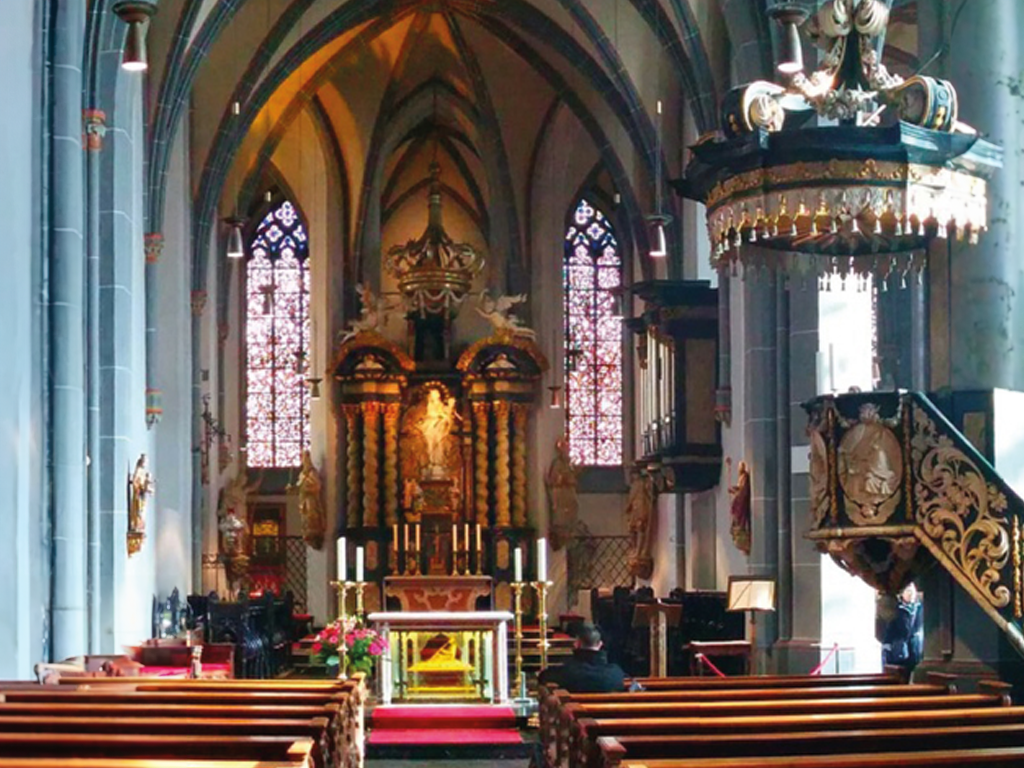
Kirchen haben eine lange Tradition und von außen sind sie heute meistens gut erkennbar. Aber wie sehen Kirchen eigentlich von innen aus? Denn egal ob alt oder neu, groß oder klein ─ so unterschiedlich sie auch aussehen, die meisten Gegenstände findet man in jeder Kirche. Der erste Blick, wenn man eine Kirche betritt, fällt meist auf den Altar und auf das über ihm hängende Kreuz. Für die Hostien, die den Christen so wertvoll sind, gibt es in der Kirche einen ganz besonderen Platz ─ den Tabernakel. Im Tabernakel werden die geweihten Hostien nach dem Abendmahl aufbewahrt. In der Nähe des Tabernakels hängt das ewige Licht.
Grade in älteren Kirchen findet man häufig eine Kanzel. Auf der Kanzel wird das Wort Gottes gelesen und für die Gemeinde ausgelegt. In katholischen Kirchen gibt es statt oder auch zusätzlich zur Kanzel einen sogenannten Ambo – das ist ein Sprecherpult, von dem aus der Pfarrer zur Gemeinde spricht.
Um ein Christ zu werden, wird man getauft. Deshalb findet man in jeder Kirche auch ein Taufbecken.
Es gibt noch viel mehr in einer Kirche zu entdecken. Was genau, seht ihr in unserem Film!
Gemeinsam mit dem umfangreichen Unterrichtsmaterial (klassische und interaktive Arbeitsblätter, Testaufgaben, Lehrtexte etc.) ist der Film sehr gut für den Einsatz im Unterricht geeignet.
Play trailer
- <> Languages : DE
- <> Target Groups : FÖ, GRU, Sek I
- <> Subject : Primary School, Religion
- <> Length : 19:42 min
- View in learning platform
Licenses

Curriculum-centred and oriented towards educational standards
Matching


Geschlechteridentität
Teil des Erwachsenwerdens ist es, seine eigene Identität zu finden. Für manche wird diese Identitätsfindung erschwert, weil das körperliche Geschlecht nicht mit dem empfundenen Geschlecht übereinstimmt.

ADHS
Die ADHS, die Aufmerksamkeitsdefizit-/Hyperaktivitätsstörung gehört zur Gruppe der Störungen von Verhalten und Emotionen. Wissenschaftler gehen davon aus, dass in jeder Klasse zwei bis drei Betroffene sitzen.