







 Biology, Health

4669618 / 5560295
Vaccination
Why? For What Reason? Against What?
It is only in recent years that a vaccination has existed that is supposed to lower the risk of getting cervical cancer. This vaccination can protect against specific, sexually transmitted human papillomaviruses that are considered one of the causes for cervical cancer.
Even though we consider our high health status as a matter of course in Germany today, it is not so very long ago that in Europe, too, many people died of diseases such as smallpox or typhus or had to suffer from the after-effects of diseases like poliomyelitis.
Even at the beginning of the 20th century, there were still deadly epidemics such as the Spanish flu which spread anxiety and fear among the population.
Due to the fact that momentarily the threats to our health are considered subjectively low, a certain vaccination fatigue has developed. That means we avoid the way to the doctor because we see no danger for our own health nor for the health of the population…
The paradox is that because of vaccinations certain diseases have receded so much or have even been pronounced eradicated that they are no longer recognised as threats.

Curriculum-centred and oriented towards educational standards
Matching
Peer Mediation
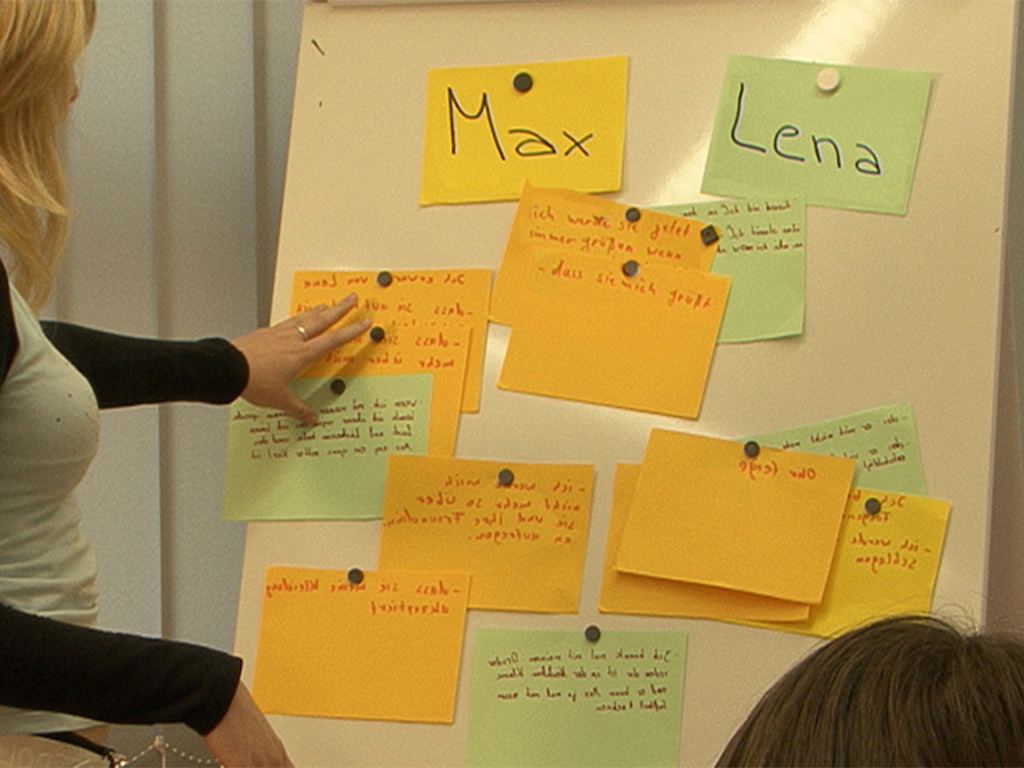
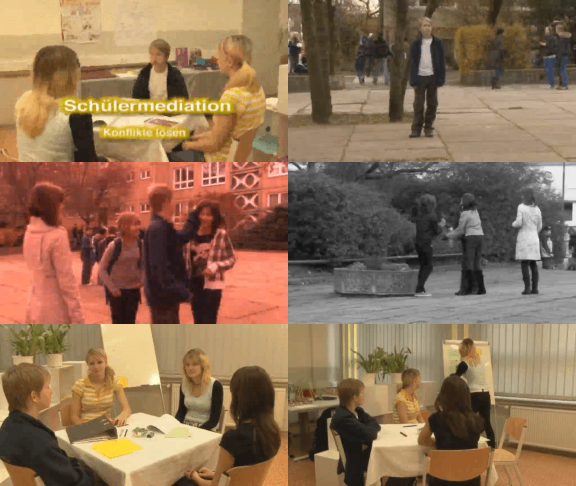
Lena and Max attend the 7th form. Max is new in class. During a break, Max notices that Lena and her friend are laughing at him again. Max loses his temper! He slaps Lena in the face. That hurts and Lena runs back into the classroom with a red cheek. The growing conflict between the two has escalated. Just like Lena and Max, every day pupils all over Germany have rows with each other. At the Heinrich Hertz Gymnasium in Thuringia, pupils have been trained as mediators for years. At set hours, they are in a room made available by the school specifically for mediation purposes. The film describes the growing conflict between Max and Lena and shows a mediation using their example. In doing so, the terms “conflict” and “peer mediation” are explained in a non-technical way. The aims of peer mediation and its progress in five steps as well as the mediators’ tasks are illustrated. The art of asking questions and “mirroring”, which the mediators must know, is described and explained. Together with the comprehensive accompanying material, the DVD is a suitable medium to introduce peer mediation at your school, too.


Internet Addiction
The film consists of two parts. The first part is the 15-minute short film “In the Net”. It describes the problem of excessive Internet use in a humorous way, in particular the risk of losing touch with reality when chatting. The second part illustrates with three real persons how Internet addiction can develop and the problems encountered by those who are afflicted. The authentic statements are commented by an experienced therapist. For many pupils, the issues addressed here are related to their everyday lives. What is a “sensible” use of the Internet, where does pathological addiction start? In contrast to addiction to alcohol, nicotine or drugs, the public seems to be largely ignorant of the problem of this addiction, which is not related to any substance abuse. The film provides material for discussion in the classroom (crossdisciplinary) and can be used as a basis for the formulation of prevention strategies.


Seal of approval
Quality seals such as the "Bio-Siegel", "Blauer Engel", "Stiftung Warentest" and up to 1,000 other seals represent characteristics such as sustainability, health or safety with regard to a product, a service or even a company.