



Suche:
- # Artistry
- # Biology
- # Chemistry
- # Ecological
- # Economy
- # English
- # Foreign Language
- # Geography
- # German
- # Health
- # History
- # Informatik
- # Latin
- # Mathematics
- # Media Education
- # Music
- # Physics
- # Politics / Civics
- # Preschool
- # Primary School
- # Religion
- # Society
- # Sports
- # Technology
- # Training of Teachers
- # Vocational Education
Mice, Small Rodents
Mice are found almost everywhere. The small agile rodents live in forests, meadows and fields but also in our very midst. They have long or short tails, big or small ears. Even if they differ on the outside, all of them have one thing in common: sharp incisors with which they gnaw their way through life. Not every animal called “mouse“, counts among the ”true mice“. The white-toothed shrew, a small, grey-coloured animal, is often found in settlement areas. Outwardly it looks very similar to a true mouse, its frenzied behaviour reminds of mice, too. Shrews, however, are not rodents but carnivores with sharp little teeth, which feed on worms, woodlice, insect larvae and other invertebrates. They are more closely related to the hedgehog or the mole than to mice.
Learn moreFish
This DVD offers a clearly structured overview of fish with an emphasis on the following aspects: The typical body build of fish and their adaptation to the water habitat are shown. The fish skeleton proves that they are vertebrates. Their sense organs (eyes, nose, barbels, lateral lines) are adjusted for survival in water. The skin is characterised by different kinds of scales. Free water fish, ground fish and surface fish are distinguished from each other by three typical mouth and body shapes. Locomotion in the water is made possible by different kinds of fins. Respiration through gills is a typical feature of fish. Herbivores possess typical characteristics distinguishing them from carnivores. Swarm fish and loners display different behaviour patterns. The film is divided into six menu items (chapters), which may be individually accessed and worked on. For this purpose, additional pictures, diagrams, texts or selected short film clips are offered, which can simply be called up by remote control.
Learn moreThe White Stork
People have always found the white stork fascinating. It is a large, conspicuous bird, which exposes itself to human curiosity by the choice of its nesting places, therefore people tend to assign meaning to its behaviour. Today, the white stork is still believed to bring good luck. The film covers the characteristics of white storks, their appearance and behaviour as well as the order of Ciconiiformes. The habits of the white storks, their habitats and migration routes are shown in the film, too. In the Reproduction Chapter, we can see interesting pictures of hatching chicks and their first attempts at flying. The DVD includes first-grade bonus material on the bird migration research carried out by the Max Planck Research Centre for Ornithology headed by Peter Berthold. The white stork’s cultural significance and myths told about it as well as the ties between countries, which are strengthened by the “European Stork Villages”, are covered, too. The bonus material is only available in German and adds approximately 14 minutes to the film.
Learn moreBlossoms
In impressive pictures several interesting biological topics are conveyed by this film: knowledge of the structure of blossoms, their variety of forms as well as significance and purpose of their colours and scents. Thus it becomes comprehensible why blossoms are so differently structured, how self pollination is avoided and which evolutionary achievement is behind the symbiotic interaction between blossoms and pollinators. Pollination is a “deal“: the plant offers the insects nectar in exchange for the transport of the pollen. Prerequisite for this is the mutual adaptation process of the blossom to the mouthparts of the insect and vice versa. That cheating goes on during this “business relationship” between plant and animal is illustrated with the example of flower mimesis. The perfect way in which blossoms succeed in attracting insects without offering them nectar in return is another highlight of this film. Together with the extensive accompanying material the DVD is perfectly suited for use in the classroom.
Learn moreOrganic Farm
That is how we imagine an ideal farm. Free-range hens, cows are being driven from the pasture into the stable, a cat is straying across the yard, the dog is watching over everything... This farm of farmer Ponzaun, however, exists today only because he need not subsist on the profit he makes from selling the products grown on his farm. The main income on the Ponzaun farm derives from the guests who want to experience once again what life was like on a farm in former times. During their holiday on the farm the children and the grown-ups want to participate in the daily life that is determined by the care for and life together with the animals and nature.
Learn moreCO2-Neutralität erreichen
CO2 ist ein natürlich vorkommendes Gas in der Atmosphäre, das im Rahmen eines Kreislaufs von Lebewesen produziert und in Pflanzen gebunden und wieder in Sauerstoff umgewandelt wird.
Learn moreBrandenburg
The federal state of Brandenburg is located in eastern Germany and encloses the federal capital Berlin in its centre.
Learn moreGlobalisation
A visit to the weekly market. Here they lie peacefully side by side: pears and apples from local regions next to exotic fruits such as kiwi, lychee, papaya and mango. What was an exotic rarity not so long ago is meanwhile offered throughout the whole year. So today there is a wide range of products from all over the world. The reason for this variety of products is what has become widely known under the term of globalisation.
Learn moreSaarland
One of the small States of the Federal Republic of Germany is also represented in this film series. A turbulent history in a border situation between two power blocs, coal and steel, structural change, services and nanotechnology. Join us on a short trip through Saarland!
Learn moreVolcanos
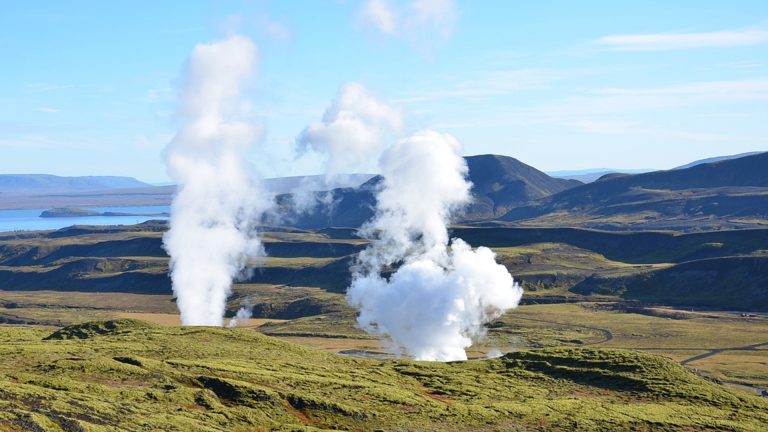
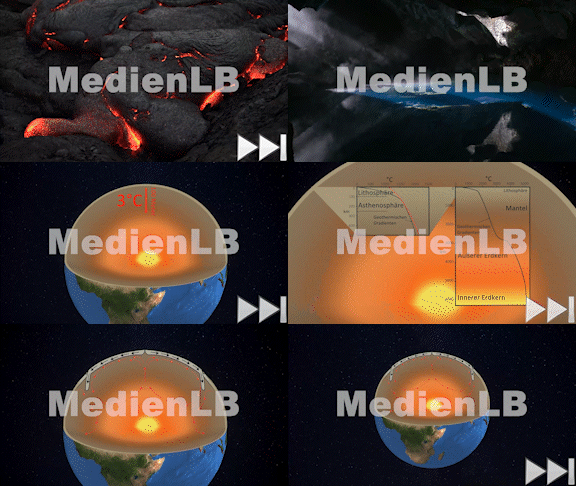
When volcanos are mentioned in the media, this is usually in connection with devastating eruptions, which come with massive damage and a great number of victims. However, volcanos can also be quite useful – either as tourist attractions or as suppliers of valuable resources. This DVD offers an introduction to volcanism. For this purpose, the following subjects are treated in four film clips: “Structure of Volcanos” – there can be considerable structural differences among the firemountains; “Types of Eruption” – depending on the composition of the magma, explosive or effusive eruptions occur; “Moderate Activities” – in between and after larger eruptions a volcano never rests completely; “Mining Products and their Use” – the materials discharged are diverse and often useful. When choosing the examples of volcanic regions (the Eifel and South Italy), the proven didactic principle “from near to far” was observed. In view of the relative proximity of the regions, the film is suitable for the preparation of field trips, which are expressly to be encouraged.
Learn moreTibet
Tibet, the so-called »Roof of the World«, is a vast highland in Central Asia. Hidden behind huge mountain ranges, the highest plateau of earth together with its inhabitants, the Tibetans, is little known to the rest of the world. The »country of the snow lion«, as the historical Tibet is also called, is comprised of the three big provinces Ü-Tsang, Kham and Amdo and several smaller ones encompassing an area of 2.5 million square kilometres. China, however, incorporated all of Amdo and large parts of Kham into the adjacent Chinese provinces. The remaining area was given the name »Tibet Autonomous Region«.
Learn more