






Suche:
- # Artistry
- # Biology
- # Chemistry
- # Ecological
- # Economy
- # English
- # Foreign Language
- # Geography
- # German
- # Health
- # History
- # Informatik
- # Latin
- # Mathematics
- # Media Education
- # Music
- # Physics
- # Politics / Civics
- # Preschool
- # Primary School
- # Religion
- # Society
- # Sports
- # Technology
- # Training of Teachers
- # Vocational Education
Coffee
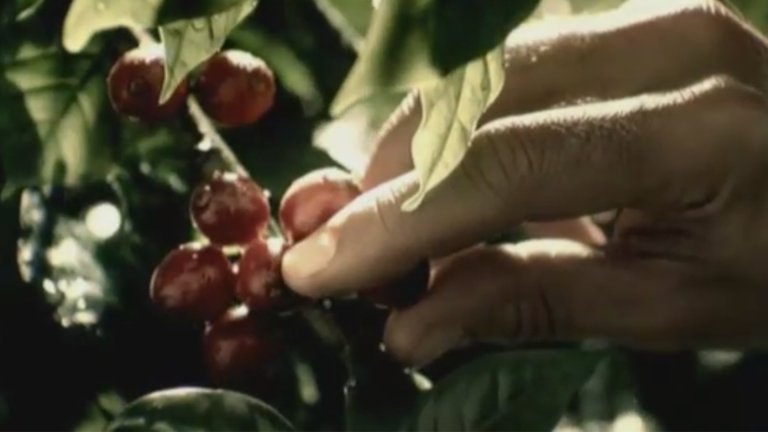
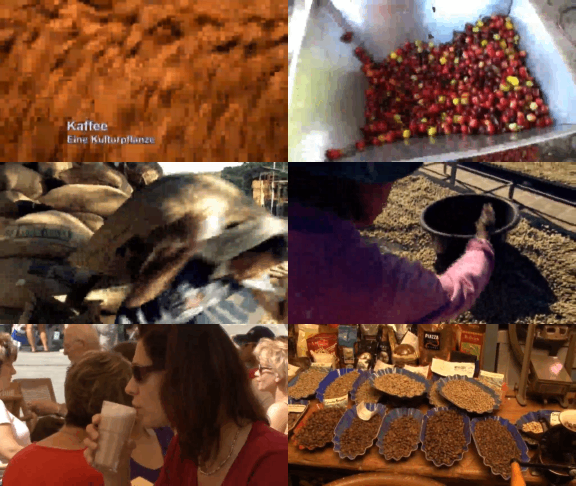
Coffee has become the second most important commodity on the world market after crude oil, and it enjoys tremendous popularity around the globe. Allegedly, it happened by chance that the stimulating effect of the cherry-like fruit was discovered in the Ethiopian province of Kaffa. The deep brown, aromatic drink embarked on a global journey of success. From the middle of the 17th century, it also became widespread in Europe, even though it was a treat that was initially reserved for the prosperous. Today, however, it is a part of everyday life for many people. The DVD starts with the history of the spreading of coffee cultivation and continues to describe in detail the biological characteristics of the coffee shrub. Another chapter outlines the conditions for growth and introduces the most important coffee-producing regions. The long, laborious journey from the harvest of the ripe coffee cherry to the prepared cup is illustrated. The economically weakest link in this chain are the coffee farmers. There are several organisations acting on a worldwide scale that try to realise adequate prices for the coffee farmers and promote incentives for development by means of fair trade.s is described.
Learn more

Das Ehrenamt
„Ich glaube, engagieren sich nicht Menschen für die Gesellschaft ehrenamtlich, dann würde das System, so wie wir es haben, einfach nicht funktionieren. Von daher glaube ich, ist das Ehrenamt, damit das alles so funktionieren kann, wie es das tut, ein wichtiges Steckenpferd.“, so das Zitat einer jungen ehrenamtlichen Mitarbeiterin bei den Maltesern.
Learn more
Sozialismus
Der Unterrichtsfilm beleuchtet die Grundlagen des Sozialismus, der als Gesellschaftsmodell auf Gemeineigentum und Gemeinwirtschaft beruht. Er hielt infolge der Industrialisierung als Gegenmodell zum Kapitalismus Einzug. Doch in den Ländern, wo sich der Sozialismus verbreitet hatte, erwies er sich als ökonomisch ineffizient und führte letztlich zur Einschränkung der menschlichen Grundrechte sowie zur Verletzung der Rechtsstaatlichkeit.
Learn more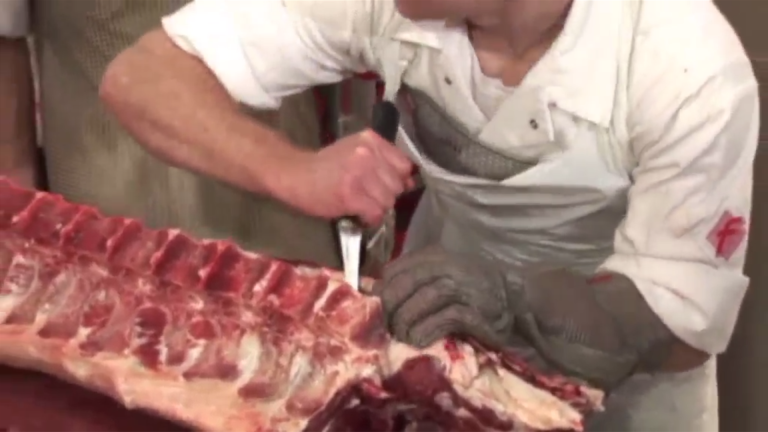
Butcher
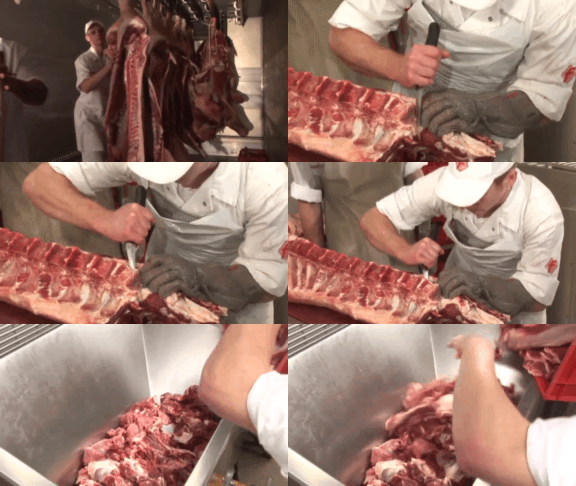
Food is the basis of human life. Its diversity and quality are decisive for our health and well-being, thus also providing the basis for a good quality of life. It is a positive challenge to take on that kind of responsibility by choosing a career in this sector. A butcher’s job is such a challenge, not only with respect to the handling of the food itself but also with respect to the contact with customers. Butchers don’t just sell their products but also give advice to their customers and, in addition, the contact to business partners and public authorities is of considerable importance. Hence, this job is extremely versatile and never boring. Some on-the-job training in an internship provides the opportunity to get to know this profession better and to find out whether you are suitable for the job and whether you feel comfortable with your choice. It is important that a job opens up good career prospects for young people, thus building a bridge to an economically secure future.
Learn more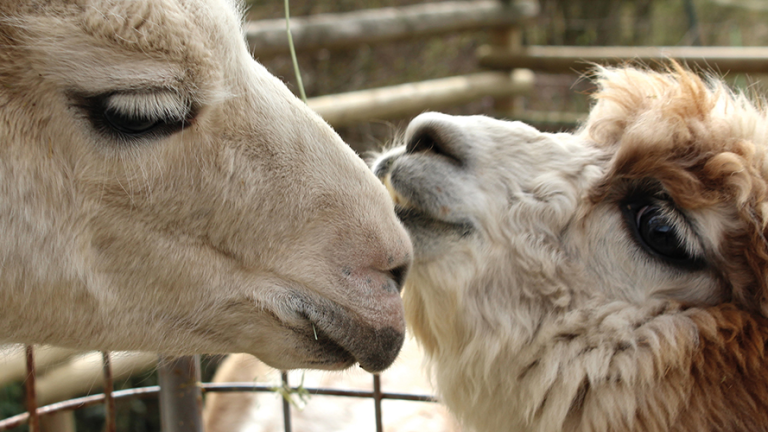
Mensch und Tier
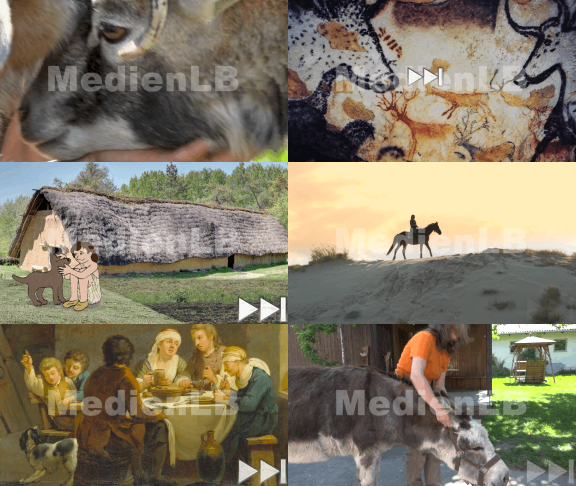
Menschen und Tiere leben seit Jahrtausenden zusammen. Ursprünglich als reines Nutztier gehalten, entwickelte sich eine Beziehung zu einem Tier als reines Haustier. Neuer ist die Verbindung der engen Beziehung des Menschen zu Tieren und therapeutischen Anliegen. Im Film werden verschiedenste Tiere und deren therapeutische und unterstützende Wirkung vorgestellt. Ob mit Schafen, Alpakas, Ponys, Schulbegleithunden oder Blindenhunden – der Film geht der engen Beziehung von Mensch und Tier nach.
Learn more
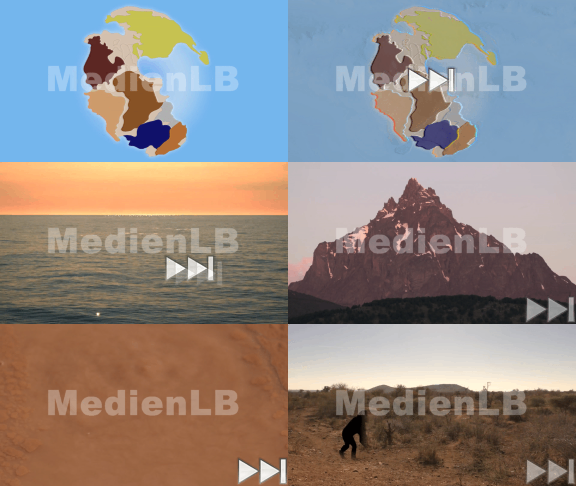
Continents
Continents are continuous expanses of land that are clearly separated from each other by oceans.
Learn more
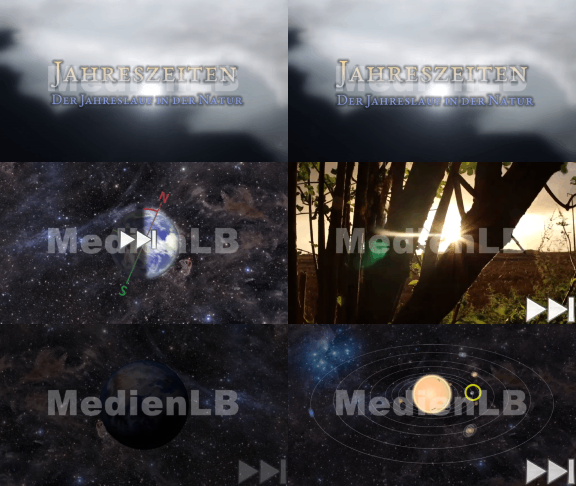
Jahreszeiten
In unseren Breiten ist das Klima im Jahresverlauf in klar abgrenzbare Jahreszeiten unterteilt. Der Film erklärt ausführlich und in anschaulichen Grafiken die Ursache hierfür: die Neigung der Erdachse und den damit verbundenen veränderlichen Einstrahlungswinkel der Sonne auf die Erde.
Learn more

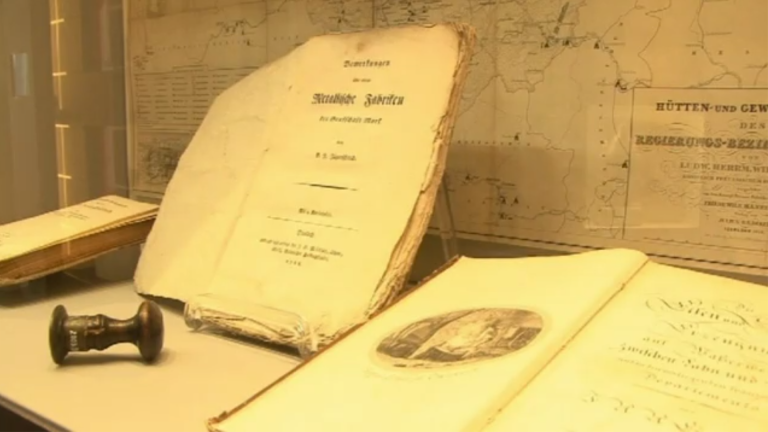
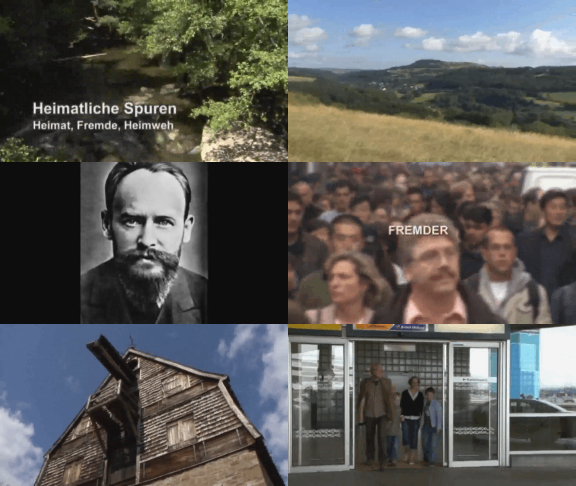
Home
Everyone of us has a home. We primarily associate home with our families, which give us a sense of comfort and security. We have our home town where we were born, but what exactly is home? According to the encyclopaedia, home means all the conditions under which someone grows up. This DVD introduces all aspects of the topic of “home” – in a way easily understandable for children. Folk songs as well as films and novels with a regional background are examined closely. The relation between home and identity is explained. Home can take many forms due to different nationalities with their different languages, customs and traditions. However, despite all our cultural differences and ways of life, when seen from a distance, we all share the same home – our planet earth!
Learn more
MedienLB has been producing award-winning school films and interactive modules for the classroom since 2006.
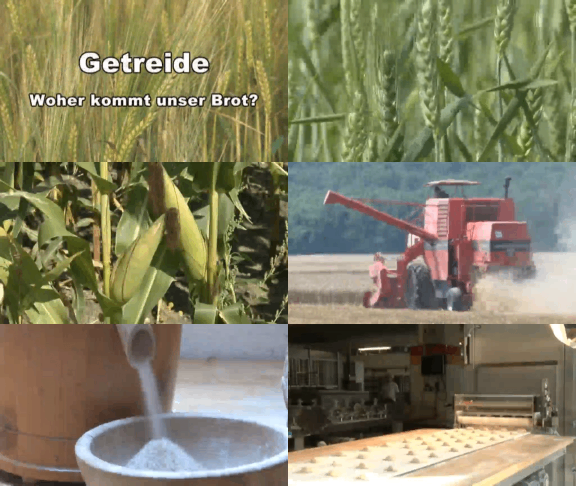
Grain
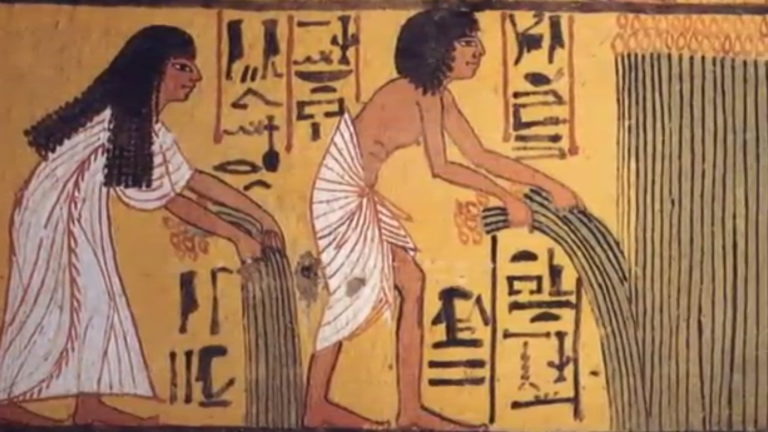
The DVD offers spectacular insights into rural forms of work of former times and of today and into the work of a baker, so that pupils can easily comprehend individual work steps, too. In addition, the children gather information on the characteristics and use of the most important types of grains: rye, wheat, barley, oats and maize. The content of the DVD is excellently suited, on the one hand, to show the children that flour is an essential ingredient of baked goods and, on the other hand, to seize upon the pupils' various experiences with the staple bread. The DVD breaks down the topic "Grain" into the following main areas: baking bread, from corn to flour, types of grain and history of grain. The DVD is divided into four didactic units that can be dealt with separately via its menu structure. Moreover, the menu offers additional pictorial and diagram material. With the varied worksheets, test tasks and colour foils, the learning content of the DVD can be consolidated and the topic "Grain" enlarged upon during lessons.
Learn more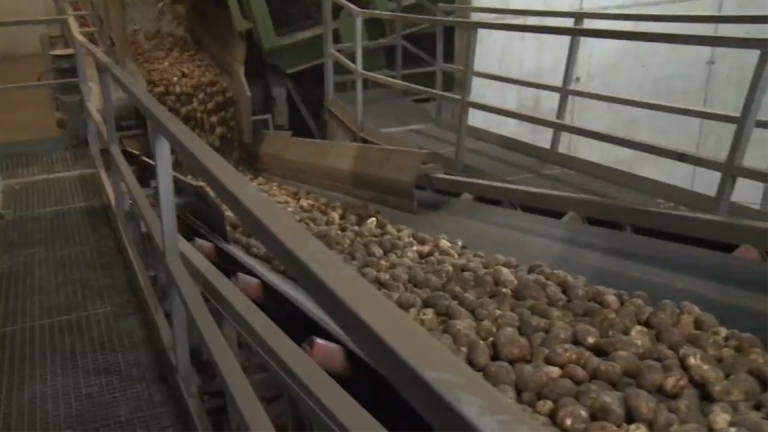

The Potato
The potato is one of the most important food staples of the world. Together with rice, maize, wheat, barley, soy and sugar cane it is one of the seven most important foods on earth. Originally it came from the Andes in South America. The Spaniards brought it to Europe and then to all other continents. It is cultivated in 130 countries on earth. Cultivation has already resulted in many different varieties. Some are waxy, others turn floury when cooked and are especially suited for soups or mash. In Germany, more than a hundred varieties with different qualities and flavours are on the market. Very specific varieties for any purpose are being cultivated. It takes about ten years to develop a new variety and to have it licensed for cultivation. The potato is the most frequent cultivated crop plant and also our staple food. Together with the extensive additional material the DVD is ideally suited for use in the classroom.
Learn more

Kathetensatz des Euklid
Das Quadrat einer Kathete ist genauso groß wie das Produkt der Hypotenuse mit dem zugehörigen Hypotenusenabschnitt.
Learn more