






Suche:
- # Artistry
- # Biology
- # Chemistry
- # Ecological
- # Economy
- # English
- # Foreign Language
- # Geography
- # German
- # Health
- # History
- # Informatik
- # Latin
- # Mathematics
- # Media Education
- # Music
- # Physics
- # Politics / Civics
- # Preschool
- # Primary School
- # Religion
- # Society
- # Sports
- # Technology
- # Training of Teachers
- # Vocational Education
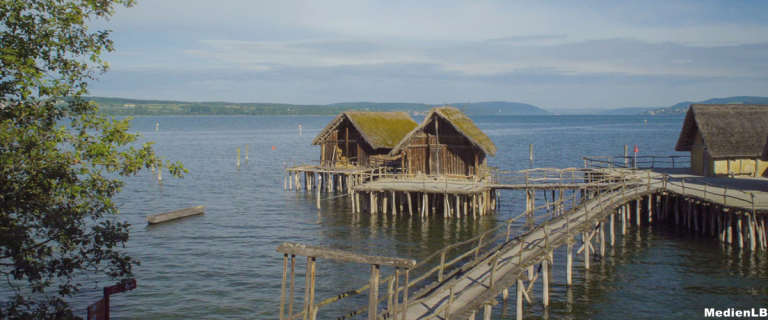
Lake Constance
Lake Constance is not only beautifully situated at the foot of the Alps, surrounded by a fertile countryside – you can also tell many stories about it, and thus learn something about its history and the people who live there.
Learn more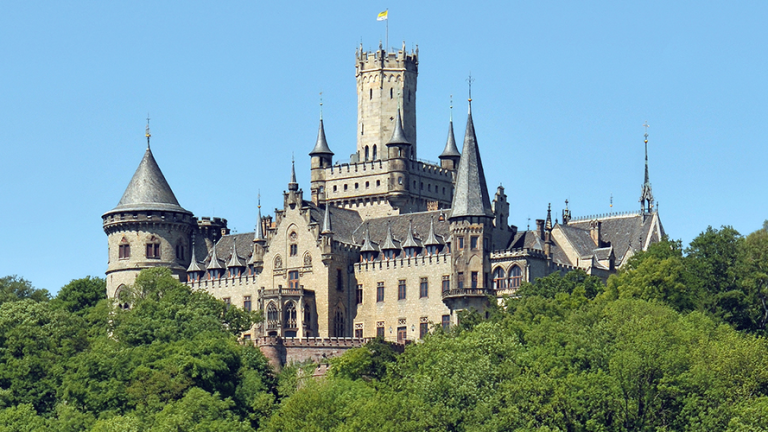
Lower Saxony
Between the North Sea and the Harz, Ems and Elbe, stretches one of Germany’s federal states in which, according to legend, once the Pied Piper of Hamelin, Till Eulenspiegel and the lying Baron Munchhausen did their mischief.
Learn more
London
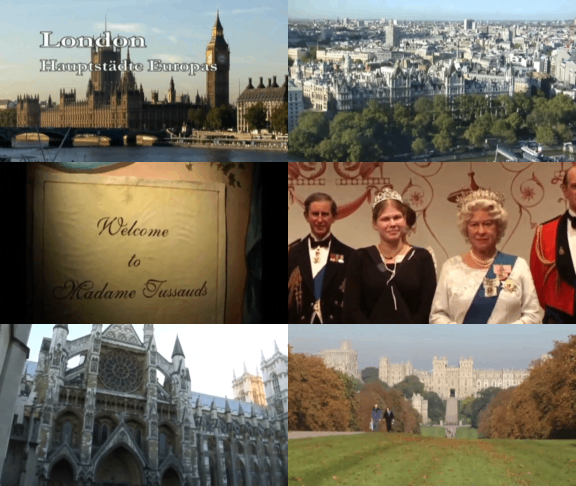
This DVD offers a clearly structured overview of the bustling city on the Thames. The students are to realise that the geographical situation of London in the centre of the island state is decisive both for its climate and its special historical and political significance within Europe. Today London has become one of the most expensive cities of the world and plays a major role in international banking. The DVD presents the metropolis in all its facets. Impressi- ve pictures illustrate the cultural highlights of the city on the Thames, views of the colourful street life allow the students to participate in London’s everyday life. The city’s historical monuments, multicultural Soho, Hyde Park or the tube – this DVD invites us on an exciting tour through the lively metropolis. The DVD is divided into six didactic units which can be individually accessed and worked on via the DVD menu. Furthermore, the menu offers additional pictures and text material.
Learn more
Major EU Project
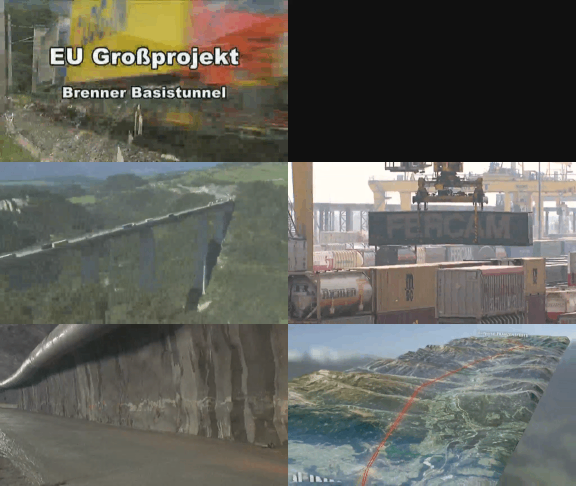
The Brenner Base Tunnel and the New Brenner Railway are a project of the Trans-European Networks – in short, TEN. The aim is to connect European countries optimally and to contribute to a more environmental-friendly and efficient organisation of traffic. The transportation of cargo is to be shifted to the railway and public passenger transportation is to become more attractive. The TEN Axis No. 1 runs from Berlin to Palermo.
Learn more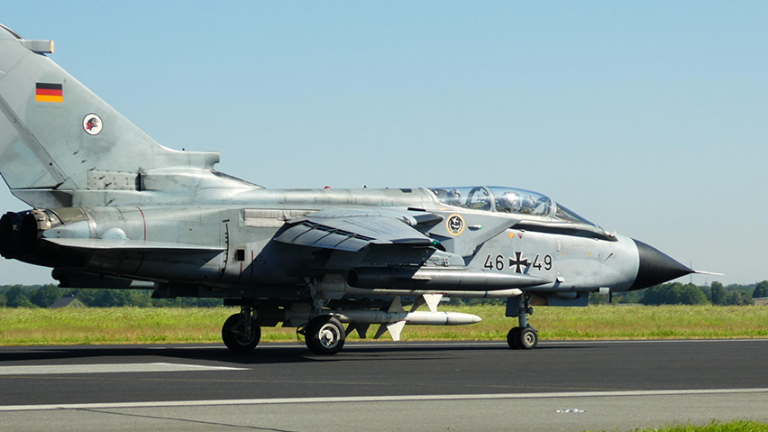
Sicherheitspolitik
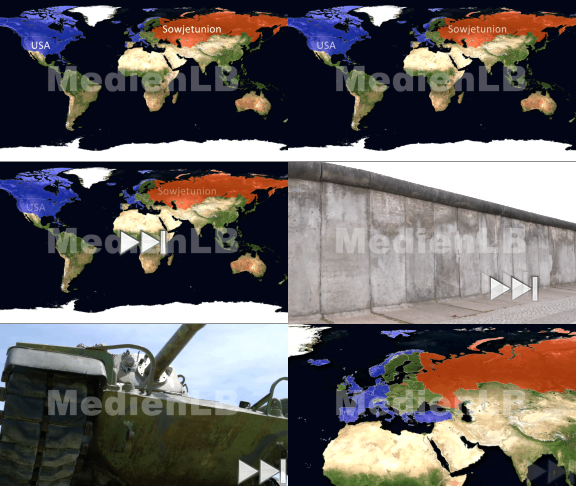
Nach Ende des Zweiten Weltkriegs wuchsen rasch die Spannungen zwischen den beiden Weltmächten USA und UdSSR, die zur Schaffung der beiden Militärbündnisse NATO und Warschauer Pakt führten. Nach Ende des Kalten Krieges und der Auflösung des Warschauer Paktes veränderte sich die weltweite Sicherheitsarchitektur. Wie wichtig die NATO noch heute ist, zeigt die Bedrohung, die für Westeuropa nach dem russischen Einmarsch in der Ukraine entstanden ist.
Learn more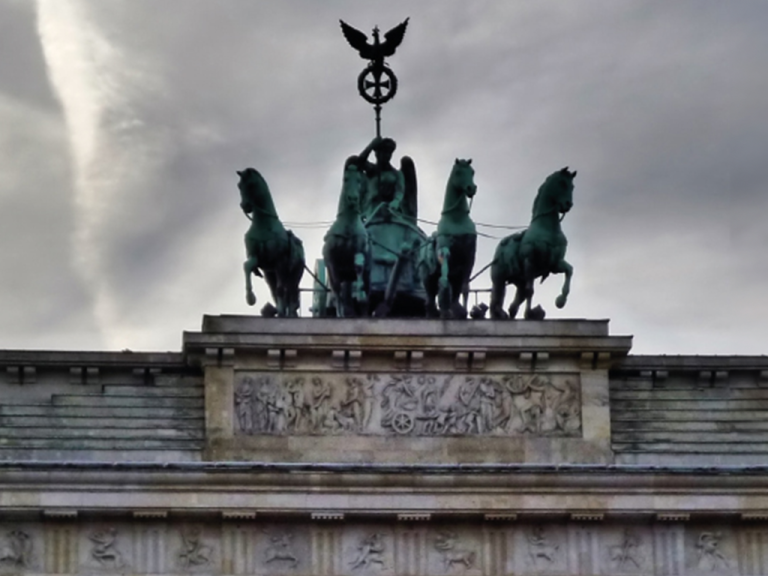
25 Years of German Unity
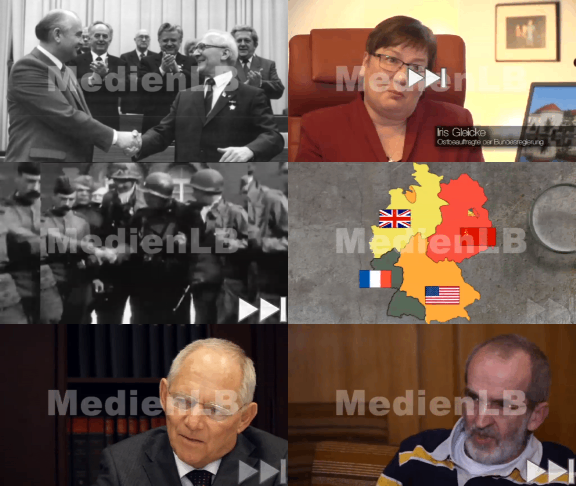
After four decades of separation in the course of the East-West conflict, the unity of Germany was constitutionally restored on October 3, 1990. The Peaceful Revolution in the GDR and the willingness of the victorious powers of the Second World War enabled reunification. Special merits were earned by the then Chancellor Helmut Kohl as well as by the Soviet head of government Mikhail Gorbachev. Their negotiations were complicated but remained friendly – although the dissolution of its ally GDR signified a considerable loss of power for the Soviet Union at the time.
Learn more
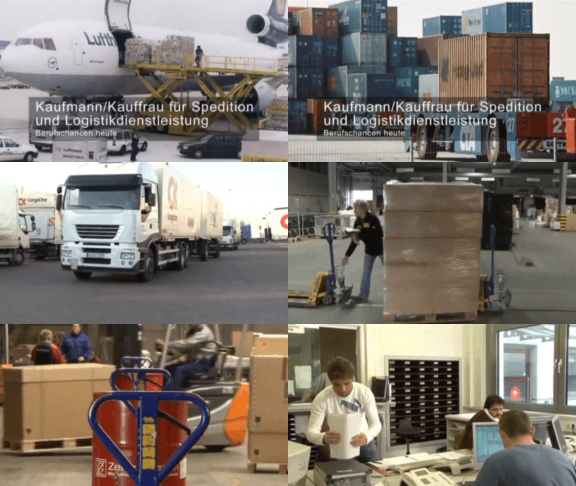
Freight-forwarding and Logistics Service Clerk
The job of a freight-forwarding and logistics service clerk is all about the transport of goods: the storage, selling and shipping of goods must run smoothly – on a national as well as on an international level. This mainly includes planning, controlling and supervisory tasks but also communication with customers and business partners. Planning is the be-all and end-all of the freight-forwarding and logistics trade. Communication with carriers (airlines, shipping or railway companies) is required, suitable routes and means of transport must be chosen, schedules must be determined and finally, the processes must be supervised. In addition, the clerks carry out price calculations, determine costs and revenues, observe offers on the market and take care of technicalities such as insurance cover and customs issues. A good command of foreign languages is therefore essential in this job. And flexibility, too! If problems occur, the clerks need to react quickly and effectively.
Learn more


Apfel
Er ist das am häufigsten angebaute und verzehrte Obst. Die Engländer sagen ihm nach, dass er den Ärzten ihre Kundschaft vergrault. Isaac Newton soll von ihm auf die Gesetze der Gravitation gestoßen worden sein.
Learn more
MedienLB has been producing award-winning school films and interactive modules for the classroom since 2006.
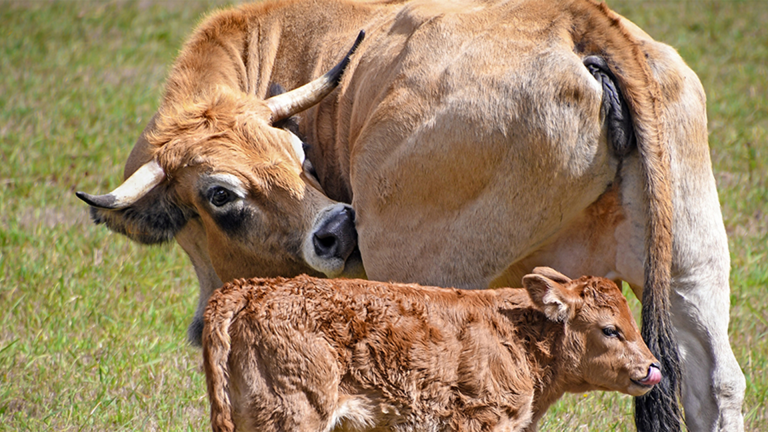
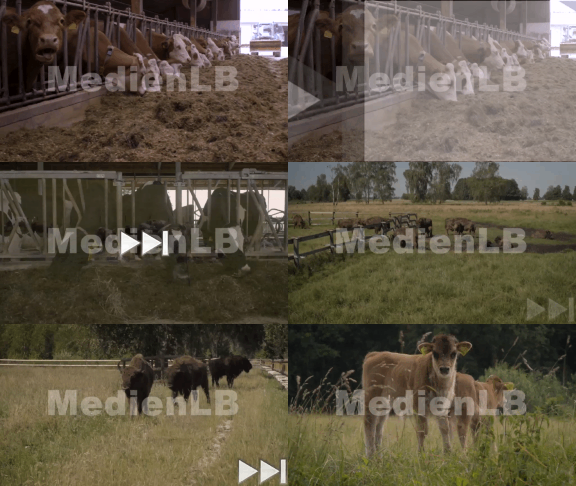
Cattle
Cattle have been of vital importance for humanity due to both their spread all over the world and presence throughout almost all of human history.
Learn more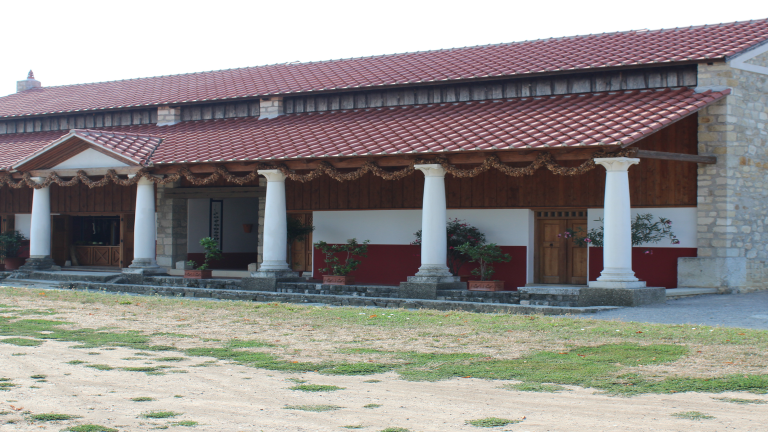
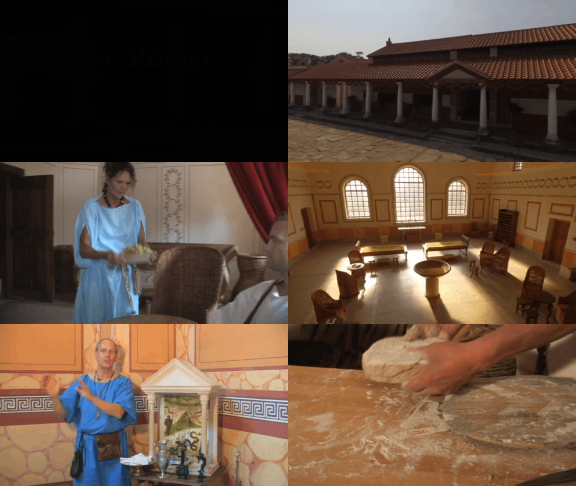
Romans
Augsburg, Cologne, Trier – perhaps you have already heard about these cities. But did you also know that all these cities were built by the Romans?
Learn more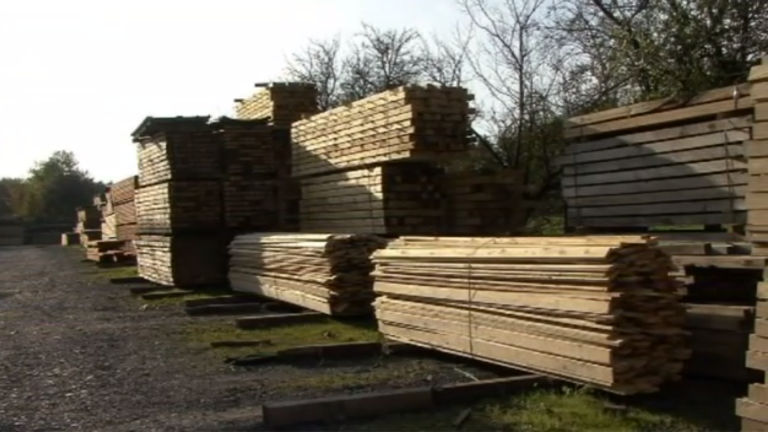
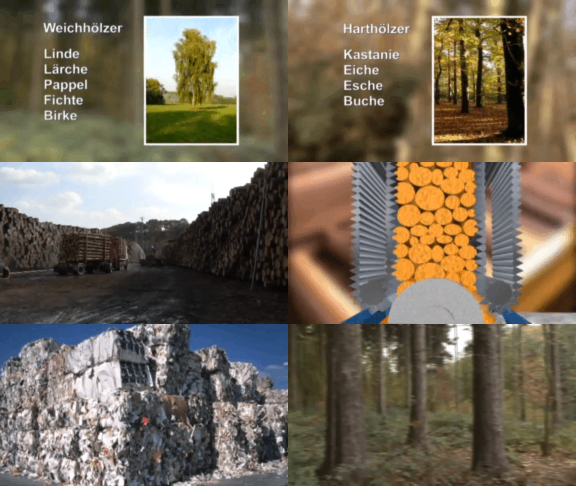
Wood/Paper/Recycling
The DVD “Wood/Paper/Recycling” provides information on the treatment and processing of wood. The production of paper, an everyday item in our lives, as well as the recycling process are explained to the primary school pupils in a simplified way. The film is also excellently suited for environmental education. The following topics in the subject area of wood, paper and recycling are covered in this DVD: • Wood – a Natural Resource (appearance, properties; types of wood) • At the Sawmill (treatment and processing methods with state-of-the-art machinery) • Paper (everyday use, papermaking, types of paper, properties) • Recycling (waste paper as an important material for the recycling of used paper, recycling technique) • Environmental Protection (conservation of trees, recycling of waste paper)
Learn more