






Suche:
- # Artistry
- # Biology
- # Chemistry
- # Ecological
- # Economy
- # English
- # Foreign Language
- # Geography
- # German
- # Health
- # History
- # Informatik
- # Latin
- # Mathematics
- # Media Education
- # Music
- # Physics
- # Politics / Civics
- # Preschool
- # Primary School
- # Religion
- # Society
- # Sports
- # Technology
- # Training of Teachers
- # Vocational Education
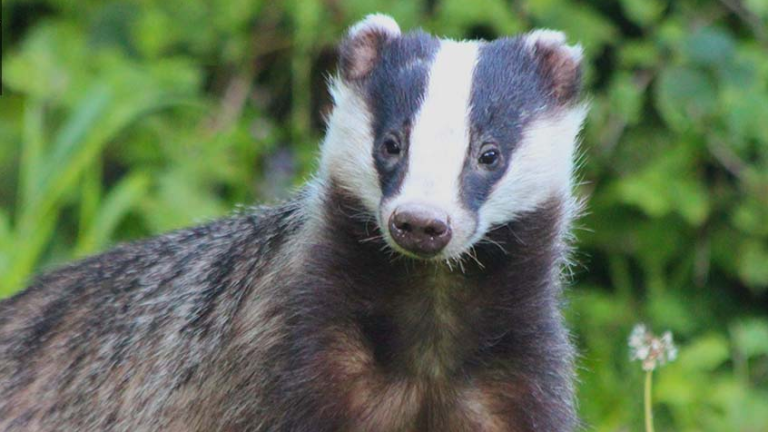
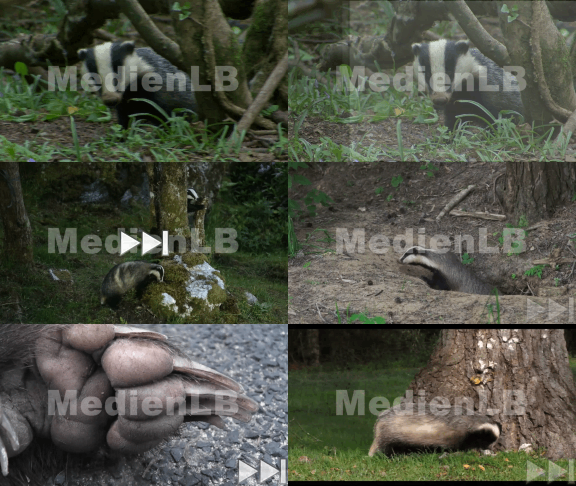
Dachs
Der Dachs ist ein nachtaktiver Bewohner der heimischen Wälder. In teilweise jahrzehntealten, bis zu 5m tiefen Bauen verbringt er den Tag und begibt sich nachts auf Nahrungssuche.
Learn more
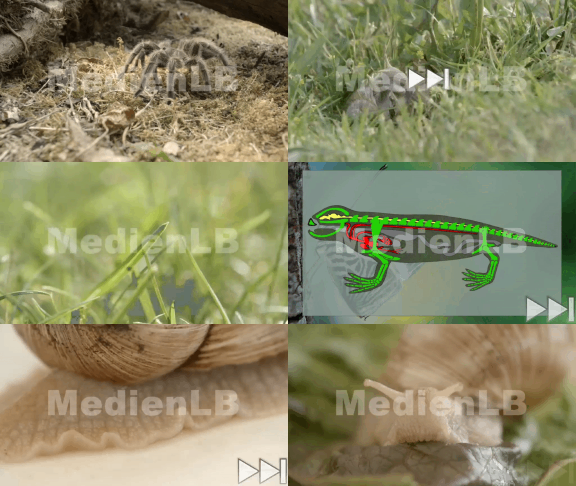
Invertebrates
The term “invertebrates” was coined by the French zoologist and botanist Jean-Baptiste de Lamarck in the early 19th century. He was the first to address the classification of the then so-called “lower animals” and divided them into different categories and classes.
Learn more
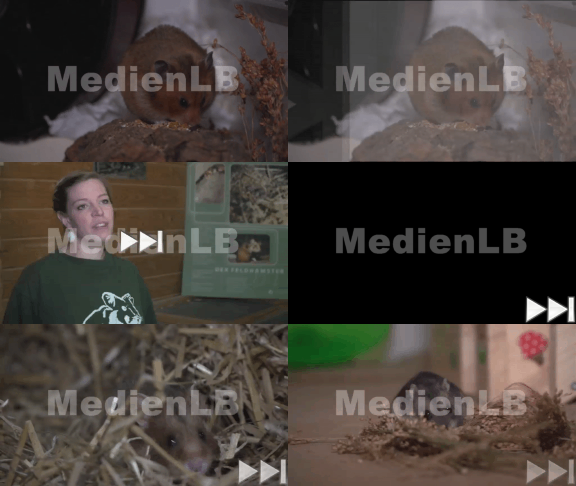
Hamsters
Hamsters are small rodents that have four sharp incisors. They are related to mice.
Learn more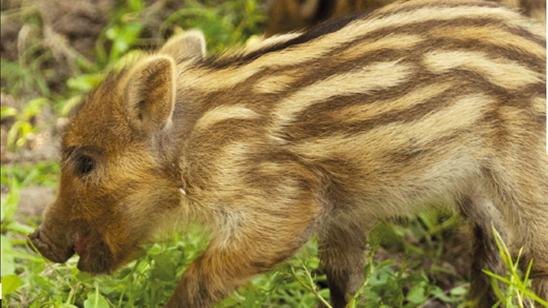
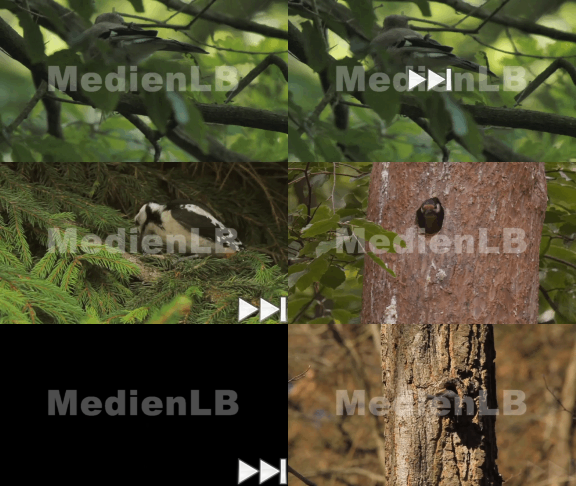
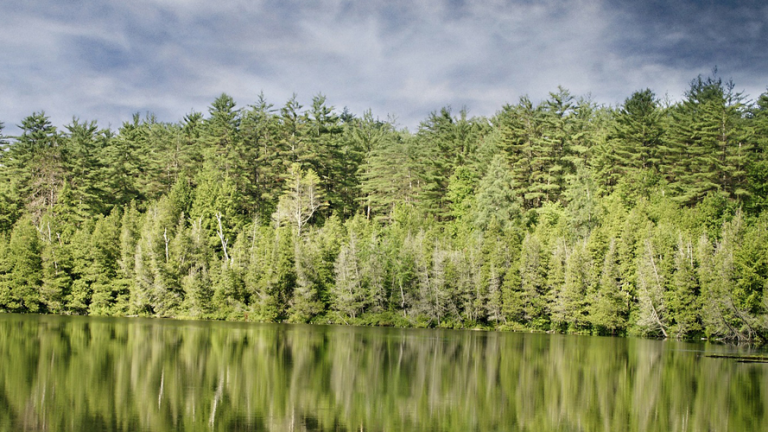
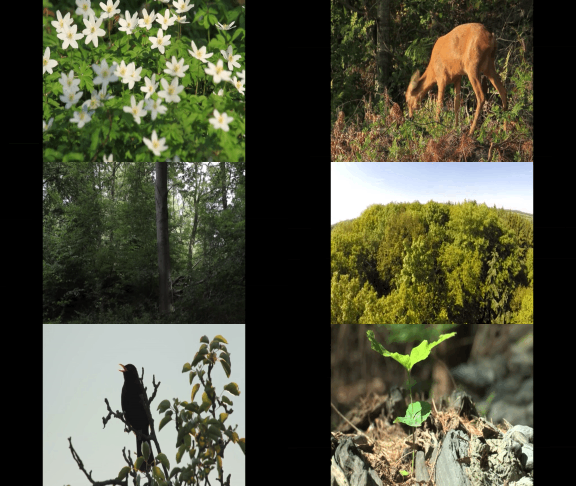
Structure of the Forest
Forests are more than an accumulation of trees. The individual tree is more than a valuable source of wood. From its roots to its crown, it offers habitats to a variety of the most different creatures. The older a tree, the more valuable it becomes to many forest inhabitants. And even in death it is still full of life. If you take a closer look at a forest, you notice that the plants grow to different heights. They form storeys like those of a house. At the top level there are only the big trees. From a bird’s perspective we see that the highest specimens in the forest form a closed canopy. In summer, the treetops resemble big parasols shading the forest floor. Depending upon how much sunlight filters into the depths, this has consequences for the forest vegetation.
Learn more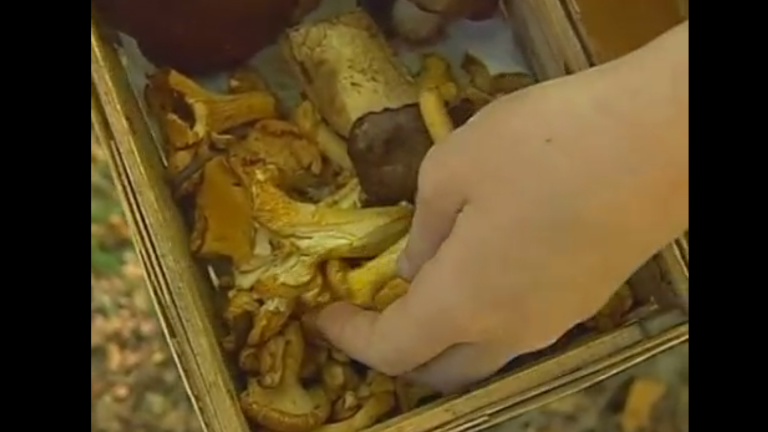
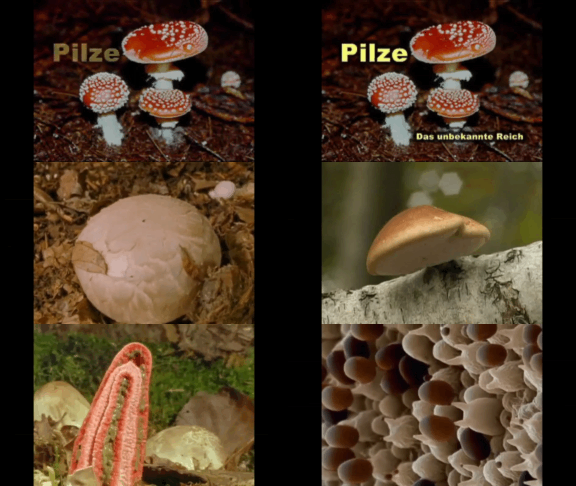
Mushrooms
This DVD offers a clearly structured survey of mushrooms with an emphasis on the following aspects: Mushrooms of different shapes and colours present their fruit bodies. The reproduction by means of spores is shown with different kinds of mushrooms. The actual mushroom is formed by hyphae in the ground. The symbiosis between mushroom and tree is called mycorrhiza. Mushrooms can be poisons or medicines, as is illustrated by the examples of ergot and the birch polypore. Mildews and slime moulds are examples of the decomposing effects of mushrooms. In the fermentation of yeast plants, sugar is transformed into alcohol and carbon dioxide. Lichens are extremely adaptable. Under the electron-scan microscope, we can see how algae and mushroom hyphae form a complex symbiosis. Finally, rules and recommendations for gathering mushrooms are provided. Outstanding shots (with impressive fast-motion pictures and animations) give the pupils a comprehensive overview of the characteristics of mushrooms.
Learn more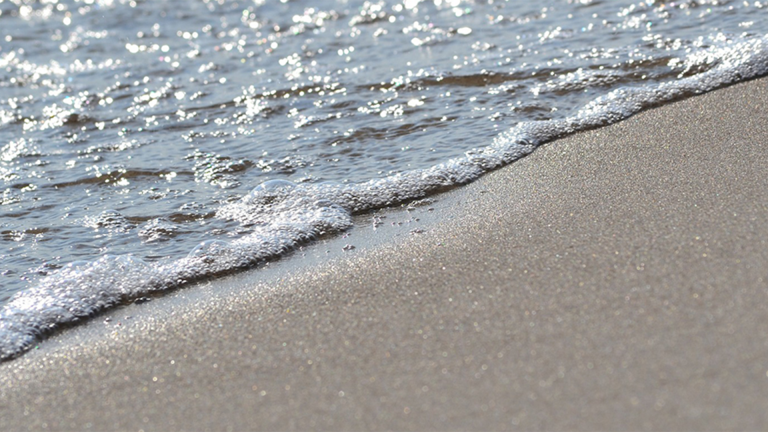

Ecosystem Sea
The oceans have been the largest connected ecosystem of the world since hundreds of millions of years. All life originated here, and a stable system ranging from single-cell plants and animals to huge vertebrates has been established. An incredible abundance of shapes and colours has emerged. Even today, we know only a fraction of this variety. We know less about the co-existence of these beings, their interdependency and the conditions and particulars of their food chain than we know about one or the other celestial body. The largest consumers of the sea, sharks and whales have an important task in the marine ecosystem. They ensure that the populations of small predators like seals, groupers and tuna do not grow excessively. In the film, the interrelation between the individual creatures is illustrated and the ecosystem sea as well as the dangers of human interference are explained using the example of sharks and whales. We learn about these animals’ characteristics and structure. We also see why and how they are endangered and what damage the marine ecosystem might suffer if these animals were exterminated. The climate change and its consequences for the ecosystem sea are illustrated by the example of sharks and whales.
Learn more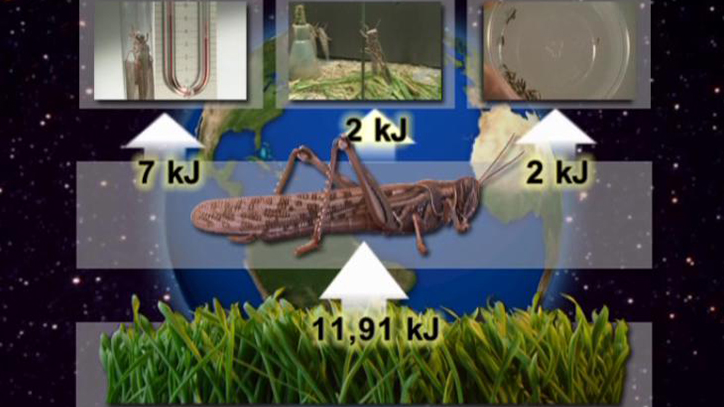
Basics of Biology II
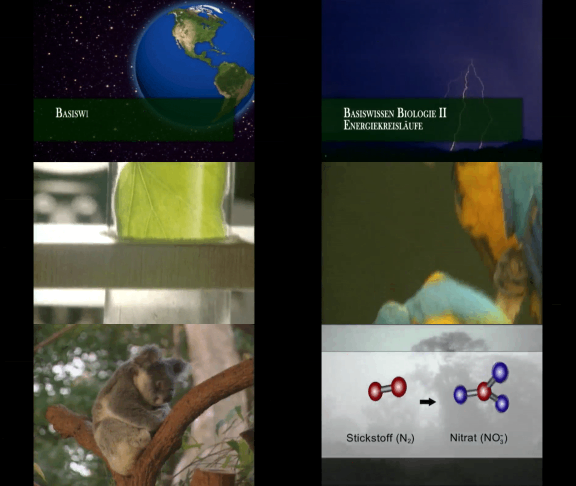
In its first chapter, Basics of Biology II deals with the food chain. The producers as the basis of the food chain and the consumers, the herbivores and carnivores, are introduced /presented. Further focus points are the energy intake through food as well as the energy losses connected with it. The resulting energy efficiency of a herbivore is vividly illustrated in an experiment. Subsequently the carbon cycle is dealt with: its occurrence and the carbon cycle from producer to consumer, and last but not least the function of destruents. In the third chapter the next important cycle, the nitrogen cycle, is discussed. Special emphasis is put on the process of nitrification as well as the function of nitrogen-binding micro-organisms and their natural fertilisation of our agricultural soil. The importance of the nitrate for plants is shown in a laboratory test. Together with the extensive additional material the DVD is ideally suited for use in the classroom.
Learn more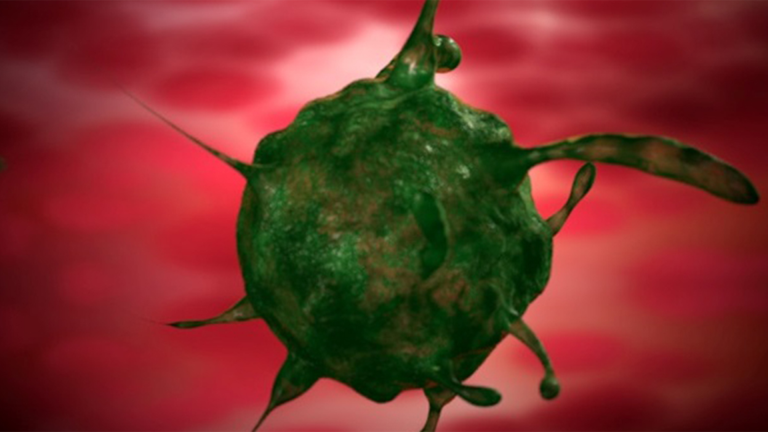

Infections
’Health isn’t everything but everything is nothing without health.‘ – This clever sentence comes from the German philosopher Arthur Schopenhauer. Since the introduction of antibiotics we are hardly aware of infectious diseases as a threat to our health anymore. However, how important successful prevention and therapy are is shown in the fact that in Germany alone about 50,000 deaths are caused by infectious diseases every year. Infections are the second most common cause of death worldwide. According to an estimate of the World Health Organisation more than 30% of deaths worldwide are related to infectious diseases. Most of them affect people in poorer countries and over 15 million people die of infections worldwide.
Learn more
MedienLB has been producing award-winning school films and interactive modules for the classroom since 2006.


Islam
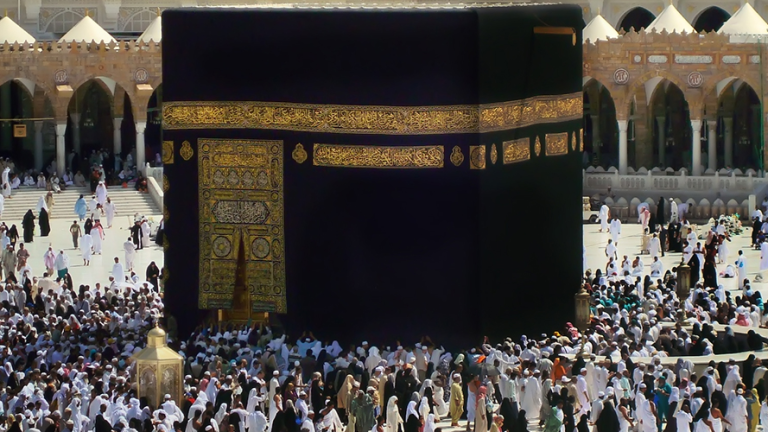
Like Christians and Jews, Muslims believe in only one God. Today about four million Muslims
Learn more
Handelsrouten
Seit Jahrtausenden handeln Menschen mit den verschiedensten Waren. Anfangs geschah dies in einem sehr begrenzten Umfeld, im Laufe der Geschichte wurden für seltene und exotische Handelsgüter allerdings auch weite Wege und gefährliche Reisen in Kauf genommen.
Learn more
Coasts
The border area of the ecosystems of land and sea, which influence each other, is referred to as coast.
Learn more